Blog
What’s going on with Edge AI? And why a Fierce Sensors survey?


Despite widespread pronouncements saying Edge AI represents a “revolution,” reports from analysts and industry studies also indicate a large number of pilot Edge AI projects don’t make it to the rollout or production stage. Some experts have put the drop-off rate at 70%.
Meanwhile, there are also reports of Edge AI rollout success stories. But how did those successes happen and after overcoming what obstacles?
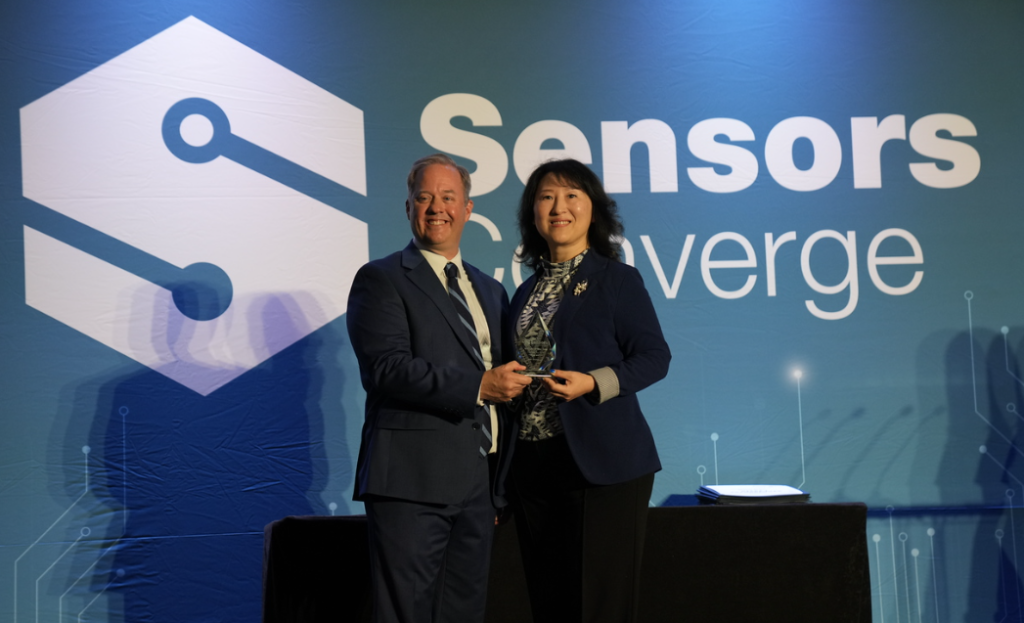
A survey of actual practitioners could provide some answers. Fierce Sensors has launched a quick 4-minute survey supported by the EDGE AI FOUNDATION on the topic and will share the results broadly, including at Sensors Converge, May 5-7, at Santa Clara Convention Center. Click here for a link to the survey.
Don’t miss out! Participants have a chance to win a $100 gift card.
Why a survey?
The following is some research to help explain why a survey could be valuable:
In early 2026, Spectro Cloud released an independent research study of 320 enterprise pros, finding that just 11% of edge AI initiatives have reached full-scale production. Also, 31% said they suffered core service disruptions due to edge AI. (The survey also found that a majority used Kubernetes to reach full- scale edge AI; Spectro Cloud also helps enterprises manage Kubernetes.)
Also, Gradion asserted 70% of Industry 4.0 edge AI pilots never leave the lab, but not because of the AI models or core tech. Instead, it is the hidden 80% of production work that causes concern: custom board support packages, secure boot, OTA update infrastructure, model optimization for constrained hardware, fleet management, and long-term reliability. Gradion didn’t cite a survey for its 70% figure.
Sixfab, an edge hardware and gateway provider, said in social media posts that most edge AI pilots never leave the lab because the pilots were validated in short duration lab settings while production-level demands are at larger scale where various factors interfere, such as unreliable connectivity, safety problems and inevitable equipment and human factor concerns.
Success stories: just a couple among many
Despite such information, engineers also hear about Edge AI success stories, including how low-power applications are being deployed where AI is tied to sensing hardware and other devices used in the field or in factories. A keynote speaker at Sensors Converge 2026 even has referred to edge AI as something so revolutionary that it will yield 10 times the value of cloud AI. There is also an EDGE AI FOUNDATION pavilion at Sensors Converge taking place May 5-7 at Santa Clara Convention Center where several companies can discuss the technology with developers and engineers.
Two prominent Edge AI success stories have appeared in recent years: Amazon Go cashierless retail and Foxconn’s AI-powered automatic quality inspection in electronics manufacturing.
Amazon Go relies on Just Walk Out technology with computer vision and other sensors (including shelf weight sensors), deep learning and AI models and some RFID. The tech allows customers to pick up and purchase items and walk out of a store with their Amazon account automatically charged. The tech has faced challenges in large grocery stores but works better in convenience and quick service spots like airports.
Amazon in January announced it was planning to close Amazon Go physical stores, but in its explanation noted that its Amazon Go locations “served as innovation hubs where we developed Just Walk Out technology” in 360 third party locations across five countries. Just Walk Out tech will be expanded to Amazon’s own operations, the company said, with more than 40 North American Fulfillment Centers using it in breakrooms and more planned for 2026.
The customer impact of Just Walk Out “has been transformative,” Amazon said, reducing cafeteria wait times from 25 minutes to just 3 minutes at one hospital to enabling sports fans at Scotiabank Arena to grab concessions in 30 seconds.
Foxconn deployed Huawei’s Ascend AI-powered quality inspection in 2023 on a production line for smart PV controllers. Edge AI was combined with computer vision to conduct automated visual checks for defects, operations, position accuracy and more to avoid cloud-based processing concerns over latency, bandwidth, and privacy.
In a case study, Huawei said the automatic inspections outperformed manual inspections with 6,000 devices inspected per month with more than 99% accuracy. This approach helped reduce defect rates by up to 80%.
Indeed, there are other examples of Edge AI successes, even amid more recent reports of concerns.