Blog
SatVu’s HotSat-2 First Light images examine strategic energy sites

Its mid Wave Infra-Red (MWIR) thermal imaging can provide temperature data of any structure on the planet in near real time.
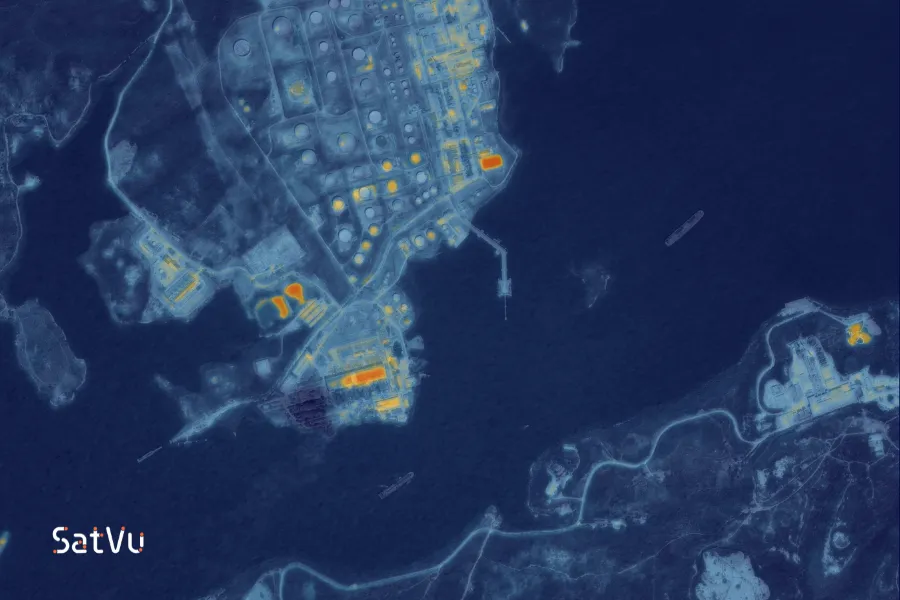
The latest examples – “First light” imagery from the satellite – are topical, showing Cuba’s experimental refining of domestic crude. This is because the country attempts to offset fuel shortages and external supply constraints.
SatVu highlights that the imagery uses thermal infrared to reveal operational activity, not just infrastructure presence. This makes it possible to independently assess whether refineries and energy assets are active, idle, or operating at reduced capacity.
“SatVu was founded to give governments and customers access to intelligence they cannot get elsewhere,” said Anthony Baker, CEO and Co-Founder of the London-based SatVu. “With HotSat-2 in orbit, that capability is operational. These images show what independent thermal data delivers in the markets that need it most – sanctions monitoring, energy security, and the operational state of the assets moving global commodities.”
“The appetite across national security, economic and environmental monitoring is a powerful validation of what we are building.”
Cuba
The image above, for example is of Santiago de Cuba, 25 April. Only two days later did the Cuban government announce the refinery had restarted.
“The Cuba example illustrates this clearly, with thermal evidence captured 48 hours before public acknowledgment,” writes the company. “This establishes thermal data not just as supplementary insight, but as an early, objective signal in environments where ground truth is limited or delayed.”
“Thermal infrared shows what other sensors miss,” said Scott Herman, Chief Technology Officer, SatVu. “Daytime and nighttime high-resolution thermal imagery from space delivers unprecedented insight into operational activities at facilities anywhere in the world.”
The significance for intelligence agencies, and traders, is obvious.
“This new data layer enables a higher level of operational understanding and validation: confirming what is running, when, and at what intensity. On or off, Hot or not. For commodity traders, energy operators, intelligence agencies, and environmental regulators, this highly valuable operational understanding directly informs commercial positioning, risk assessment, and strategic decision-making.”
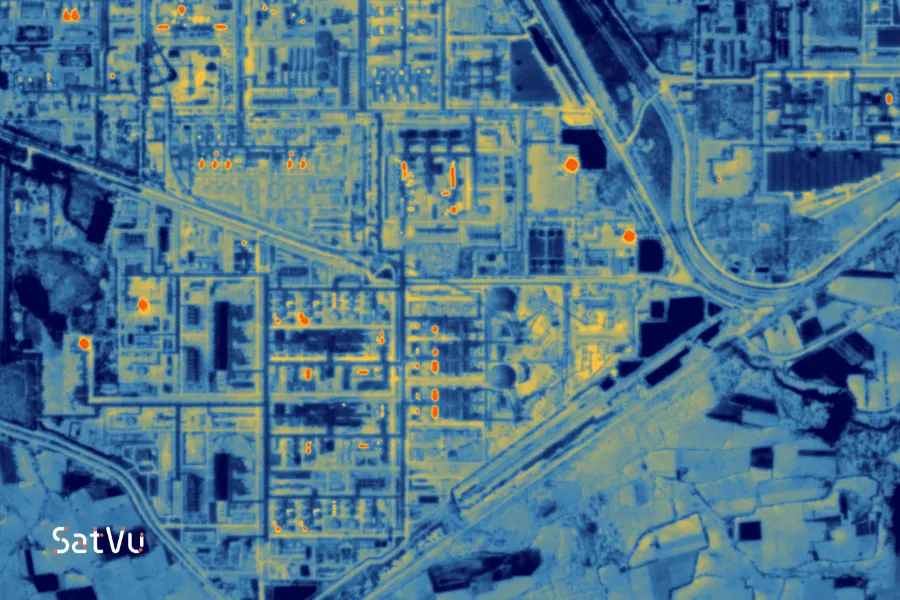
Below, is the world’s largest oil refinery at Reliance Industries Jamnagar Refinery, India. It is pictured not running at full capacity.
SatVu
The release of the data, says the company, marks its transition from development to operational thermal intelligence.
The company recently raised £30m ($40m) in a funding round lead by the NATO Innovation Fund, bringing total equity funding to £60 million ($80 million.
Currently with two satellites in operation – both built by SSTL – SatVu plans to have a constellation of 10 or more satellites in the next 2-3 years.
Following the initial launch of HotSat-1 in June 2023, SatVu has two satellites planned for orbit in 2026. Following HotSat-2, predictably enough, is HotSat-3. And an additional three are initiated under contract (HotSat-4, HotSat-5, and HotSat-6). The more the better as it increases revisit frequency.
It’s avowed aim is to become the ‘thermometer of the world’.
Image: SatVu