Blog
Artemis II: Image sensors in digital cameras capture stunning Moon pics

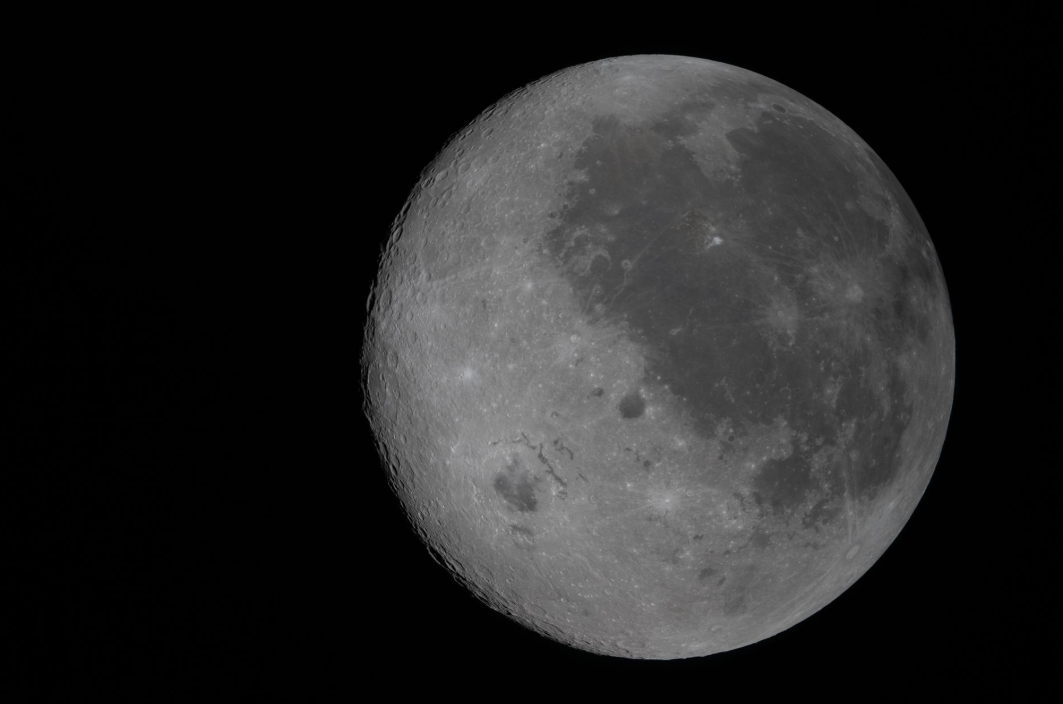
Artemis II astronauts shot thousands of images of the near and far side of the Moon using handheld digital cameras equipped with CMOS image sensors. The images are expected to help future missions map out potential landing areas and even locations for lunar settlements.
The crew’s lunar flyby observations over several hours on Monday marked the first time humans viewed some features of the Moon, including the Orientale basin with their own eyes, and it was the first time digital cameras reached this distance at more than 250,000 miles from Earth. The Orientale basin is nearly 600 miles wide, straddling the Moon’s near and far side.
The imagery will also inform greater insights into Moon geology and ultimately will beg comparisons to Earth’s geography. Bill Nye, known as Bill Nye the Science Guy, said on CNN that the images of the Moon dramatically show how many thousands of lunar craters have been formed by collisions with meteors in space, another reason, he argued, to continue funding NASA programs to protect Earth against future unknown collisions.
Using modern digital cameras with digital sensors represented a big change from photos in the Apollo era, going back to the 1970s. The team—Commander Reid Wiseman, Pilot Victor Glover, and mission specialists Christina Koch and Jeremy Hansen–narrated their observations in real time with the ground teams and called attention to seeing colors on the lunar surface, even greens and oranges that likely reflect mineral qualities.
Some shots included the South Pole of the Moon and the Moon against the blackness of space. The crew also reported six light flashes created by meteoroids hitting the lunar surface during an hour-long solar eclipse. “It creates an amazing visual illusion,” Hansen remarked. “Wow, it’s amazing.”
“Human eyes and brains are highly sensitive to subtle changes in color, texture and other surface characteristics,” NASA said in one of many blog posts on the mission. These discoveries “could uncover new discoveries and more nuanced appreciation for the features on the surface of the Moon.” Indeed, the far side of the Moon has been mapped robotically in recent decades, but NASA is clearly focused on the human element in the Artemis II mission.
A NASA science team provided the astronauts with 30 lunar surface targets for their photographs, including Orientale, to be shot up close and from multiple angles. Orientale is a 3.8 billion-year-old basin and provides clear topographic evidence of a collision with a large object. NASA also had the team focus on Hertzprung basin, northwest of Orientale. Its features have been more degraded by later impacts, and comparing Hertzsprung to Orientale will help scientists learn more about how lunar features evolve over massive periods of time, NASA said.
NASA is expected to officially release some of the images in coming days, but did release on image late Monday: a detailed full lunar image taken April 6 showing Orientale at the boundary of the near and far sides of the Moon. The images were recorded on SD cards that the astronauts were beginning to transfer to the ground Monday night for the science team to review and discuss with the crew on Tuesday, NASA said.
The crew even suggested naming two craters: one to honor the spacecraft, Integrity, and the other to honor Wiseman’s late wife, Carroll. The proposals will be formally submitted to the International Astronomical Union, the governing body naming celestial bodies.
What we know about the astronauts’ cameras and their sensors
Cameras have many parts, but a camera’s optical sensor is critical to the system. An image sensor is a light-sensitive electronic component in a digital camera that works like a digital equivalent of film. It captures incoming light photons using millions of tiny pixels and converts them to electrical signals, which are then translated into a digital image. When light hits a sensor, it generates a charge in proportion to the light’s intensity. The sensor determines image quality such as resolution, color accuracy and sensitivity to light.
There are two main types of camera sensors: CMOS, or Complementary Metal-Oxide-Semiconductor, and CCD, Charge-Coupled Device. CMOS is most common in modern cameras and smartphones because they use low power and provide higher speed.
The Artemis II crew used mainly Nikon D5 DSLRs for high-resolution still photos of the lunar surface and far side. But they also relied on GoPros and smartphones. The Nikons are rugged, professional grade cameras and NASA chose them because they are radiation hardened and had been proven in deep space work in the past, according to NASA in comments to the BBC and other outlets. There were 17 handheld cameras used by the crew while another 15 cameras are mounted on the spacecraft, both inside and outside.
A Nikon D5 has a full-frame FX sensor with 208 megapixels to produce images up to 5568 x 3712 pixels, according to official specs. The sensor is CMOS, which is considered excellent for low light and high IOS, up to ISO 51,200 for sharp deep-space images. ISO controls the amount of light a camera lets in. With a higher ISO for low light, a faster shutter speed is possible. Astronauts were able to pair the Nikon sensor with both wide-angle lenses for Moon context and telephoto/zoom lenses for surface details. One astronaut said he felt he could be “walking up and down the ridge” using a zoom lens.
According to various blog forums, the lenses were Nikon AF-S Nikkor 14-24mm f/2.8 for wide angle and the Nikon AF Nikkor 35 mm f/2. An 80-400 zoom was used to capture surface details through Orion’s windows.
One Nikon Z9 mirrorless camera with a 457 MP full-frame sensor was brought aboard for radiation testing in deep space.