Blog
CircuitHub raises $28m to accelerate electronics production

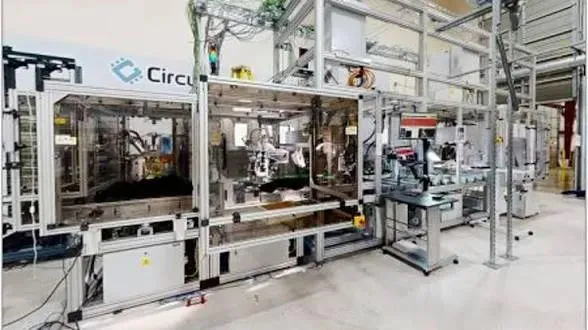
With CitcuitHub’s system, engineers can upload design files, virtually configure and order prototypes, while automated machines produce PCBs in CircuitHub’s Grid facilities
CircuitHub’s system reduces production timelines from months to days and has seen over 2 million PCBs delivered to date
The funding was led by Plural and will accelerate the expansion of CircuitHub’s automated factories across Europe and the US, grow its engineering team and extend the platform into full-service electronics manufacturing
Founded by CEO Andrew Seddon, CircuitHub has built an automated manufacturing system that turns design files into printed, production-ready circuit boards in days.
While CircuitHub launched its first facility in Massachusetts to be close to early customers, its R&D roots are in Cambridge, UK, with a growing team across London and it’s preparing for a broader European manufacturing footprint.
Inspired by semiconductor fabs, among the most automated systems in the world, engineers building self-driving cars, satellites and more can upload designs and order circuit boards in seconds, via CircuitHub’s online platform.
From here, the company uses automated robotics, computer vision and AI to assemble these designs at its first 5,000-square-foot factory, the Grid, before shipping them to teams around the world.
By automating large parts of the production process and monitoring quality via a small on-site team, CircuitHub’s Grid can produce a single prototype or batches of 10,000 units across dozens of different designs simultaneously.
This not only shrinks production cycles from months to days, which helps fuel innovation, but it finally makes high-mix manufacturing, where different designs are produced in small batches, economically viable in a world still built for mass production.
Andrew Seddon, founder and CEO of CircuitHub, said: “Today, hardware companies face a tough choice: either spin up their own vertically integrated manufacturing from scratch, or rely on a legacy Western supply chain that’s been decaying for years. CircuitHub is the alternative: providing remote access to a cutting-edge factory through your browser or your AI agent. Just as software companies share cloud compute, hardware companies can now share our Grid.”
Around 95% of electronics projects today involve fewer than 10,000 units, yet the industry remains optimised almost entirely for mass production. For most hardware teams, manufacturing still looks as it did in the 1990s – manual assembly, supply chain bottlenecks and rising labour costs, while iteration cycles stretch into months.
With much of the world’s manufacturing overseas, critical supply chains are heavily concentrated in China, creating dependencies that are increasingly exposed to geopolitical tensions and disruption. The US alone has lost more than 85% of its share of the global PCB market to lower-cost manufacturers overseas.
In response, US and European governments and companies are rebuilding domestic manufacturing capacity, driven by geopolitical tensions, fragile supply chains and the need for technological sovereignty.
The ability to design, test and manufacture electronics quickly and locally has become a commercial and strategic imperative, along with a significant market opportunity as electronics manufacturing services are on track to hit $1 trillion.
CircuitHub is built for this shift. Its model of automated, distributed factories with rapid, local delivery fundamentally changes this equation, enabling fast on-demand production close to where products are designed.
As AI makes designing hardware as accessible as writing code, CircuitHub ensures the long tail of custom, small-batch production can be fulfilled instantly without the delays, costs or minimum order constraints of traditional factories. This is empowering a new generation of hardware innovation across robotics, space, energy, defence and compute.
Since launching its first production facility in Massachusetts, CircuitHub has delivered 2M+ boards and placed 133M+ parts, serving 20,000 engineers across some of the world’s biggest and most innovative hardware teams.
It has become the fastest-growing electronics manufacturer in the US and, over time, CircuitHub aims to make its factories increasingly modular, allowing new capacity to be deployed wherever needed.
The company plans to expand its Grid model across the US and Europe, scaling high-speed, on-demand manufacturing that reduces reliance on distant supply chains.