Blog
SSA-LaMB project benchmarks AI for collision avoidance in space| Electronics Weekly

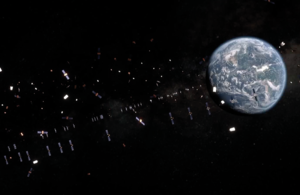
With tens of thousands of objects moving at orbital speeds, AI could become an essential tool. Both for tracking debris and predicting risk.
SSA-LaMB
No standardised benchmark currently exists, however, to test how reliably those systems perform. Enter SSA-LaMB, which stands for Space Situational Awareness Language Model Benchmark.
 Professor Wai Lok Woo, right, is lead researcher on the SSA-LaMB project. He is Professor of Machine Learning within Northumbria University’s School of Computer Science
“Trustworthy AI in space is not a future ambition – it is an urgent present need,” he said. “With satellite operators carrying out more than 144,000 emergency manoeuvres every year to avoid collisions, AI systems that cannot honestly communicate uncertainty pose real operational risks.
“We are delighted to receive this award to enable us to build the evaluation infrastructure the community needs to move from promising capabilities to proven reliability.”
University of Sheffield
Northumbria will be working with the University of Sheffield. And also alongside the UK space technology company 3S Northumbria, and a US-based space analytics company ExoAnalytic Solutions.
All datasets and tools will be openly available via Hugging Face, Figshare and GitHub, highlights Northumbria. It says it wants to make rigorous space situational awareness research accessible to institutions worldwide, including those without access to classified data.
The project is receiving funding through the UK’s AI Hub for Generative Models’ Dataset Creation and Challenge Projects programme.
“Developed with operational partners in both UK defence and commercial space sectors, SSA-LaMB gives every researcher access to rigorous AI evaluation tools regardless of whether they hold classified data access or work at a well-resourced institution,” added Professor Wai Lok Woo.
For context, the university says more than 40,000 objects now tracked in Earth’s orbit.
Science
Note that Northumbria’s award is one of four made nationally. The programme is distributing £400,000 between university-led teams working across science, technology and the creative industries.
Queen Mary University of London, University College London, and the University of Sheffield lead the other funded projects. These address area such as AI understanding of real-world sound, creative performance capture, and AI fact-checking in professional contexts.
Image: Northumbria University
See all our Research Content.