Blog
Xona Space raises $170m Series C for PNT satellite network

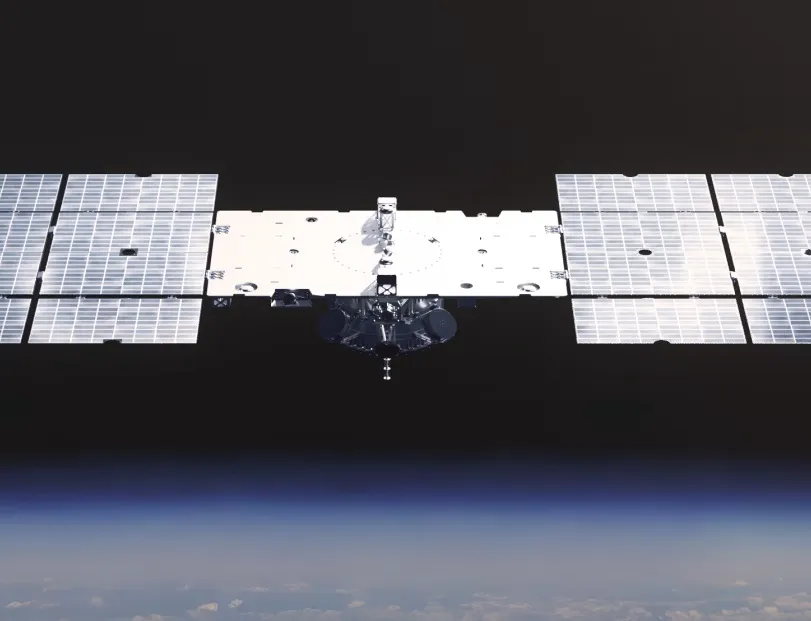
It says the backing will speed the deployment of its Pulsar constellation, providing position, navigation and timing services.
The round was led by Mohari Ventures Natural Capital. It also included backing from Craft Ventures, ICONIQ, Woven Capital, NGP Capital, Samsung Next and Hexagon.
Xona Space’s planned PNT satellite infrastructure is based in LEO. It aims to provide “the robust precision guidance needed for intelligent and autonomous technologies to scale beyond highly structured environments”.
Xona Space
The latest funding marks the moment, says the company, when its “next-generation navigation infrastructure moves from concept and theory to global deployment”.
“This funding allows us to move faster. To build at scale. And to deploy a system designed for the world that’s already emerging,” writes Xona Space co-founder and CEO, Brian Manning, in the announcement.
“Every technological era builds the infrastructure it needs – from railroads to electricity to the internet. As intelligent machines begin to reshape the physical world, we believe navigation infrastructure will be just as foundational.”
Navigation signal
In 2025, Xona Space broadcast a fully authenticated satellite navigation signal. According to Xona it achieved the highest positioning accuracy yet recorded from orbit.
In May 2024 it raised $19 million in a Series A funding round. It was led by Future Ventures and Seraphim Space.
In a memorable quote at the time, Manning said:
“AI and automation are the future – our PULSAR service aims to be for these industries what the North Star was for humanity in previous centuries.”
Costs
For context, the UK government has previously highlighted the economic damage that would be caused if global navigation satellite systems (GNSS) were disrupted.
It estimated, for example, that a 24-hour GNSS outage could result in a £1.4bn loss to the UK economy, with a seven-day outage costing the economy £7.6bn.
While there is GPS (Global Positioning System), a US military technology, the EU has its Galileo system, Russia has the Global Navigation Satellite System, China the BeiDou system and Japan has its Quasi-Zenith Satellite System.
See also: The importance of being on PNT