Blog
Sponsored Content: The Future of Industrial Weighing in Smart Factories

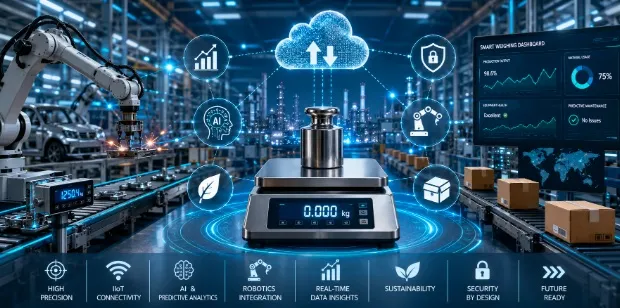
Modern factories are increasingly driven by automation, data exchange, artificial intelligence, robotics, and real-time analytics. As production environments become more digitized, industrial weighing systems are no longer isolated devices. They are becoming integrated nodes within larger industrial ecosystems, capable of communicating with machines, enterprise software, cloud platforms, and predictive maintenance systems.
This shift is transforming industrial weighing from a basic measurement process into a core component of manufacturing intelligence.
Smart Factories Demand Intelligent Measurement Systems
The primary objective of a smart factory is to create a highly connected production environment where machines, systems, and operators exchange data continuously to improve efficiency and reduce operational waste. Accurate weighing is essential in achieving this objective because nearly every industrial process depends on measurement precision.
Industries such as food processing, pharmaceuticals, semiconductors, chemicals, automotive manufacturing, and logistics rely heavily on precise weighing for quality control, regulatory compliance, and process optimization. Even small measurement deviations can lead to defective products, increased waste, production downtime, or safety risks.
Traditional weighing systems required manual supervision and periodic calibration checks. In contrast, modern smart weighing systems continuously monitor performance in real time. Advanced sensors and digital load cells can automatically detect anomalies, identify drift in calibration, and trigger alerts before failures occur.
For manufacturers operating high-volume production lines, this capability significantly reduces downtime while improving consistency across production batches.
Industrial IoT Is Reshaping Weighing Infrastructure
One of the most significant developments in industrial weighing is the integration of Industrial Internet of Things (IIoT) technologies. IoT-enabled weighing systems can transmit data directly to centralized monitoring platforms, enabling real-time production visibility across entire facilities.
Connected weighing systems allow manufacturers to monitor material usage, inventory flow, machine efficiency, and production throughput from a single dashboard. This level of visibility supports faster decision-making and improves operational responsiveness.
For example, in modern food manufacturing plants, smart weighing systems monitor ingredient dosing automatically during mixing and batching processes. If ingredient levels exceed specified tolerances, the system can instantly stop the process or adjust material flow rates automatically. This reduces waste while ensuring product consistency.
In chemical processing facilities, IoT-connected weighing systems help operators monitor hazardous material handling with greater precision. Automated weight verification improves safety compliance while minimizing the risk of overuse or contamination.
The ability to collect continuous operational data is turning industrial weighing into a valuable source of manufacturing intelligence.
Artificial Intelligence Enables Predictive Weighing Systems
Artificial intelligence is beginning to redefine how weighing systems operate inside advanced factories. AI-powered analytics can process large volumes of weighing data to identify patterns, optimize production workflows, and predict equipment failures before they disrupt operations.
Predictive maintenance is one of the most important applications of AI in industrial weighing. Load cells and weighing sensors naturally experience wear over time due to vibration, environmental conditions, temperature fluctuations, and heavy industrial use. Traditionally, maintenance teams identified these problems only after system performance deteriorated.
AI-driven monitoring systems can now detect microscopic performance variations long before visible failures occur. This allows maintenance teams to schedule repairs proactively, reducing costly unplanned downtime.
In pharmaceutical manufacturing, where precision is critical, AI-integrated weighing systems can detect subtle inconsistencies in ingredient dispensing during tablet or capsule production. Automated adjustments ensure strict compliance with regulatory standards while improving production reliability.
Machine learning models are also being used to optimize material consumption. By analyzing production trends, factories can identify where excessive material usage occurs and implement process improvements that reduce waste.
Robotics and Automation Increase Demand for High-Precision Weighing
Automation is becoming standard across modern manufacturing facilities, and industrial weighing systems are increasingly integrated into robotic workflows and autonomous production lines.
In automotive manufacturing, robotic assembly systems use precision weighing sensors to verify component integrity before installation. If a component weight falls outside acceptable tolerance ranges, the system automatically removes it from the assembly process.
This type of automated quality control reduces manufacturing defects while improving production efficiency.
In semiconductor manufacturing, where microscopic precision is essential, automated weighing systems help monitor material deposition, wafer handling, and chemical usage. Small measurement inaccuracies in semiconductor fabrication can significantly impact product performance and yield rates.
Warehouse automation is another major growth area for intelligent weighing systems. E-commerce fulfillment centers now rely heavily on conveyor-integrated weighing solutions capable of processing thousands of packages per hour.
Amazon’s fulfillment operations are one well-known example of how automated weighing and scanning technologies improve logistics efficiency, package verification, and inventory management in large-scale distribution environments.
As robotics adoption continues to increase globally, demand for faster and more accurate industrial weighing systems will continue to grow.
Real-Time Data Is Becoming More Valuable Than Measurement Alone
The future value of industrial weighing systems lies not only in accurate measurement but also in the operational data they generate.
Modern weighing platforms now function as real-time data collection systems capable of feeding information into manufacturing execution systems (MES), enterprise resource planning (ERP) software, digital twins, and cloud-based analytics platforms.
This integration allows manufacturers to gain deeper insights into production performance, material consumption, energy usage, and process efficiency.
For example, manufacturers can analyze weighing trends across multiple production lines to identify bottlenecks or inefficient material usage patterns. Historical weighing data can also support traceability requirements in highly regulated industries such as pharmaceuticals and aerospace manufacturing.
Cloud-based weighing platforms additionally allow remote monitoring across multiple factory sites. Production managers can access operational data from anywhere, improving responsiveness and simplifying multi-site coordination.
As data-driven manufacturing expands, industrial weighing systems are evolving into strategic operational intelligence tools.
Sustainability Is Driving New Weighing Innovations
Sustainability targets are becoming a major priority across global manufacturing sectors. Smart weighing technologies are helping companies reduce waste, improve resource efficiency, and minimize environmental impact.
Accurate weighing reduces overfilling, material overuse, and product rejection rates. In industries using expensive raw materials, even small improvements in measurement precision can generate substantial cost savings.
In chemical manufacturing, precise dosing systems minimize hazardous waste generation while improving process safety. In agriculture, intelligent weighing systems help optimize feed distribution, fertilizer application, and crop management.
Transportation and logistics companies are also using smart weighing technologies to optimize shipment loading and reduce fuel consumption. Better load management directly contributes to lower carbon emissions.
As governments introduce stricter environmental regulations, intelligent weighing systems are expected to become an important tool for achieving sustainability and compliance goals.
Cybersecurity Will Become a Critical Concern
As industrial weighing systems become more connected, cybersecurity risks are increasing. Smart weighing infrastructure connected to industrial control systems and cloud platforms can potentially become vulnerable to cyberattacks.
Unauthorized access to production systems could disrupt operations, manipulate measurement data, or compromise sensitive manufacturing information.
To address these concerns, manufacturers are implementing encrypted communication protocols, secure industrial networks, and advanced cybersecurity frameworks designed specifically for operational technology environments.
Future smart factories will require weighing systems that are not only accurate and connected but also highly secure.
Digital Twins and Edge Computing Will Shape the Next Generation
Emerging technologies such as digital twins and edge computing are expected to further transform industrial weighing applications.
Digital twin technology enables manufacturers to create virtual models of production systems, including weighing operations. These virtual simulations allow factories to test process improvements and identify inefficiencies before making physical production changes.
Edge computing is also gaining importance because it allows weighing data to be processed locally rather than being transmitted entirely to cloud servers. This reduces latency and improves response times in critical industrial environments where real-time decision-making is essential.
Combined with AI and IoT technologies, these innovations will create highly autonomous weighing systems capable of self-monitoring, self-calibration, and adaptive process optimization.
Conclusion
Industrial weighing is becoming one of the foundational technologies enabling the transition toward fully connected smart factories. The integration of IoT connectivity, artificial intelligence, robotics, cloud computing, predictive analytics, and automation is transforming weighing systems from passive measurement devices into intelligent industrial platforms.
Real-world adoption across sectors including pharmaceuticals, food manufacturing, logistics, semiconductors, automotive production, and chemical processing demonstrates the growing strategic importance of advanced weighing technologies.
In the coming years, manufacturers will increasingly depend on smart weighing systems not only for precision measurement but also for operational intelligence, predictive maintenance, sustainability, and real-time production optimization.
As Industry 4.0 continues to evolve, the future of industrial weighing will be defined by connectivity, automation, data-driven decision-making, and intelligent process control making it a central pillar of next-generation manufacturing infrastructure.
Author information
Website: https://www.ato.com
Contact: sales@ato.com