Blog
Sponsored Content: Siemens’ User2User – How AI forms the future of Europe’s EDA industry

But challenges also bring opportunities. The EU Chips Act demonstrates that Europe intends to seize this moment. The goal is to reshore the semiconductor supply chain to remain globally competitive and strengthen Europe’s semiconductor sovereignty.
It is therefore no coincidence that chip designers are gathering in the heart of Europe to discuss how to tackle these challenges. In Munich, Siemens EDA – a global company with European roots – is hosting User2User, a conference where designers from all over Europe present their projects, share best practices, and learn about the latest industry trends.
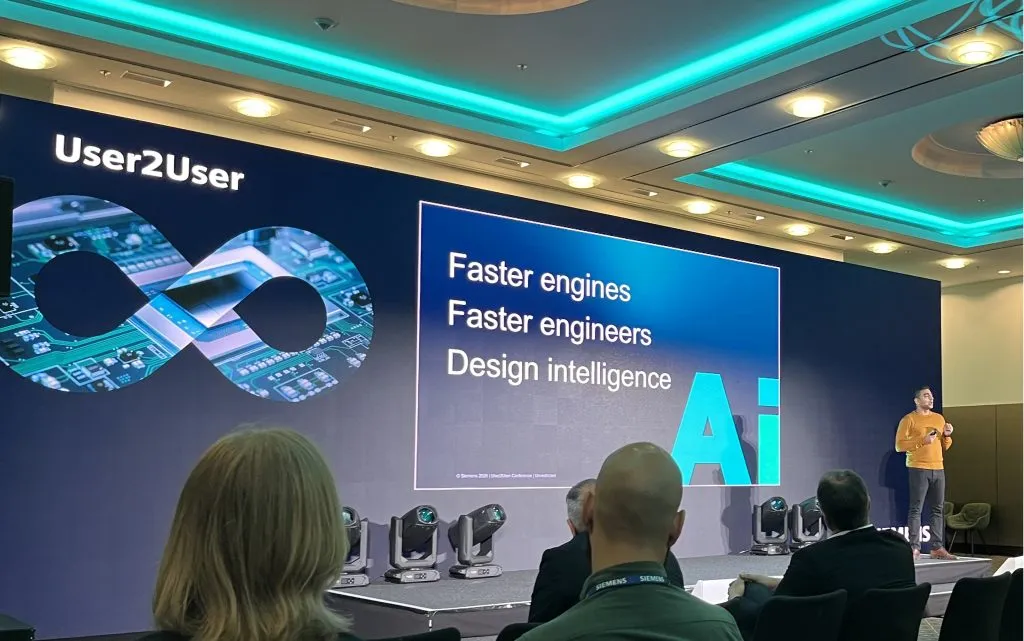
The User2User event hosted by Siemens EDA highlights, among other things, the benefits of AI for designers.
Shift further left
One of these trends is the ongoing shift from hardware-centric to software-defined design. At the Leadership Panel at User2User, A.J. Incorvaia, senior vice president and general manager of Electronic Board Systems at Siemens EDA, Siemens Digital Industries Software, explains how development is becoming more complex. Products are now composed of multiple systems, and the growing number of features packed into smaller footprints leads to issues with power and signal integrity. Therefore, it is more important than ever to identify problems as early as possible. “Shift-left” is becoming essential in development and has now reached the point where software development must begin in parallel with hardware development.
Abhi Kolpekwar, senior vice president and general manager of Digital Verification Technologies at Siemens EDA, Siemens Digital Industries Software, adds that conventional verification can no longer keep pace with the increasing demands and ever-more-complex behavior of today’s products. Therefore, verification must be integrated into the development process from the beginning and extend throughout the product’s entire lifecycle, which generates enormous amounts of data. This requires a fundamental shift from a one-dimensional to a holistic approach.
This is just one example of the growing importance of AI in development. However, simply integrating AI into established tools is not enough to meet the challenges of the future. Rather, AI must be incorporated from the very beginning so that hardware and software are no longer viewed as separate entities but as a unified whole.
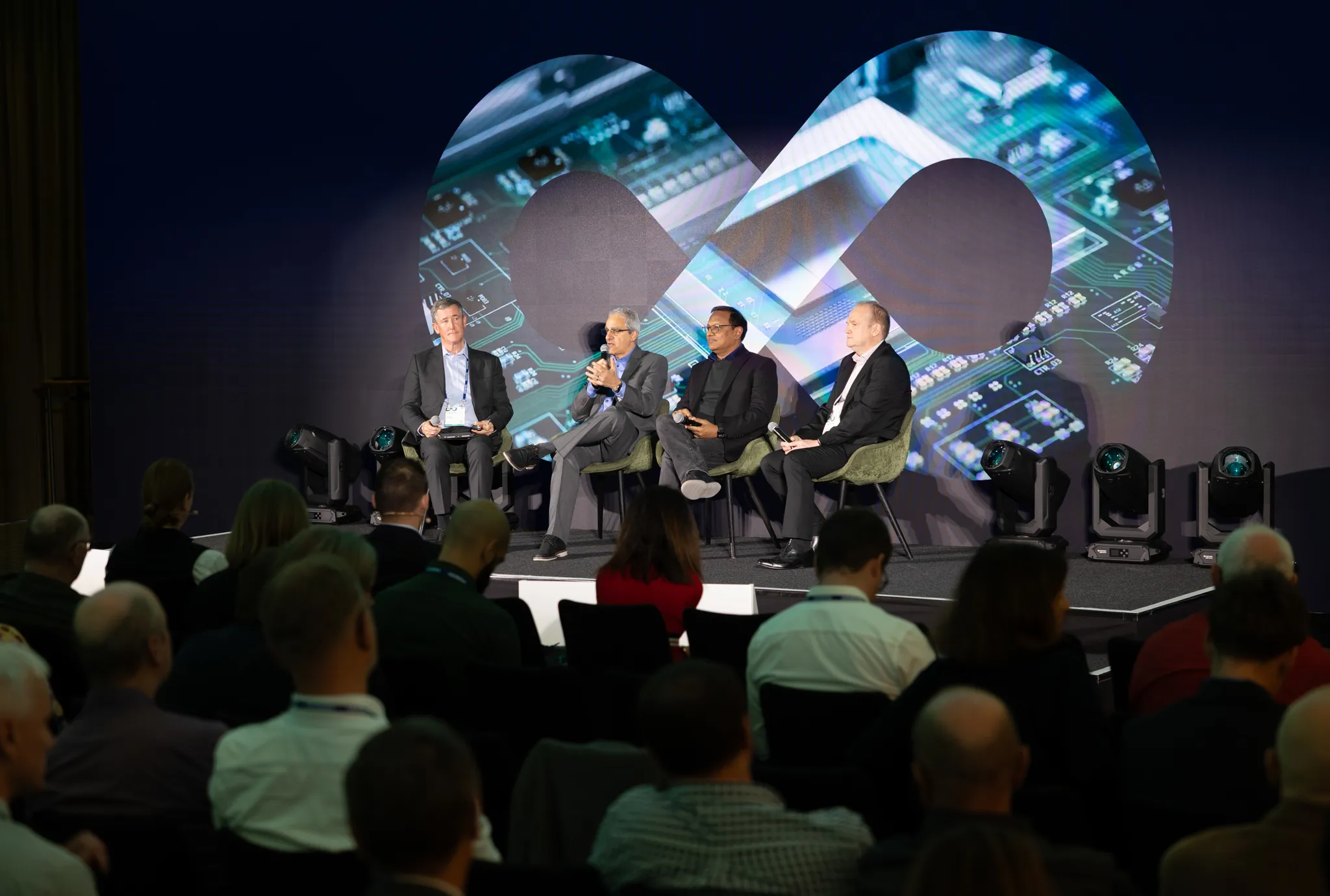
An informative exchange on the leadership panel: Sean Redmond, Silicon Catalyst Europe, A.J. Incorvaia, Abhi Kolpekwar, and Geoff Lee, Siemens EDA (from left to right)
AI-native tools for efficient designers
With AI-native tools, design teams will become significantly more productive. Siemens EDA aims to follow this path with its portfolio, spanning from IC design to verification and board systems: a unified, AI-native, software-defined, and silicon-enabled design paradigm will lead to faster engines and faster engineers.
A.J. Incorvaia emphasizes that the value of AI does not lie in “replacing engineers, but in helping them be as productive as possible.” This begins with onboarding and continues with the optimal use of tools, especially those that designers rarely use. AI supports this through command prediction or natural language assistance.
Furthermore, Abhi Kolpekwar calls for what he refers to as “verification confidence.” AI should assist developers by automating, accelerating, and optimizing processes. It should not be used to replace human judgment. Engineers must always remain in control and be able to understand the AI’s results.
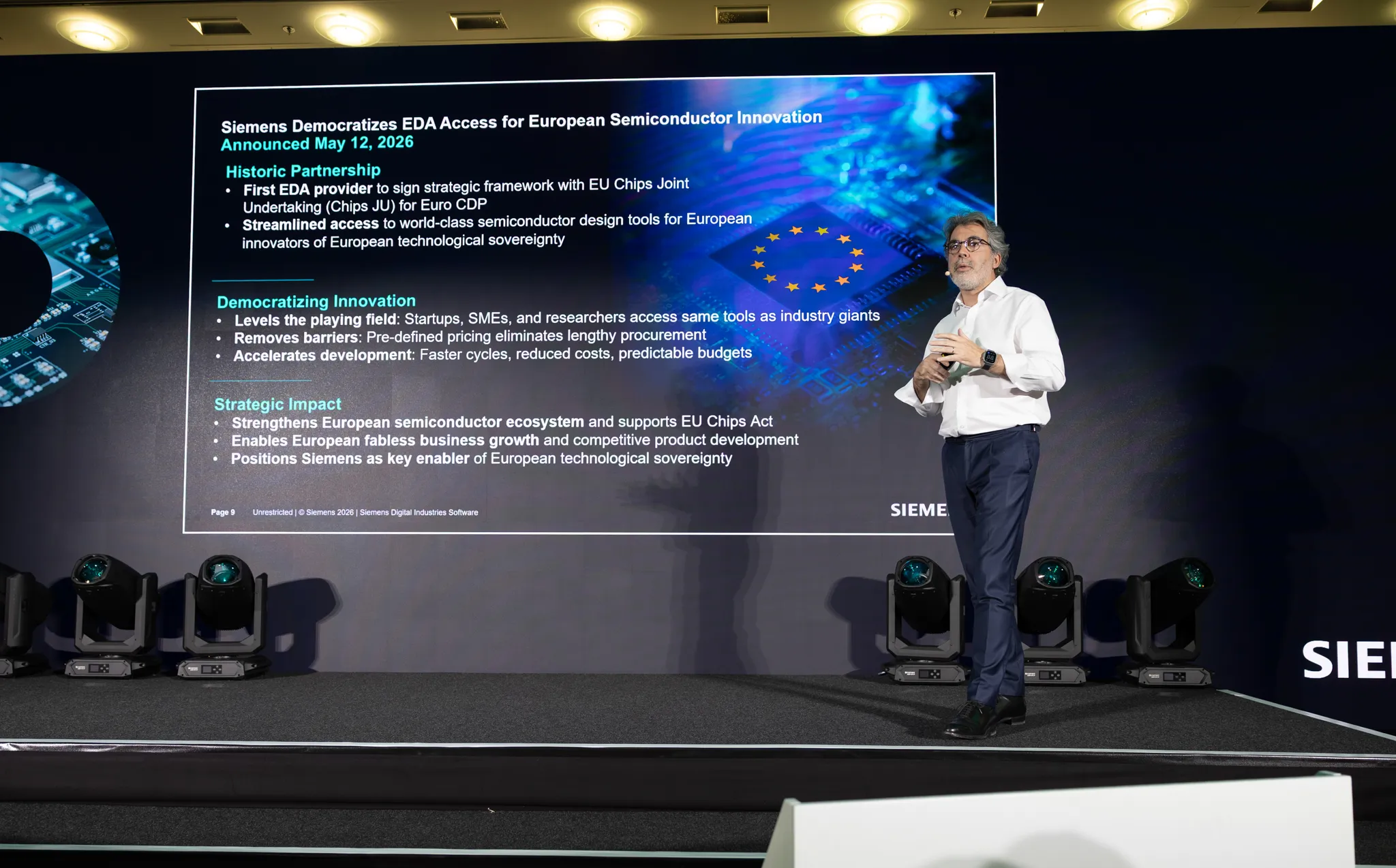
Jean-Marie Saint-Paul, Senior Vice President of EDA Global Sales at Siemens EDA, shows how Siemens EDA supports startups in Europe.
Collaboration and startups
But innovations cannot mature in isolation. In today’s world, progress can only be made through collaboration with customers, partners, and the broader industry. The third panelist, Geoff Lee, vice president of EMEA Sales at Siemens EDA, Siemens Digital Industries Software, also notes that collaboration within the industry has been on the rise over the past few years, a trend that is accelerating across companies.
For Siemens EDA, this collaboration also extends to supporting startups. At User2User, the company announces that it is the first EDA provider to sign a strategic framework agreement with the EU Chips Joint Undertaking (Chips JU) for Euro CDP (European Chips Design Platform). This gives companies selected for the Chips JU program access to Siemens’ EDA software at predetermined prices and terms. This creates a level playing field: startups, SMEs, and researchers gain access to the same tools as industry giants.
“After funding, the availability of tools is a key factor in a startup’s success,” explains Jean-Marie Saint-Paul. Strengthening Europe’s position as a business hub is also one of his personal goals in his new role as senior vice president of EDA Global Sales at Siemens EDA, Siemens Digital Industries Software, a position he recently assumed.
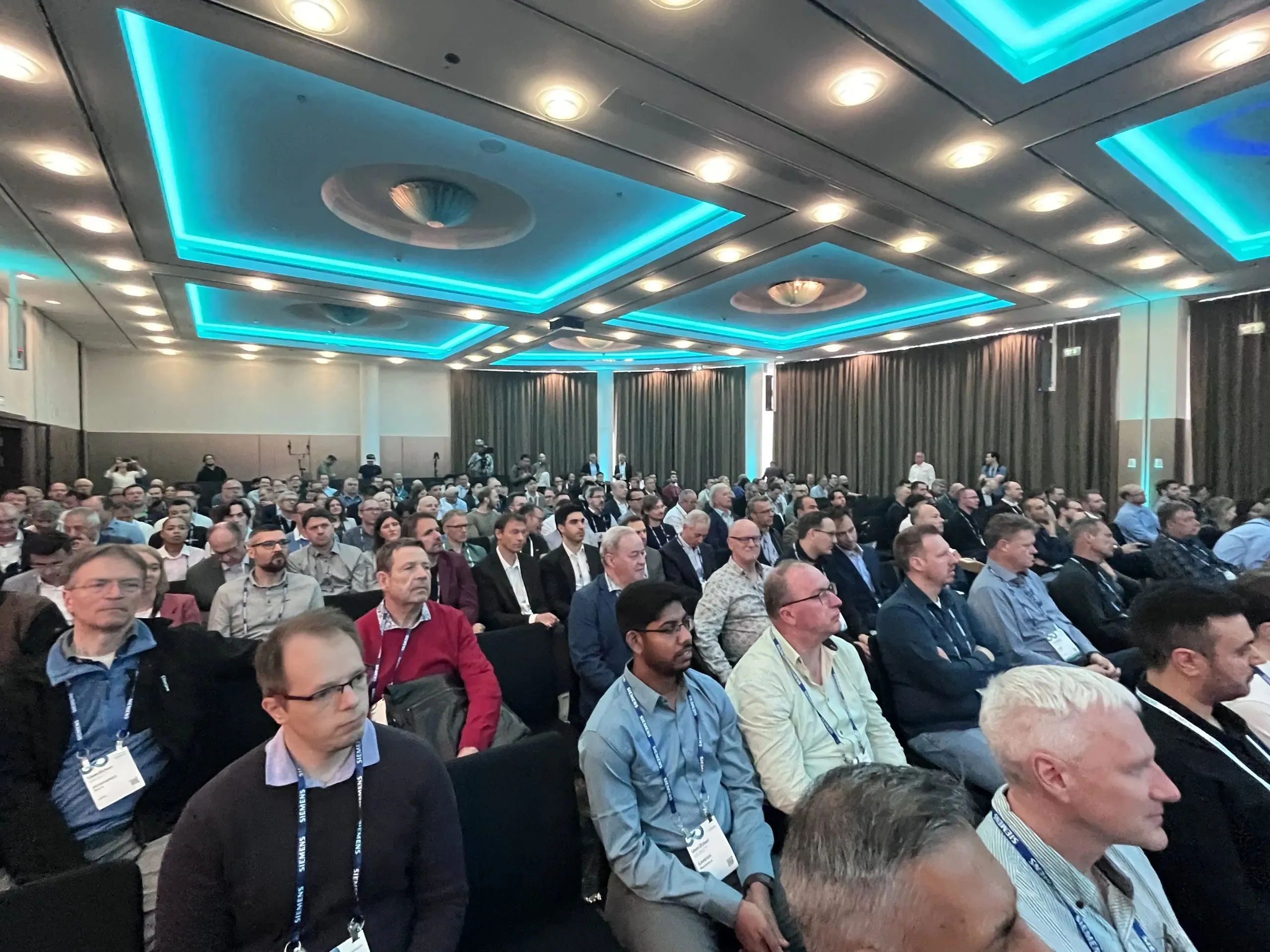
There was a lot of interest in the keynotes and breakout sessions at User2User.
Industry leaders using Siemens EDA
To remain competitive on the global stage and ensure its sovereignty, more high-value companies must be cultivated in this decade. This point is also emphasized by Sean Redmond, President of Silicon Catalyst Europe, an accelerator for startups in the semiconductor sector, as moderator of the leadership panel at User2User: “In Europe, the stakes have never been higher.”
A role model for the European startup scene is Arm®, one of the few high-value companies to emerge from Europe in recent decades. It is only natural that Siemens EDA invited the company to deliver one of the two opening keynotes at User2User.
Karima Dridi, vice president of Productivity Engineering at Arm, explains how the AI boom is generating massive amounts of data. To address this, Arm recently unveiled the AGI CPU, which was developed using tools and agentic AI from Siemens EDA. And Karima Dridi is convinced that AI will continue to play an increasingly important role in development: “This is just the beginning.”
In the second keynote, another industry leader discusses his collaboration with Siemens EDA. Dr. John Linford, director of Industrial Engineering at NVIDIA®, emphasizes the importance of AI physics. This leads to the creation of digital twins, which are essential for the co-design of software and hardware. John Linford sees this as the beginning of the “Age of Physical AI,” as he calls it.
John Linford goes on to explain how his company is supporting this trend: GPU-accelerated solvers and AI physics surrogates can be integrated into CAE and EDA environments to drastically shorten iteration cycles, while agentic AI systems such as Siemens’ Fuse EDA AI coordinate complex workflows, allowing experts to continue focusing on engineering decisions.
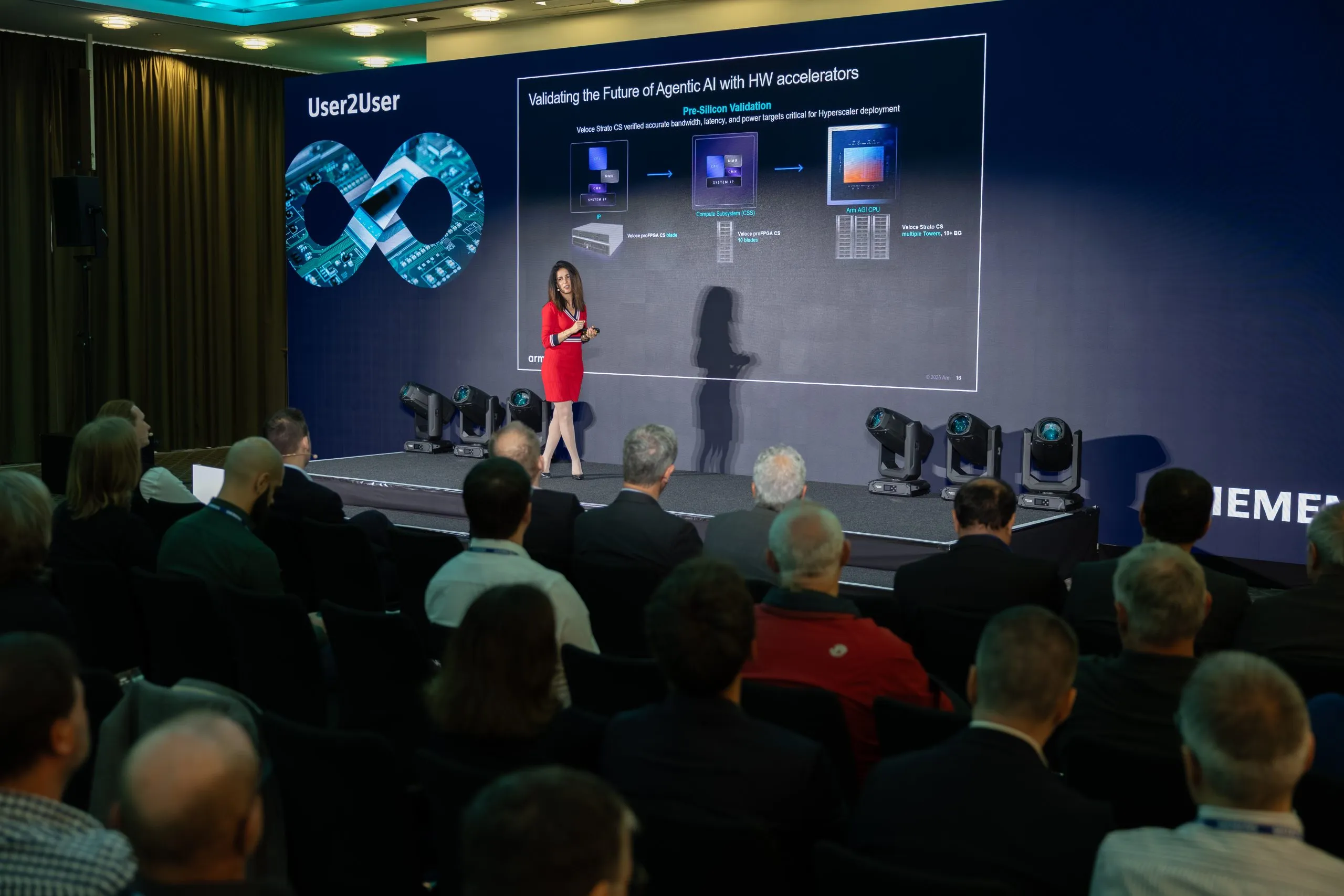
Karima Dridi, Vice President of Productivity Engineering at Arm, used her keynote to showcase how Siemens EDA contributed to the development of the ARM AGI CPU.
How Siemens EDA supports engineers
Several presentations by customers and users highlight the use of agentic AI systems in their respective development projects. Companies such as Infineon®, Intel®, and STMicroelectronics® share how they are using agentic AI in their applications and the results they have already achieved.
Most notably, Sathishkumar Balasubramanian, head of products, EDA AI, at Siemens EDA, demonstrates the benefits of Siemens EDA’s AI ecosystem in his closing keynote. He shows how agentic orchestration ensures that AI supports entire design workflows and controls them autonomously.
Using concrete examples, he illustrates how a design engineer working with Siemens EDA tools can integrate silicon design with system simulation, manufacturing, and lifecycle management. Each domain clearly showcases how agentic AI eliminates manual intervention while simultaneously improving results – both in-tool and across the entire Siemens EDA portfolio.
Taken together, these capabilities show how Siemens EDA tools help developers and designers do their jobs even better, which is important for the entire industry in Europe. Or, as Sean Redmond, moderator of the leadership panel, tells the audience, “The future is in your hands.”
Please visit the User2User content library to access general sessions, keynotes and panels from the User2User event series, which brings together the electronic design automation (EDA) community to share their real-world experiences using Siemens EDA Tools.
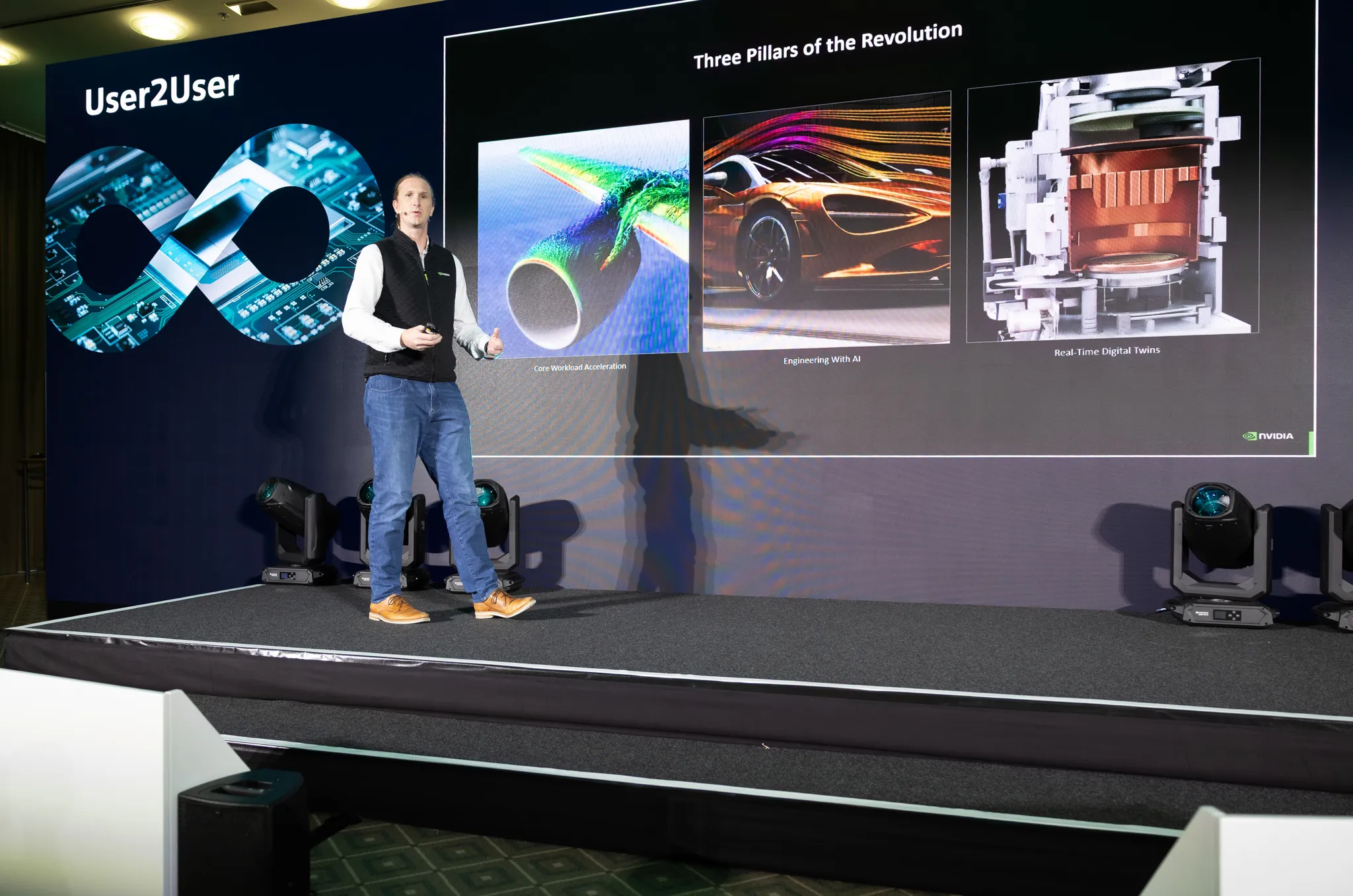
Dr. John Linford, Director of Industrial Engineering at NVIDIA, demonstrated NVIDIA’s efforts to create more efficient AI systems to support designers.