Blog
Middle East crisis live: Iran ‘offers to end chokehold on strait of Hormuz’ | US-Israel war on Iran

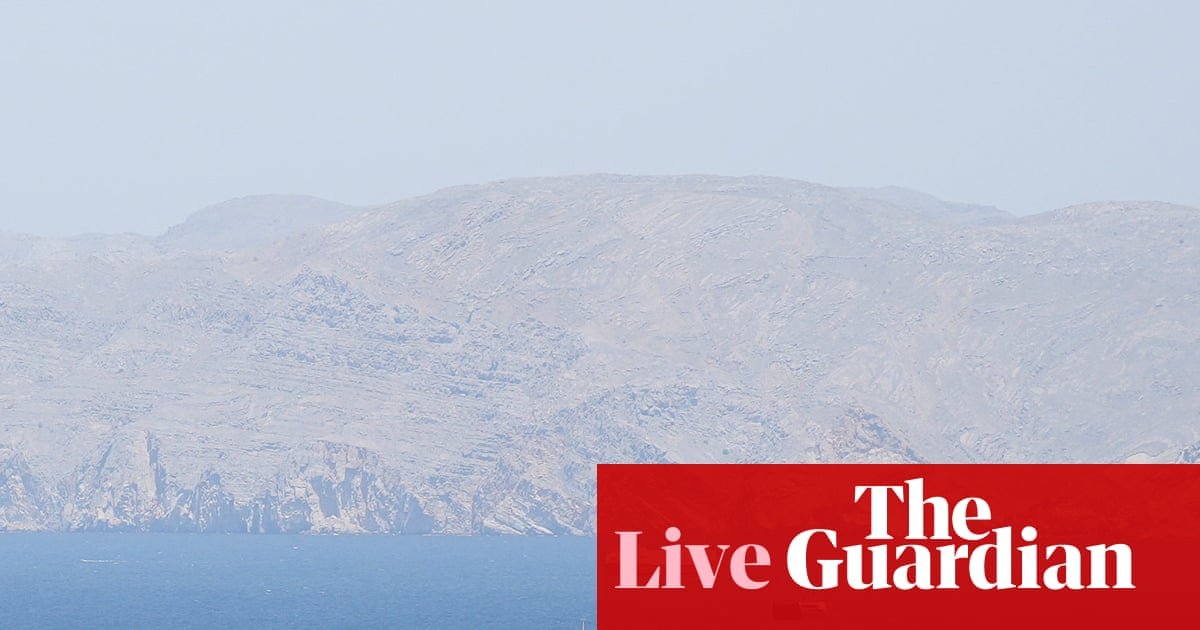
Iran ‘offers to end chokehold on strait of Hormuz’
Iran is offering to end its chokehold on the strait of Hormuz without addressing its nuclear program, two regional officials with knowledge of the proposal said Monday.
It comes as the country’s foreign minister made a visit to Russia he said was an opportunity to consult with Moscow regarding the war against Israel and the United States.
Iran also wants the US to end its blockade of the country as part of its proposal, said the two officials, who spoke on condition of anonymity to discuss the closed-door negotiations.
The new proposal, passed to the United States by Pakistan, likely won’t be supported by US president Donald Trump, who wants to end Iran’s atomic program as part of an overall deal to reopen the strait of Hormuz and make the ceasefire permanent.
“We have all the cards. If they want to talk, they can come to us, or they can call us,” Trump said Sunday to Fox News Channel.
Key events
Stephen Doughty, the UK minister for Europe and North America, said earlier that while the UK is not in favour of the US blockade of Iranian ports, it supports working with the United States and others to reopen the strait of Hormuz.
Speaking ahead of a UN Security Council meeting, Doughty said that Iran is holding “the rest of the world to ransom”.
Maritime traffic must flow safely and unimpeded through the strait, he said in comments reported by the Associated Press , “and that includes no tolls, no security risk and, of course, adherence to the international laws on freedom of navigation”.
He later said in a statement to the council:
This crisis is not just affecting international shipping, it is driving up costs and sending shockwaves throughout energy markets and supply chains far beyond the region with impact for all of our citizens, our communities and their cost of living.
So, we must get the strait reopened fully and unconditionally.
Freedom of navigation must be restored, in line with international law. Shipping and seafarers must not be used as leverage, and there is no place for tolls or permissions in international straits.
Freedom of navigation means navigation must be free.
Throughout this crisis, the UK has been clear: Iran must not be able to hold the global economy hostage or indeed threaten regional and international security.
The day so far
Donald Trump has said Iran can telephone if it wants to negotiate an end to the war and that it must agree never to have a nuclear weapon, while Pakistan’s leaders have sought to revive the stalled peace talks between Washington and Tehran.
Iran is offering to end its chokehold on the strait of Hormuz without addressing its nuclear program, two regional officials with knowledge of the proposal said Monday. It comes as the country’s foreign minister made a visit to Russia he said was an opportunity to consult with Moscow regarding the war against Israel and the United States.
The head of the UN’s maritime agency said Monday there was “no legal basis” for imposing any fees for ships to pass through the strait of Hormuz. Shipping through the narrow strait has been strangled since the US and Israel attacked Iran in late February.
Lebanese president Joseph Aoun said Monday that direct negotiations with Israel were aimed at ending the conflict with Hezbollah, while accusing those who drew Lebanon into war of “treason” in an implicit rebuke to the Iran-backed armed group. “My goal is to reach an end to the state of war with Israel, similar to the armistice agreement” of 1949, Aoun said in a statement, adding that “I assure you that I will not accept reaching a humiliating agreement”.
Russian president Vladimir Putin has reportedly told Iran’s foreign minister, Abbas Araghchi, that Moscow would do everything it could to help secure peace in the Middle East, as the two met in Russia. “For our part, we will do everything that serves your interests, the interests of all the people of the region, so that peace can be achieved as soon as possible,” Russian state media quoted Putin as telling Araghchi during a meeting in Saint Petersburg on Monday.
Iran’s foreign minister said the Islamic republic was “stable, solid” during a meeting in Russia with president Vladimir Putin, according to Russian state TV. Foreign minister Abbas Araghchi said due to the war with the United States and Israel, “the world has now realised Iran’s true power” and “it has become clear that the Islamic republic of Iran is a stable, solid and powerful system”, he said in the meeting in Saint Petersburg.
Iran’s armed forces would be the authority responsible for the strait of Hormuz under the country’s proposed law for managing the waterway, a top official said on Monday. Ebrahim Azizi, head of the national security commission in Iran’s parliament, told state television that the armed forces were already in control of the strait and were seeking to prohibit the passage of “hostile vessels”.
France’s top diplomat said Iran must be ready to make “major concessions” in talks to end a crisis triggered by the attack by the United States and Israel. “There can be no lasting solution to this crisis unless the Iranian regime agrees to major concessions and a radical shift in its stance,” foreign minister Jean-Noel Barrot told a UN Security Council session.
Israeli defence minister Israel Katz warned Monday that Hezbollah’s defiance would bring catastrophic consequences for Lebanon, after the militant group’s leader rejected proposed direct talks between Israel and Lebanon. “Naim Qassem is playing with fire, and the fire will burn Hezbollah and all of Lebanon… If the Lebanese government continues to take cover under the wing of the Hezbollah terrorist organisation – fire will break out and engulf the cedars of Lebanon,” Katz told UN envoy to Lebanon Jeanine Hennis-Plasschaert, according to a statement issued by his office.
The Israeli military on Monday said it had begun hitting Hezbollah positions in Lebanon’s Bekaa region, amid a ceasefire that began earlier this month. “The IDF has begun to strike Hezbollah infrastructure sites in the Bekaa valley and in additional areas across southern Lebanon,” it said in a brief statement on social media.
Lebanese president Joseph Aoun said Monday that direct negotiations with Israel were aimed at ending the conflict with Hezbollah, while accusing those who drew Lebanon into war of “treason” in an implicit rebuke to the Iran-backed armed group. “My goal is to reach an end to the state of war with Israel, similar to the armistice agreement” of 1949, Aoun said in a statement, adding that “I assure you that I will not accept reaching a humiliating agreement”.
France’s top diplomat said Iran must be ready to make “major concessions” in talks to end a crisis triggered by the attack by the United States and Israel.
“There can be no lasting solution to this crisis unless the Iranian regime agrees to major concessions and a radical shift in its stance,” foreign minister Jean-Noel Barrot told a UN Security Council session.
UN maritime agency rejects Hormuz tolls
The head of the UN’s maritime agency said Monday there was “no legal basis” for imposing any fees for ships to pass through the strait of Hormuz.
Shipping through the narrow strait has been strangled since the US and Israel attacked Iran in late February.
Iran has sealed off the passage, sharply cutting oil and gas flows and sending prices soaring, while the US has blockaded Iranian ports. Tehran has also said it wants to impose transit fees as part of any lasting peace deal.
“There’s no legal basis for the introduction of any tax, any customs, or any fees for on straits for international navigation,” IMO secretary-general Arsenio Dominguez said at a press conference.
Iran’s armed forces would have authority over the key shipping lane under the country’s proposed law for managing the waterway, a top official said Monday.
Israeli defence minister Israel Katz warned Monday that Hezbollah’s defiance would bring catastrophic consequences for Lebanon, after the militant group’s leader rejected proposed direct talks between Israel and Lebanon.
“Naim Qassem is playing with fire, and the fire will burn Hezbollah and all of Lebanon… If the Lebanese government continues to take cover under the wing of the Hezbollah terrorist organisation – fire will break out and engulf the cedars of Lebanon,” Katz told UN envoy to Lebanon Jeanine Hennis-Plasschaert, according to a statement issued by his office.
Iran’s foreign minister Abbas Araqchi said on Monday that Tehran was looking into US president Donald Trump’s request for negotiations, according to a post on the minister’s Telegram account.
He told reporters in Russia that Trump requested negotiations because the US has not achieved any of its objectives.
Trump scrapped a visit to Islamabad by his envoys Steve Witkoff and Jared Kushner for talks on ending the conflict and said Iran could telephone if it wanted to negotiate.
Iran’s foreign minister said the Islamic republic was “stable, solid” during a meeting in Russia with president Vladimir Putin, according to Russian state TV.
Foreign minister Abbas Araghchi said due to the war with the United States and Israel, “the world has now realised Iran’s true power” and “it has become clear that the Islamic republic of Iran is a stable, solid and powerful system”, he said in the meeting in Saint Petersburg.
He added that Russia had stood by Iran and the two countries would continue their “strategic partnership”.
We have some more comments from Vladimir Putin’s meeting in Russia with the Iranian foreign minister, Abbas Araghchi (see post at 14.37 for more details).
“Last week I received a message from Iran’s supreme leader. I would like to ask you to convey my most sincere thanks for this and to confirm that Russia, like Iran, intends to continue our strategic relationship,” Putin told Araghchi, according to Russian state media.
Sitting across from Putin, Araghchi was quoted as having said: “We have proven to the whole world that Iran maintains good allies and friends like the Russian Federation.”
“We thank you for your firm and unshaken position in support of the Islamic Republic of Iran.”
Bahrain has revoked the citizenship of 69 people and their families for “expressing support for Iranian attacks”, according to the Gulf country’s interior ministry.
Iran’s foreign minister meets Vladimir Putin in Russia
Russian President Vladimir Putin has reportedly told Iran’s foreign minister, Abbas Araghchi, that Moscow would do everything it could to help secure peace in the Middle East, as the two met in Russia.
“For our part, we will do everything that serves your interests, the interests of all the people of the region, so that peace can be achieved as soon as possible,” Russian state media quoted Putin as telling Araghchi during a meeting in Saint Petersburg on Monday.
Russia and Iran, both subject to tough western sanctions, have become increasingly close in recent years. Moscow has provided diplomatic cover for Iran at the UN, as well as intelligence, according to reports.
Araghchi’s diplomatic visit to Russia follows recent stops in Pakistan and Oman, which have acted as mediators between Iran and the US. The Iranian foreign minister earlier said the US’s excessive demands caused negotiations to fail in Islamabad.
The Mehr news agency is reporting that a wave of intense Israeli attacks have hit southern and eastern Lebanon despite the ceasefire.
Israel, which claims it is striking Hezbollah operatives and sites even though it is killing many civilians and destroying civilian infrastructure, was given extremely wide scope by the wording of the agreement that permits it the “right to take all necessary measures in self-defence, at any time, against planned, imminent, or ongoing attacks”.
The ceasefire deal, which took effect on 16 April and was extended by three weeks last Thursday, was agreed between Israel and the Lebanese state, not Hezbollah, the Iranian backed Lebanese militant group and political party.
In its latest update, the Lebanese health ministry said since 2 March Israeli attacks have killed at least 2,509 people, including many women and children.
The renewed Israeli war on Lebanon started when Hezbollah launched missiles at Israel on 2 March after the US-Israeli bombing of Iran, triggering an Israeli aerial assault, invasion and continuing occupation of Israeli troops in some of Lebanon’s territory.
Iran’s armed forces would be the authority responsible for the strait of Hormuz under the country’s proposed law for managing the waterway, a top official said on Monday.
Ebrahim Azizi, head of the national security commission in Iran’s parliament, told state television that the armed forces were already in control of the strait and were seeking to prohibit the passage of “hostile vessels”.
Azizi also said the proposed law states that financial gains from the strait should be paid in the local rial currency.