Blog
Microelectronics US is platform to discuss “policy, challenges and solutions for the globe”

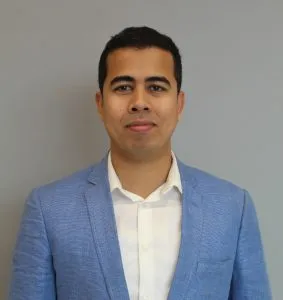
Based at the Texas State University Electrical Engineering department, Haque has been involved with planning panel discussions and focused session taking place during the two-day event.
“It’s not about a regular conference where students and faculties and industry folks come and present their research,” he told CHIIPs host Caroline Hayes. “It’s more about policy making. It’s more about discussing the present challenges and futuristic solutions and for the betterment of US and the for the betterment of the globe,” he added.
Another difference is that the organising committees have not restricted invitations to experts but have also invited students and post-doctorates and other faculty members, including 15 from his own lab. “I want to make sure that the language we will be using while discussing aspects of semiconductor industries, semiconductor supply chain resilience and so on [will be clear to students who] have been exposed to course work only or some lab activities,” he said.
He speaks from experience. Working at Intel, he said he would speak to his wife, an electrical engineer, about his day spent dealing with process-related challenges and she would not understand some of the terms used by engineers and technicans in the fab. This makes him determined that he and other panel members communicate in a way that students will comprehend and with which they will connect.
The focus of Microelectronics US is broader than other events in the US, he added. “They discuss things about that particular state, the status of the semiconductor innovation or the manufacturability, or [include] the companies or startups in that particular state only. But here we’ll be discussing about everything from US perspective, our national perspective, as well as perspectives from the globe . . . the partnership that could be made between US and Europe, the partnership that could be made between US and Asia like Taiwan, Singapore, India, Japan. So overall this discussion is a little bit local, but at the same time we got that global flavour.”
Ariful also discusses the engineering programmes in the US today. He is a core faculty member in the university’s Material Science, Engineering and Commercialization PhD programme where he is working on ultra-wide bandgap semiconductor development, today mostly working with diamond gallium oxide and aluminium nitride. “These are the futuristic semiconductors that will enable us to manufacture the type of devices that . . . can fulfill the need of the present era, not only in the power electronics segment. . . [but] also these devices can be utilised in places like nuclear facilities. . . space, space exploration, and any sort of extreme environment conditions.”
Registration is open now for Microelectronics US 2026