Blog
Overcoming the challenges of water quality measurement

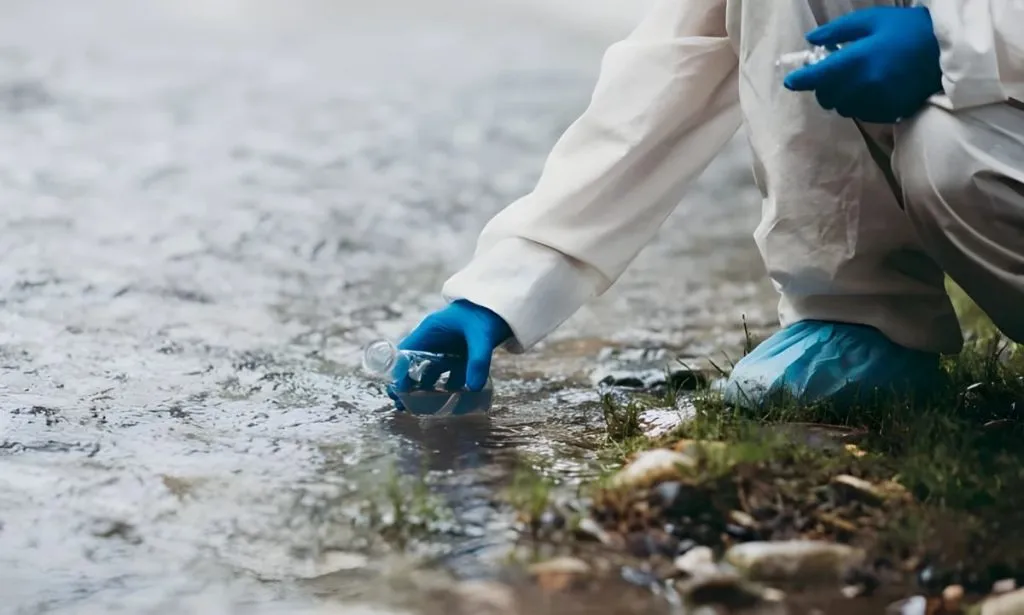
Measuring water quality in situ — directly at the source, be it a fast-flowing river, a tranquil lake or the shifting tides of the ocean — has long been a scientific and technical challenge. While laboratory analysis allows for precise testing under controlled conditions, in situ monitoring demands technology that can deliver reliable, real-time data in environments that are anything but controlled.
This is no small task. Variable temperature, pressure, salinity, turbidity and biological activity all influence water chemistry and can disrupt readings. Add to that the remoteness or inaccessibility of many aquatic environments and it becomes clear why the measurement of water quality remains one of the most demanding areas in environmental science.
To bridge this gap scientists and engineers are working to develop in situ sensor systems that can detect key parameters such as pH, dissolved oxygen, turbidity, nitrates, heavy metals and biological contaminants.
Variable conditions
One of the most persistent technical challenges in in situ measurement lies in the sheer variability of aquatic environments. In rivers rapid changes in flow and sediment load can alter readings and damage delicate sensor components. In lakes and reservoirs stratification — layering of water due to temperature differences —complicates the picture, requiring measurements at multiple depths to obtain conditions while maintaining calibration and sensitivity over time.
Another key difficulty is selectivity. Many conventional sensors rely on electrochemical principles, such as ion-selective electrodes or amperometric techniques, which can suffer from cross-sensitivity to other substances in the water. For instance, detecting low concentrations of nutrients such as phosphates or nitrates is critical in monitoring eutrophication, but sensors must distinguish these from similar ions or background noise.
Optical techniques such as fluorescence and absorbance spectroscopy have been deployed to improve selectivity. However, they can be sensitivite to turbidity or need precise alignment of optical paths — something not easily guaranteed in rough field conditions.
Despite these hurdles modern in situ sensor platforms increasingly incorporate multi-parametric systems — suites of sensors embedded in a single unit, capable of measuring a wide range of indicators simultaneously. These platforms, often integrated with autonomous buoys, drones, or underwater vehicles, can be deployed for weeks or months, transmitting data in real-time via satellite or cellular networks. Power efficiency, data processing and sensor miniaturisation have all improved significantly, enabling longer deployment times and greater data resolution.
Xenon
One important device used in water quality monitoring is xenon flashlamps. These are pulsed light sources that give an instantaneous high peak output. They and have many advantages over other light sources such as small size, low heat generation, easy handling and a continuous spectrum from UV to IR (160-7,500nm). They are filled with very pure xenon gas in a small enclosure that contains an anode and cathode. The broad spectrum of xenon flash lamps can be harnessed to measure phosphorus, total nitrogen and other chemicals by absorption and fluorescence spectroscopy.
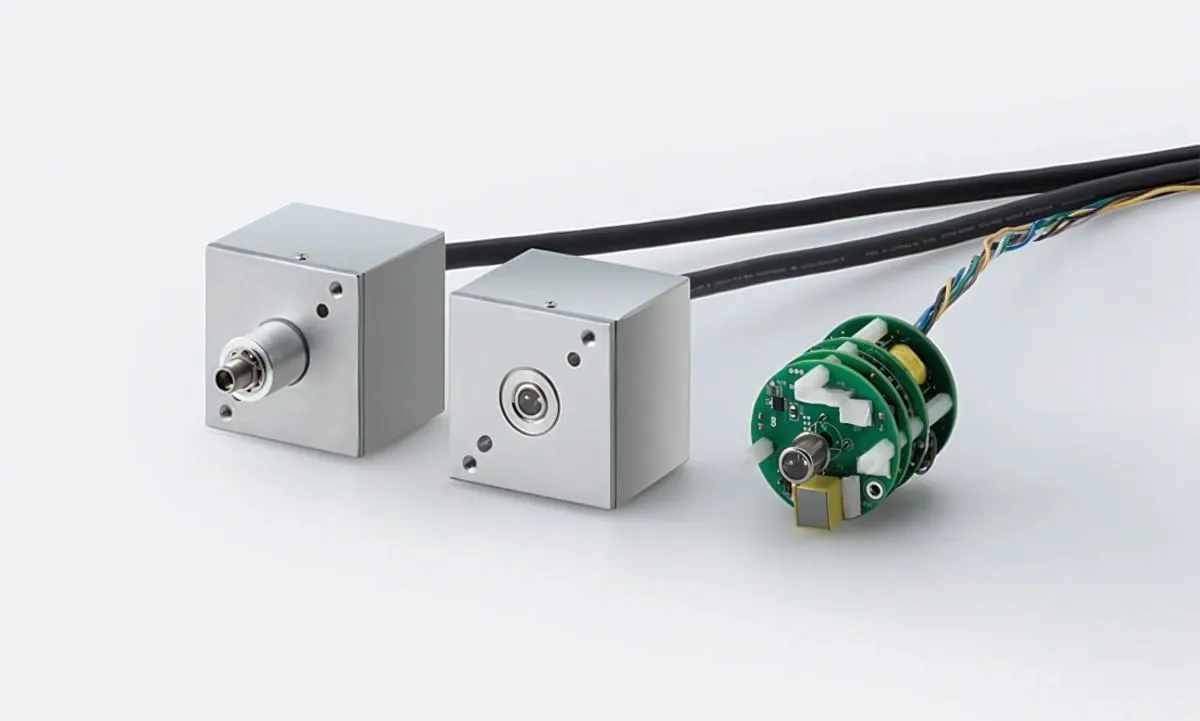 Xenon flashlamp module
Still, every sensor system has limitations. Electrochemical sensors, for example, often require regular calibration and maintenance due to drift. Optical systems can be fouled by microbial growth or particulates. Sensor lifespan, response time and accuracy are all dependent on deployment conditions. Moreover, translating raw sensor data into meaningful water quality indicators requires sophisticated models and validation.
Portability
Portability adds yet another layer of complexity. Field scientists and environmental engineers need instruments that are not only accurate and robust but also lightweight and easy to deploy. Handheld devices, portable colorimeters and miniaturised spectrometers have become increasingly popular in fieldwork, but striking the right balance between portability and performance remains elusive. Smaller systems tend to compromise on analytical power, while more sophisticated systems often require bulky peripherals or extensive setup.
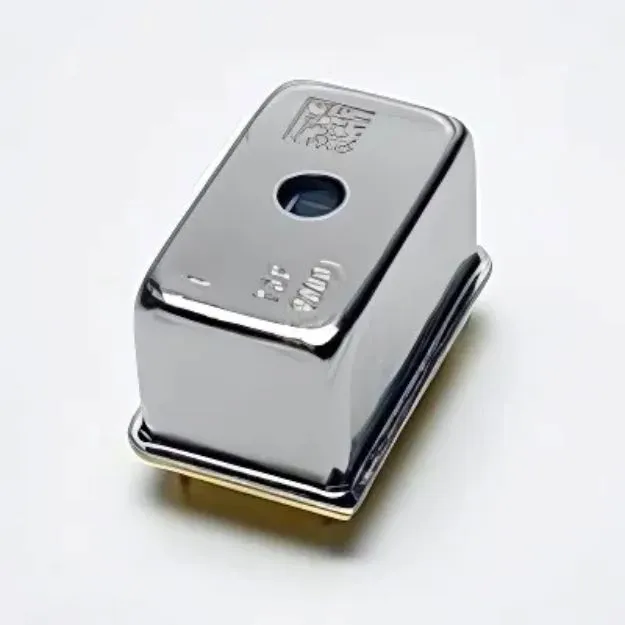 Hamamatsu mini spectrometer
The challenge of portability without sacrificing performance is a driving force behind sensor design. Photonic and optoelectronic solutions, particularly those based on advanced spectroscopy, aim to provide highly compact yet sensitive platforms for water quality analysis.
Portability is key for water monitoring devices. The micro-spectrometer’s compact size enables instruments to be customisable for the application rather than relying on a typical standard design. For example, a micro spectrometer can be mounted in a compact water quality monitor. The monitors would be installed in rivers, lakes or oceans, allowing inspection and analysis of many types of pollutants via absorption spectrophotometry.
The spectrometer separates UV light in the range of 190-440nm and measures the light intensity at each wavelength. This does not just identify individual pollutants in water, it also helps to determine their concentrations. The device is lightweight and highly sensitive, delivering accurate measurements with a spectral resolution of 8nm.
The micro spectrometer analyses in the UV, giving advantages over other analysis methods for example, being reagent-free and offers real-time measurements. It uses a low power CMOS image sensor, covering 300nm over the UV spectral region. With its low power consumption it can operate from battery power alone. It requires only 5V so can be powered with ordinary lithium batteries.
Looking to the future, techniques such as hyperspectral imaging, Raman spectroscopy and laser-induced fluorescence are already being adapted for aquatic environments.
Quantum-enhanced sensors
Hyperspectral systems, for instance, can identify specific algal blooms or organic pollutants based on their spectral signatures, providing a powerful tool for early warning systems. Perhaps the most exciting frontier is the application of quantum imaging technologies. Quantum-enhanced sensors, leveraging the unique properties of entangled photons and quantum correlations, promise to revolutionise the sensitivity and resolution of environmental measurements.
These systems could detect trace pollutants at parts-per-trillion levels or image chemical distributions in situ with extraordinary precision, even in low-light or high-scatter environments. Early results suggest they could dramatically outperform current methods in both accuracy and versatility. Work in low-noise photon detection, high-speed optical sampling and integrated photonic circuits is already feeding into collaborative projects aimed at creating quantum-ready environmental monitoring platforms.
The convergence of photonics, quantum science and environmental engineering holds the promise of real-time, highly resolved water quality data on a global scale. Ultimately, as demands on water resources intensify and environmental regulations tighten, the need for accurate, real-time, and in situ monitoring will only grow. The technical challenges are considerable, but so too are the rewards.
By harnessing the power of light — from conventional optics to quantum imaging — we are moving ever closer to the goal of seeing clearly beneath the surface.
See: Transdeptor enables long-range transmission of depth measurement