Blog
Intel “Wildcat Lake” Is Official: Up to 6 CPU Cores and 2 Xe3 Cores

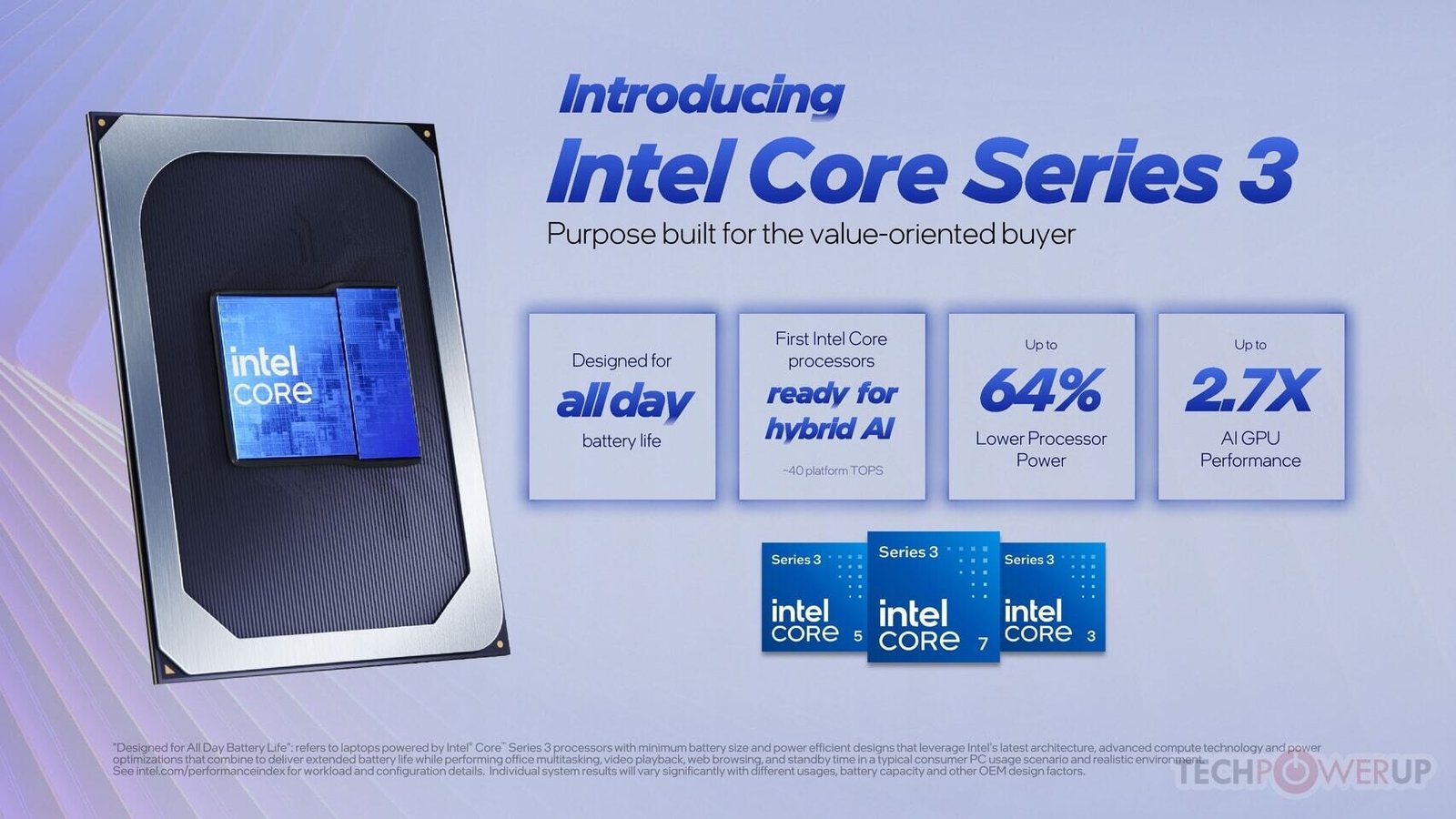
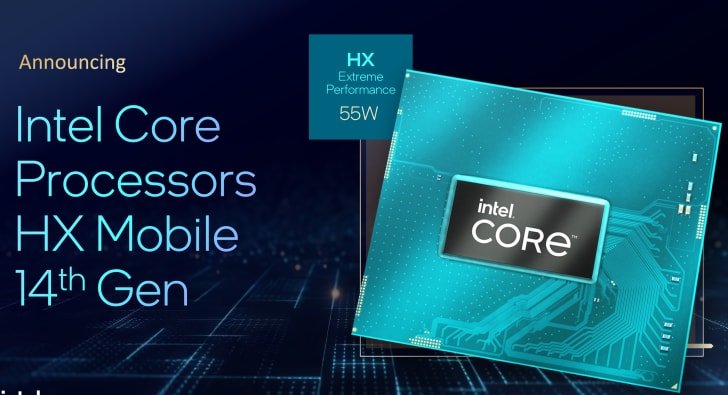
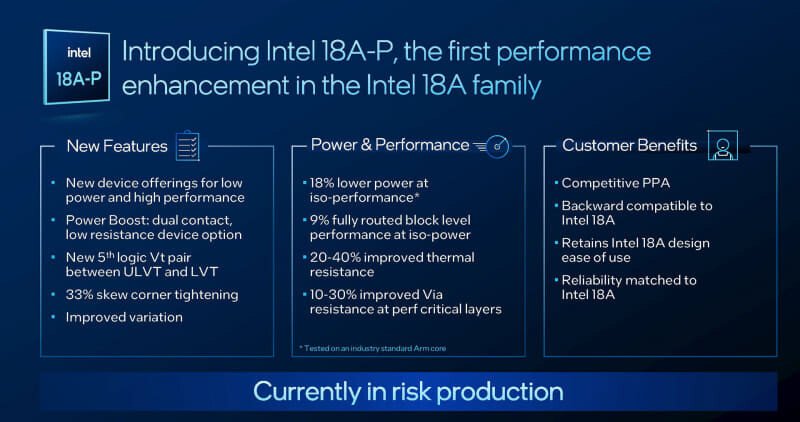
The actual SoC package integrates two dies. The first and most important one, built on the 18A internal Intel node, features a 6-core CPU configuration, NPU 5 with 40 TOPS of INT8 data, Xe display and media engine, and a GPU that includes up to two Xe3 cores. This die also contains the memory controller and cache pool, supporting LPDDR5X memory running at 7,467 MT/s or up to 6,400 MT/s for DDR5. The memory-side cache includes 4 MB to help tasks “buffer” into this cache before and after accessing memory. Intel dedicates the second die to I/O handling, as the platform supports 6 PCIe Gen 4 lanes, two Thunderbolt 4 connections, two USB 3.2 connectors, and up to eight USB 2.0 connectors. For Wi-Fi, there is the Wi-Fi 7 standard, and Intel also includes Bluetooth 6.0.
Intel compares this “Wildcat Lake” launch with two of its own CPUs that are very common: the Intel Core 7 150U “Raptor Lake-U” and Core i7-1185G7 “Tiger Lake” designs, which are several years old. For the entry-level segment that Intel aims to please, the performance jump between these generations is considerable, as there have been many architectural and manufacturing improvements over the years, driving efficiency and performance to new heights. Intel promises around 18.5 hours of Netflix streaming, 12.5 hours of office productivity, and about 9.6 hours of Zoom calls with AI effects.This is a direct challenge to Apple’s recent MacBook Neo success, especially since this segment is easily disrupted by new technologies. We expect to see more than 70 designs from ecosystem partners, including Acer, ASUS, Colorful, Dell, Haier, Hasee, Honor, HP, Infinix, Lenovo, Xiaomi, MSI, Positivo, Samsung, Tecno, Wiko, and Mechrevo.

If Intel and its OEM partners can offer good pricing with decent RAM and SSD configurations for “Wildcat Lake,” we should see significant pressure on all players in the entry-level segment. Especially with Apple now offering a $599 MacBook Neo, the competitive landscape is changing—and quickly. For those seeking a more powerful laptop, Intel highlights “Panther Lake,” which uses the same 18A node and efficiency.