Blog
Destination Austin – Microelectronics US focuses on industry supply chain

For some, Austin is known as the Silicon Hills. The capitol city is close to Texas State University and home to many technology companies and is about 45 minutes’ drive from Bastrop, the site of Elon Musk’s X and Boring Company’s HQ.
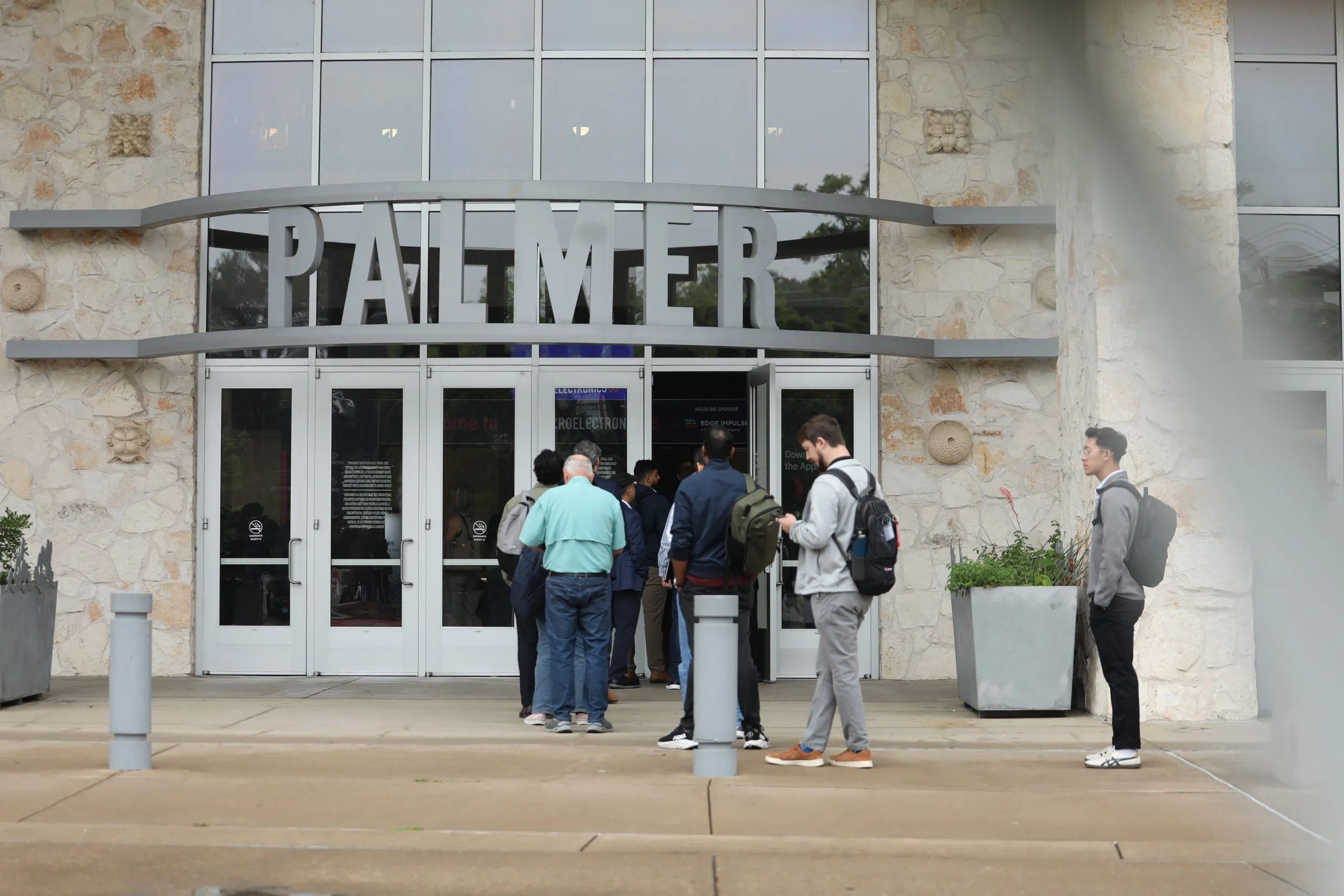
It was also the venue for the inaugural Microelectronics US, a conference for the entire semiconductor supply chain, encompassing embedded, photonics and semiconductor companies exhibiting and presenting research and panel discussions as well as a platform for academia and startups across these three sectors.
Among the panel discussions, a common theme was the future workforce, how to identify gaps in the industry and how to engage and encourage students to select appropriate courses and also how companies can nuture talent organically. Speakers from universities including Hardward, Texas Institute of Electronics and TSU, and companies such as AMD and Motorola Solutions, shared some of their research about how to engage students and entry-level employees
There were many presentations about the Chips Act funding and how it is being used, particularly for new and emerging areas, such as integrating AI into the design cycle and tools.
The Embedded stage in particular focused on presentations about integrating AI into the design flow, for efficient testing and debugging and Electronics Weekly’s editor, Caroline Hayes, moderated a panel discussion on the use of AI/ML in automotive applications with Sean Murphy (MIPS), Matt Pollock (AWS) and Ahsan Qamar (Ford). The four panellists observed how AI/ML is being used in autonomous vehicles, bringing together insights from different perspectives for developers working with the cloud, in-vehicle systems and the embedded systems that need to build, test and manage increasing amounts of data on a mission-critical basis.
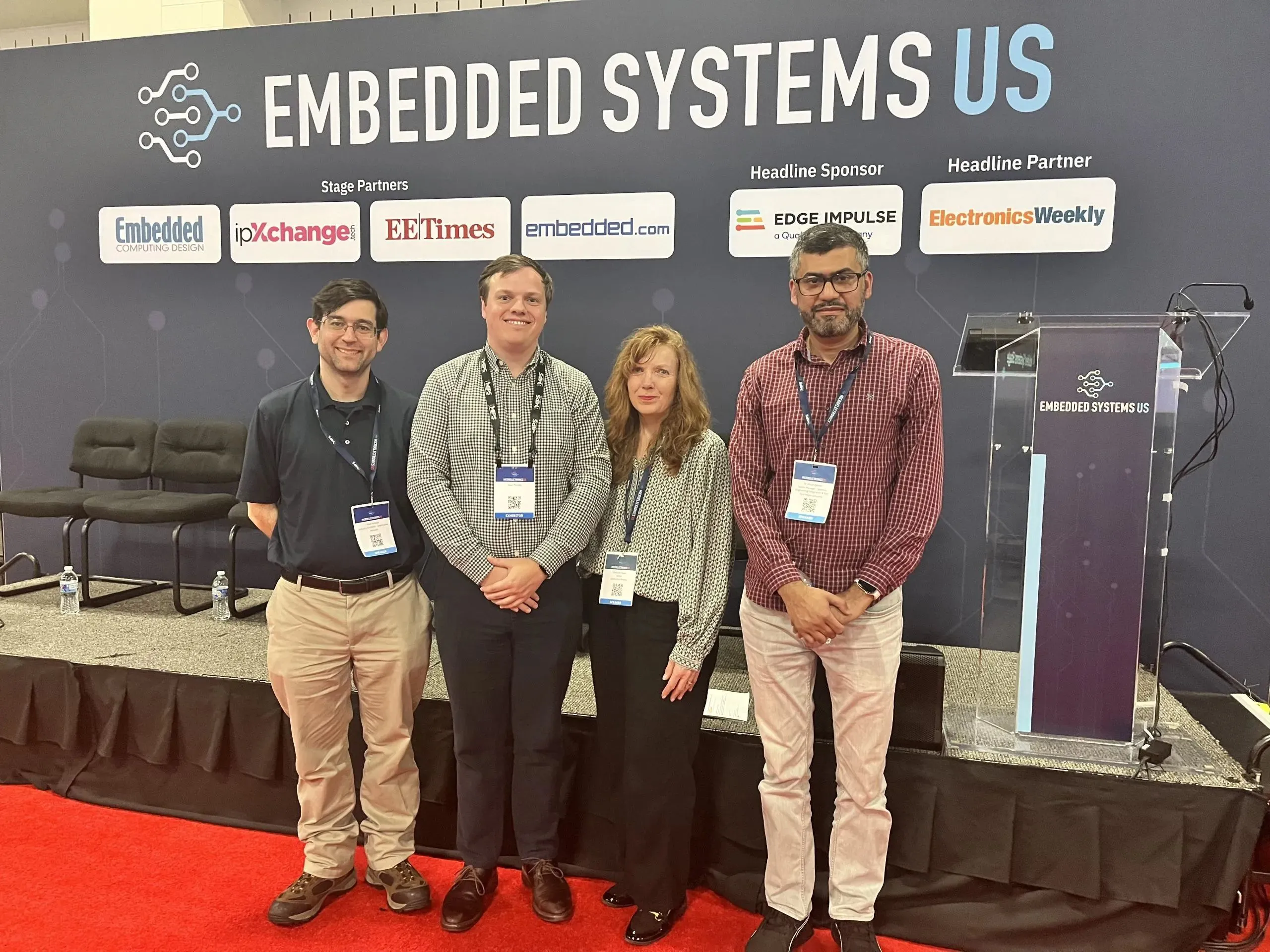
Automotive Applications for Embedded AI/ML panel: (L-R: Matt Pollock, Sean Murphy, Caroline Hayes, Ahsan Qamar)
On the photonics stage, there was a lot of activity for experienced electronics engineers as well as those starting out. There were practical presentations, such as Manimozhi Sekar’s Why testing light is hard: real-world challenges in silicon photonics vs electronics (pictured), there were also presentations discussing materials innovation, architectures for quantum photonics and macrotrends around investing in photonics.
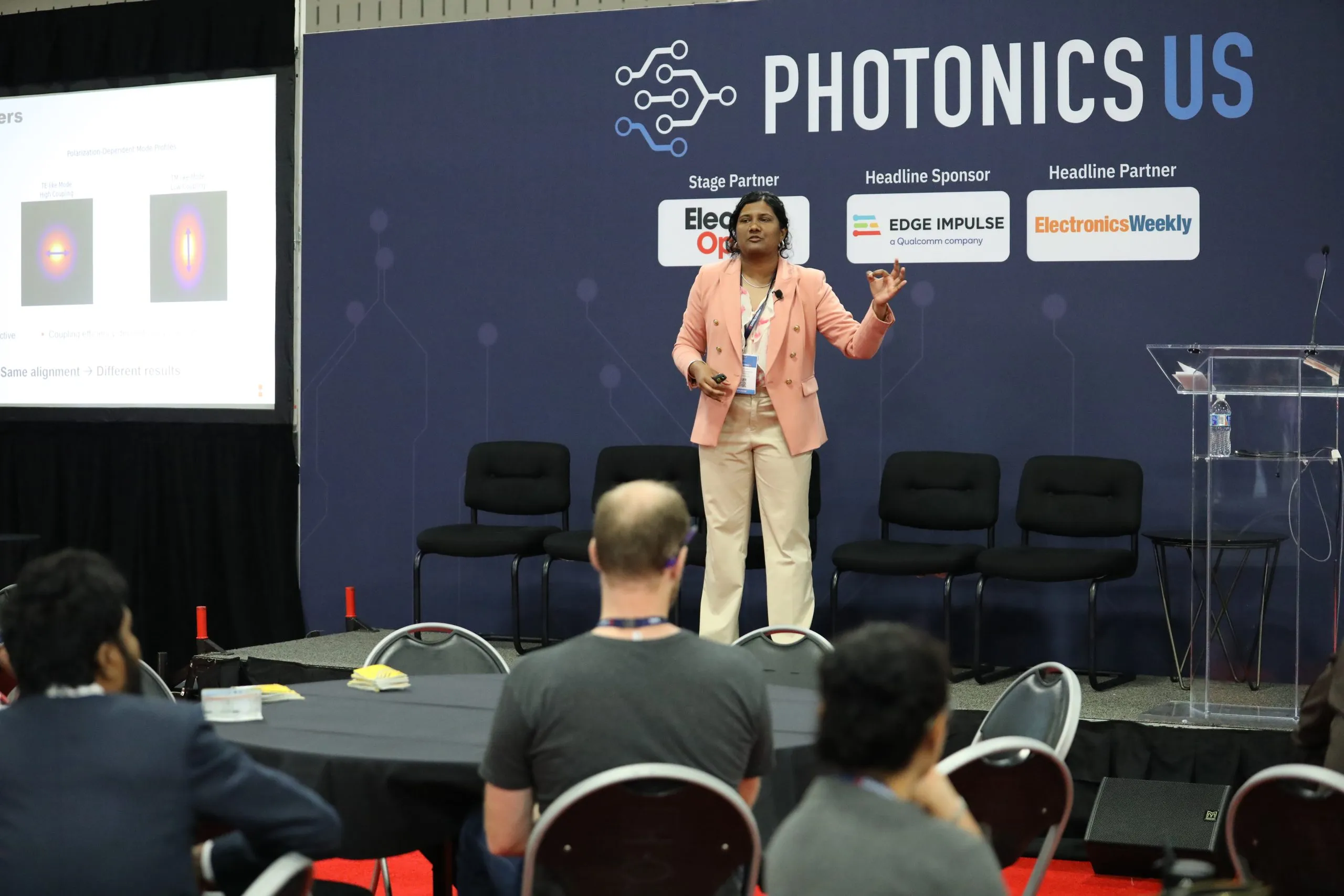
Manimozhi Sekar, Sr engineer – silicon photonics, Global Foundries
This was also the area which held the Photonics Startup Foundry on the first day on the event, where some interesting companies and fresh ideas presented. On the second day, it was the venue for two Talent Foundry sets, where speakers from large organisations, such as Microsoft and NIST presented.
Around the presentations and keynotes, there was the exhibition space, which reflected the main themes of Microelectronics US 2026, with exhibitors from embedded developers, asic and FPGA companies, packaging companies, photonics suppliers, thermal management and metrology specialists as well as some interesting software companies presenting software tools and libraries. There were also some interesting collaborative booths with startups and incubator hubs joining forces to support young companies with advice and the facility support of established companies.
Over two days, the Palmer Events Center showcased some of the ideas and innovations from across the industry, with an emphasis on what lies ahead for those currently working in the industry and those looking to become a part of it as it continually evolves.
Read some news stories from Microelectronics US 2026:
AI accelerates simulation and data collection in development system