Blog
: Designing and Testing a Home Energy Management System (HEMS)

This regenerative capability saves energy during testing and ensures the simulator behaves like an actual grid, with realistic impedance characteristics and grid disturbances. It’s essential for both functional testing and certification testing.
The testbed also simulates the home and all its energy resources:
- AC home load: Represents electricity consumed by loads like appliances, lighting, and HVAC systems.
- EV interface: For bidirectional HEMS, this includes an EV emulator and a battery simulator to support both charging and discharging the EV. When an EV discharges its battery and supplies that power back into the home, this is called vehicle-to-grid (V2G) testing.
- Wind input simulation: Typically provided through a DC source, because the output of a wind turbine is typically DC before it enters the inverter.
- Home battery simulator: Represents stationary home battery storage systems such as the Tesla Powerwall, the LG Energy Solutions RESU series, the Panasonic EVERVOLT Home Battery, and the Generac PWRcell.
- PV simulator: Emulates solar-panel behavior DC output as an input to the inverter.
All components are coordinated by PC-based control and measurement software, supplying overall system management, communication, and safety oversight.
Types of HEMS Testing
A comprehensive HEMS test program typically includes four major categories of testing:
1. Basic engineering (Bench) testing
- Early-stage testing where engineers probe inverter circuitry, measure waveforms, verify expected signals, and confirm proper electrical behavior.
2. Design validation testing
- System-level functional testing to confirm performance against design specifications — for example, verifying efficiency targets or ensuring the inverter shuts down properly under emergency or fault conditions.
3. Cybersecurity testing
- Required for any device connected to the grid. Systems must demonstrate robust protection against communication and control vulnerabilities.
4. Grid interconnection (certification) testing
- The most stringent category, following standardized test methods mandated for DER certification. Certification must be conducted by an NRTL (Nationally Recognized Testing Laboratory) such as TÜV, DEKRA, UL, CSA, or Intertek.
- HEMS manufacturers need to submit their product for formal evaluation and certification. These processes are costly, so passing the first attempt is important. Alternatively, before sending the HEMS to an NRTL, manufacturers can choose to perform pre-compliance testing in-house using their own in-house HEMS testbed.
- Even if the in-house testbed can’t cover 100% of the full certification testing, passing this pre-certification helps to ensure that the HEMS, as a DER, is highly likely to pass formal certification the first time, avoiding repeated and expensive submissions.
Where Do Battery Energy Storage Systems Fit into the Picture?
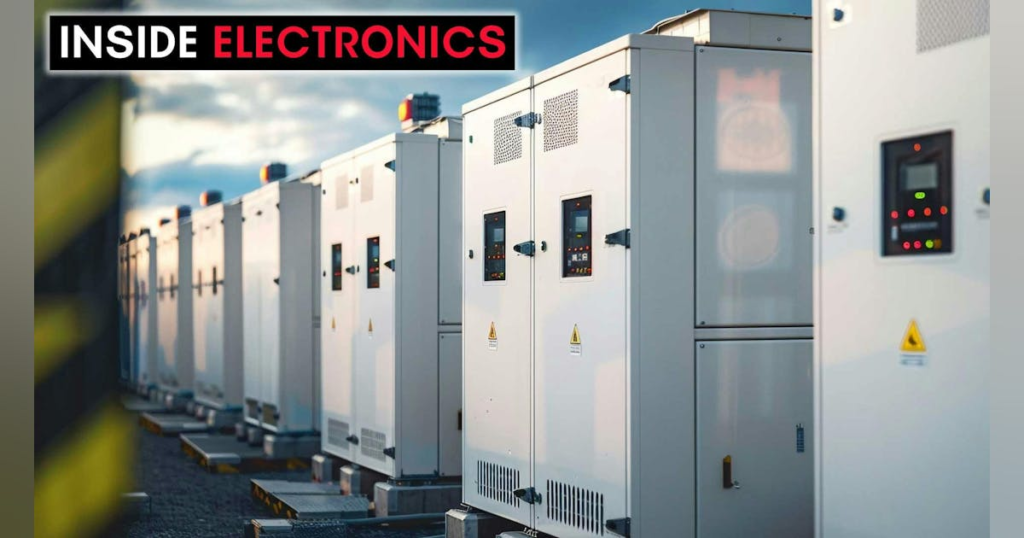
A battery energy storage system (BESS) is actually very similar to a HEMS. After all, one function of a HEMS is to provide a battery-backup capability to the home. A BESS operates much like a large-scale UPS for a home or building, or even an entire neighborhood in rare cases. The following are the functions of a typical BESS:
- Contains a large battery bank
- May include optional wind or solar inputs
- Charges from the grid
- Supplies AC to residential, commercial, or industrial loads
- Can supply DC to applications such as data centers
- Maintains building operation during outages, effectively forming a microgrid
If power flows only from the grid into the BESS, it’s not classified as a DER. No certification is required. But if it operates bidirectionally, exporting power back to the grid, it must undergo DER certification just like a HEMS.
Utility-scale BESS systems — those owned and operated directly by the grid — are treated differently. These very large systems don’t go through DER certification; they follow separate grid-operator requirements.
Engineering a More Intelligent Electric Grid
Growing global energy demand is driving transformation across the grid. DERs are essential to supporting this transition, and the HEMS is a key category of DER. Grid-interconnection testing involves stringent, standards-based methods to achieve certification. Beyond certification, a HEMS testbed must support:
- Functional testing
- Performance and design-validation testing
- Cybersecurity testing
- Pre-compliance and certification-preparation testing
Doing this requires a sophisticated test environment capable of simulating the grid, the loads within the home, and everything in between. These can include renewable energy sources (such as solar, wind, and more), power converters (such as EV chargers), and battery storage systems.
Similarly, BESS and microgrid systems require comparable testing architectures. As distributed resources continue to scale, these test capabilities become increasingly critical to ensuring safe, reliable, and compliant integration with the evolving smart grid.