Blog
Bourns Introduces High-Current Chip Ferrite Beads for High-Density Power

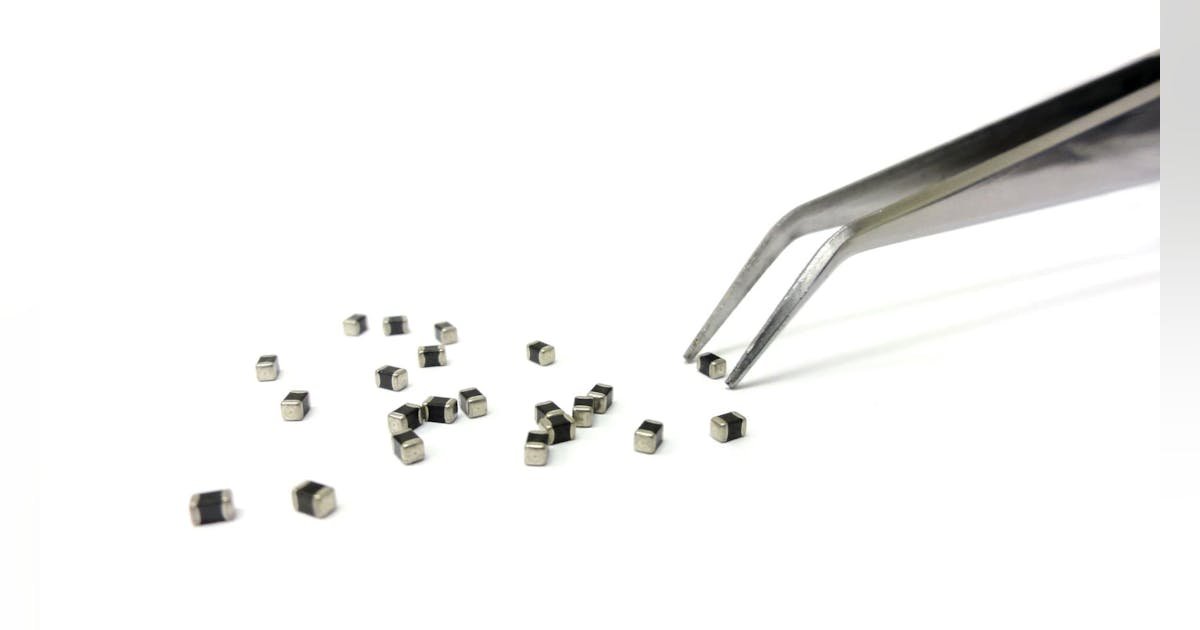
The ferrite beads feature impedances ranging from 30 to 1,000 Ω at 100 MHz, giving engineers the flexibility to filter different EMI frequencies and meet a wide range of noise-suppression requirements for power-delivery designs. For instance, power beads with lower impedance and higher currents can be used for main power rails where voltage droop must be limited. Those with higher impedance and lower current are suited for secondary supplies and local power domains feeding single ICs or small groups of loads.
The bead-shaped devices are well-positioned for tightly packed boards since they come in compact 3.2- × 1.6- × 1.1-mm packages. Ferrite beads are typically placed in series with the power-supply rail; they’re also often paired with decoupling capacitors on the load side and, if necessary, the source side. The capacitors — both connected to ground — combine with the power bead to form a simple but effective LC filter that further rejects differential‑mode noise on the power-supply line.
The series comes with a wide operating temperature range of −55 to +125°C, including the heat it generates itself, which is important when placing the beads close to hot power components such as MOSFETs, controllers, or rectifiers.
The devices are designed for EMI reduction on high-current power rails and power-distribution networks handling high currents in a severely limited space. Power beads in this class are often used to decouple high‑frequency switching noise in point-of-load (POL) converters located close to analog front ends (AFEs) or timing components, positioned directly on DC power rails feeding processors or other ICs, and placed in high‑density DC‑DC converter modules on server and telecom boards.
The MH3261T can also be used for local filtering in the power-distribution paths of industrial controllers, motor drives, and sensor interfaces. In consumer electronics, it’s suited for high-density PCB designs where switching converters compete for limited space while sharing the same power-supply rails. Its wide operating temperature range is a boon for industrial applications, which are often exposed to harsh ambient temperatures as well as heat caused by varying load conditions.
Bourns said the beads should be placed as close as practical to the switching converter or other noise source, or the input of the circuit that needs the noise suppression, while keeping the PCB traces short and wide to reduce parasitic inductance and resistance.