Blog
Inside Fishtown Urby’s Community-First Design

For most young professionals, the prospect of renting a decently sized apartment in the center of a major U.S. metropolis like New York, Denver, or Miami can seem impossible. The cost of living in highly desirable urban centers has far outpaced overall salary increases. Urby is seeking to rectify this widespread dilemma and flip the script on what urban living looks like.
Launched in 2010 by seasoned developer David Barry, the chain has expanded into secondary and tertiary markets near these major urban cores, with suitable transportation links. Though the units are smaller, the emphasis is placed on the communal spaces.
Photography by Robert Tsai; courtesy of Urby and Concrete Amsterdam
“Apartment living in the United States has become especially transitory and sterile,” Barry says. “My goal has always been to create a more human experience and better facilitate social interaction.”
In locations like Staten Island, Jersey City, and Washington, D.C., these complexes have emerged as alternatives—fully amenitized, condensed communities, but not hermetically sealed enclaves. Rather, they’ve been successfully implemented to open up and embrace their surroundings. Innovative, concept-oriented Dutch architecture firm Concrete Amsterdam has been involved since day one.
Photography by Robert Tsai; courtesy of Urby and Concrete Amsterdam
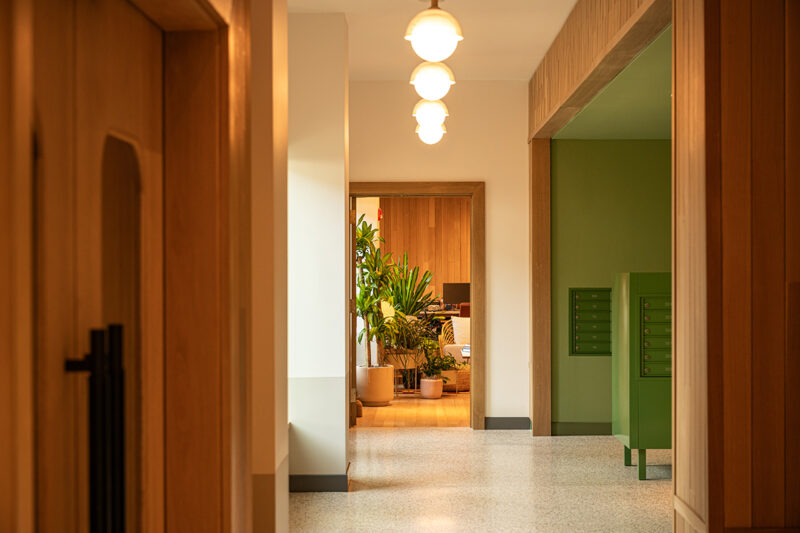
The company has been instrumental in defining smart layouts and finishing options for the compact, flexible studio to three-bedroom residences, as evidenced in Urby’s latest property in Philadelphia’s Fishtown neighborhood. Beta-tested in a factory before being introduced at scale, these units were designed to more closely align with the needs of Millennial and Gen-Z renters. The kitchens are galley-style but feature all of the essential top-line appliances. Large enough to accommodate queen-size mattresses and a dresser, bedrooms are separated in the layout so roommates have privacy.
Photography by Robert Tsai; courtesy of Urby and Concrete Amsterdam
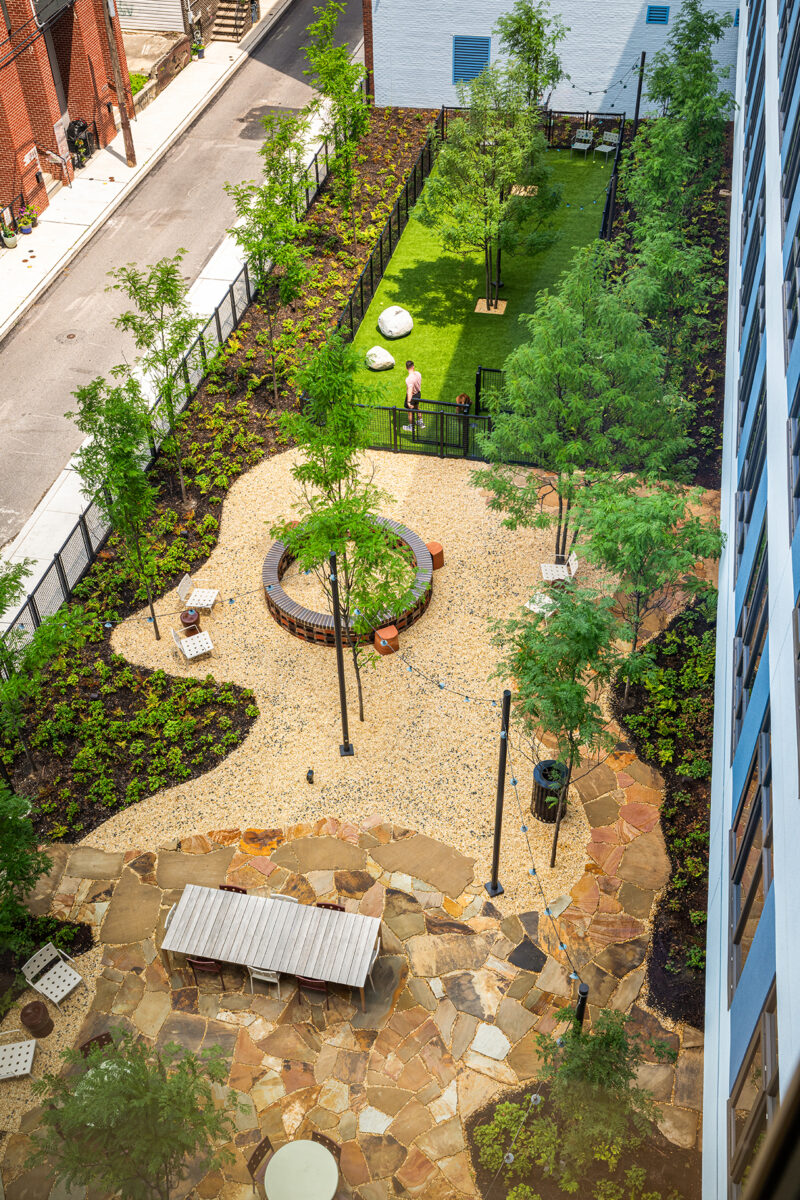
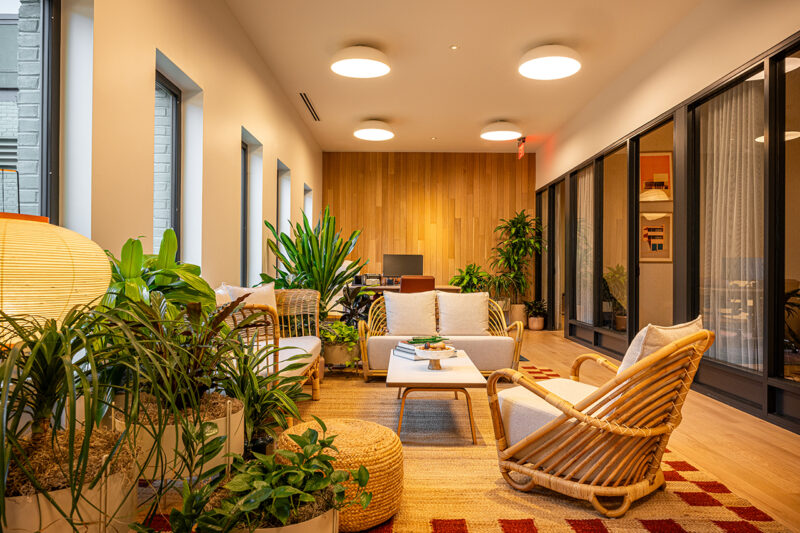
Concrete Amsterdam has also been a crucial partner in shaping the program and design of shared spaces at each location, which include everything from a multifunctional work-from-home lounge that moonlights as a party room to an onsite hotel-style lobby restaurant, a fitness center, outdoor patios, and even a dog park.
After 15 years of collaboration, Fishtown Urby represents how the two companies have developed a distinctive yet refined approach through trial and error. “You’re always balancing your own experience with how trends are shifting,” says Barry. One such tendency that has emerged in the past few years is the ability to seamlessly move between social and fitness spaces.
Photography by Robert Tsai; courtesy of Urby and Concrete Amsterdam
At Fishtown Urby, a larger-than-average gym sits on the ground floor. It connects directly to a large backyard barbecue area and dog park. Nearby, a well-lit living room features soundproof office pods and banquette seating. The lobby is preceded by a semi-enclosed entrance courtyard designed with native plants by Belgian landscape architect Bas Smets. Percy, a retro-style cafe serving regional staples, also opens into this calm green space.
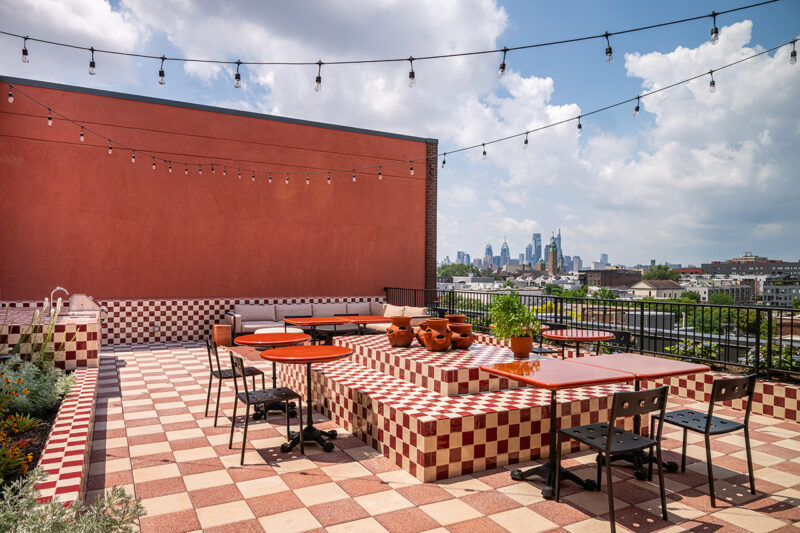
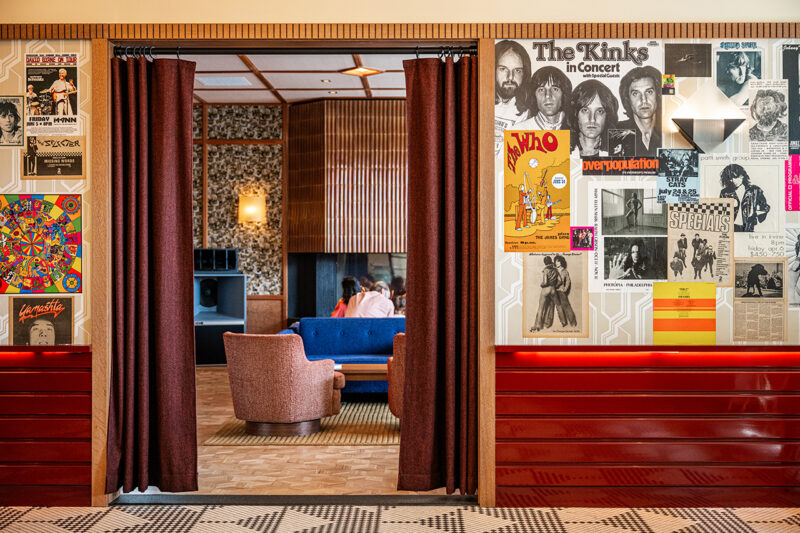
On the top floor, a hidden door leads into a purple-clad disco-style speakeasy with a picture window perfectly framing the Downtown Philly skyline. The rooftop patio serves as yet another gathering space; the strategically introduced cutaways help bring down the sheer scale of the block-wide, all-brick building, better aligning it with the proportion of the repurposed industrial structures and rowhomes in its vicinity.
Photography by Robert Tsai; courtesy of Urby and Concrete Amsterdam
“Every architectural detail here is designed to enhance daily living, from the robust brick envelope to the smartly positioned transom windows that balance privacy with daylight,” says Erikjan Vermeulen, partner at Concrete Amsterdam. “It’s about creating spaces that are not only beautiful, but genuinely functional for urban life.”
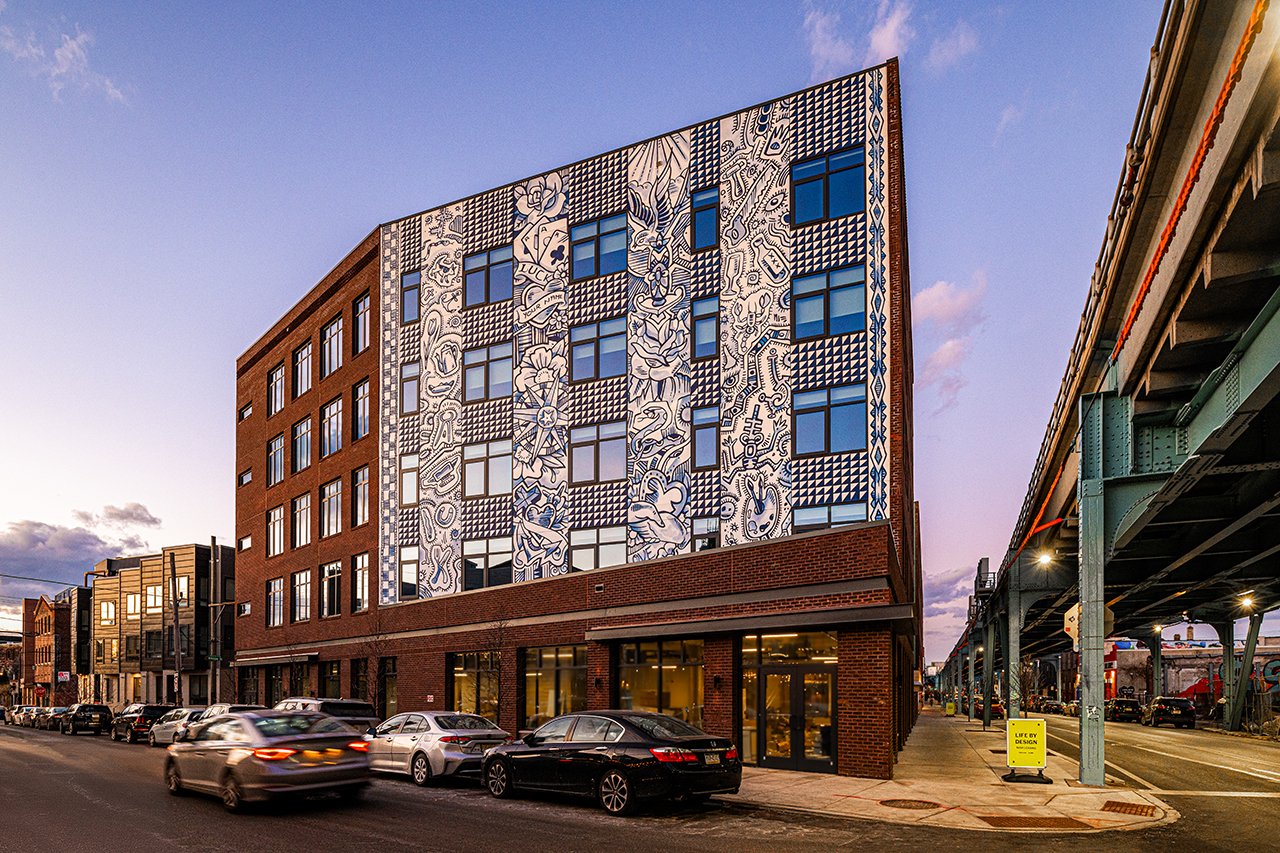
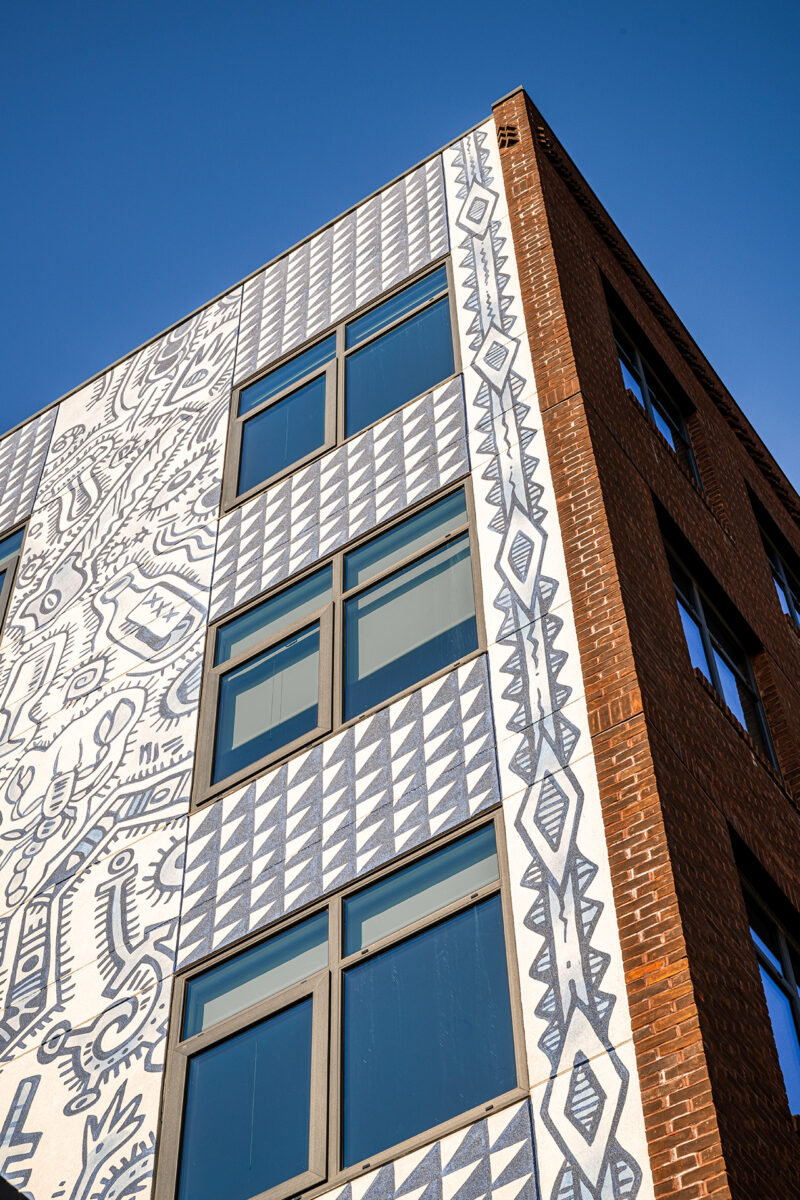
The most critical factor, Urby and Concrete’s key strategy across the chain, has always been to carefully introduce site-responsive elements that are functional, aesthetic, and allow the buildings to blend into the neighborhood. In Fishtown, the structure is emblazoned with a distinctive mural that honors the area’s industrial and creative heritage as well as the Dutch heritage of its maker, noted tattoo artist Henk Schiffmacher.
Photography by Robert Tsai; courtesy of Urby and Concrete Amsterdam
True to form when considering the particular strain of ironic irreverence that has defined Dutch design over the past few decades, Schiffmacher collaborated with Royal Delft, the renowned ceramic producer, on a series of Delft Blue plates. The traditional painted pottery features playful, tattoo-inspired patterns and imagery, including dragons, crying hearts, swallows, sailors, and clipper ships.
One of many in Fishtown, the mural also recalls the age-old tradition, developed by Dutch craftspeople in the 16th and 17th centuries, to imitate Chinese painted porcelain, which was hard to find at the time. Adding to the complex of cultural references embedded in the work, Schiffmacher also drew inspiration from the sacred songline motifs used by Aboriginal Australians as a form of wayfinding. Here, this type of pattern, introduced between the transom windows, is also chosen to honor the local indigenous Lenape people, who used beadwork as a means of communication.
Photography by Robert Tsai; courtesy of Urby and Concrete Amsterdam
The rest of the layered imagery nods to the more recent past and present of the location: tools used in the seafood industry that once thrived and the supplies of many of the artists that now live here. The blue-on-white paint scheme is what brings everything together.
Rather than functioning as a standalone apartment block, Fishtown Urby uses architecture, interiors, and public art alike to weave itself into the neighborhood it now calls home.
Photography by Robert Tsai; courtesy of Urby and Concrete Amsterdam