Blog
David Miall, National Oceanography Centre – EW BrightSparks

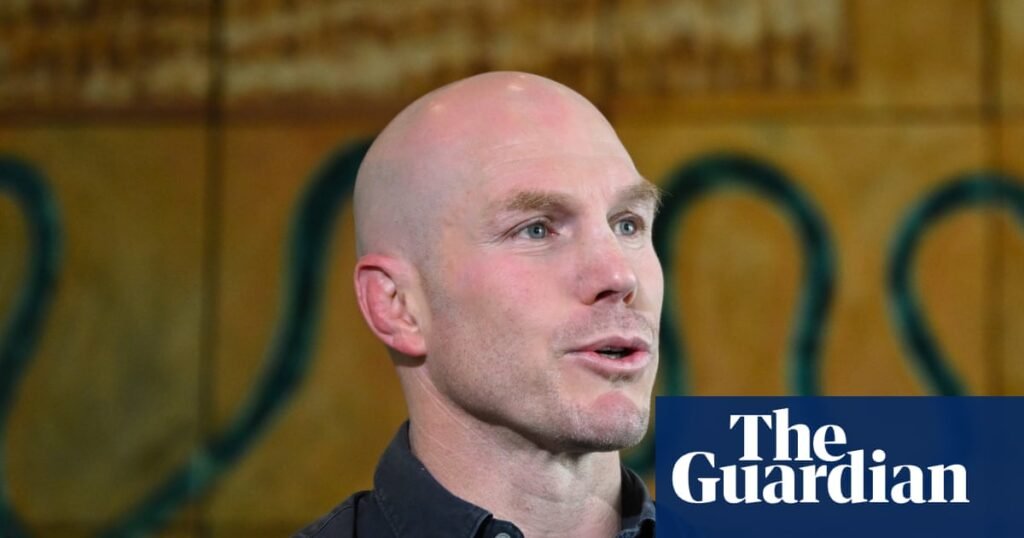
For the next in our series on the latest EW BrightSparks of 2025, we profile David Miall, an Electronics Engineer at the UK’s National Oceanography Centre (NOC). He is also a former UKESF (UK Electronics Skills Foundation) scholar.
Achievements
David was nominated by his manager who told us how important David has been as part of the electronics and software team.
David joined the National Oceanography Centre (NOC) in September 2023, having graduated from the University of York with a 1st in Electronic Engineering. And he has been strongly contributing to the development of our environmental sensing devices since then, we learned.
Shortly after joining, for example, David joined the multi-institution MISSION project. This is funded by the EPSRC (Engineering and Physical Sciences Research Council) to produce a prototype greenhouse-gas sensor using a mid-IR absorption spectrometer with a silicon-photonic sensing chip.
His manager writes:
“His involvement in this project initially involved designing a DSP-based modulating laser-driver for the tunable diode-laser; this required him to combine precision analogue techniques, moderate-speed digital design, and high-performance embedded software to produce the modulated current waveforms for the laser, demodulator control signals, and temperature control.”
“As he took more ownership of the work-package, he moved to primary Electronic Engineer on the project and has presented and explained his work to nationally-recognised silicon-photonics experts, has represented the position of the NOC on the overall project direction at several national meetings of the project partners, and collaborates with the scientists in Southampton on a day-to-day basis.”
We also heard David has been investigating encapsulation for the envisaged combined optoelectronic sensing device. That is, considering the mid-IR properties of different polymers as well as how they should behave under pressure to provide protection to the device whilst still allowing adequate light transmission.
To properly contribute, his nominator told us, David had to learn the fundamentals of silicon-photonics and optoelectronics, a challenging task at which he really succeeded.
David has also been contributing to the TRIDENT project, we learnt. This was co-designing, and developing the electronics for, a sediment sensor to measure sediment falling out of the water-column from simulated deep-sea mining. The aim is for researchers to gain a better understanding of the effects of deep-sea mining on the environment on the sea floor around the site.
So, the initial requirement was to be able to sense a layer of sediment up-to 10mm thick. And a standard optical-reflectance type device was initially proposed by the lead researcher. It was found, however, that the sensitivity to thick layers was limited, and it would be difficult to reach 10mm, so another technique was required.
“David proposed that electrical impedance could be used for thicker layers and so devised a novel sensing element allowing both optical and electrical measurements of the same area using patterned conductive glass.”
More recently, he has been working with NOC scientists to optimise the electrical sensing element through experimental lab work. Basically, optimising the production process to leave the glass clearer and produce higher-quality electrodes (moving from a chemical etch to a dry laser process).
For this, David developed a prototype for a 3-wavelength reflectance measurement plate to sit below the glass and give precision measurements of the reflectance in 4 quarters of a sediment plate, allowing the project-lead to produce a demonstration device and investigate encapsulation techniques with glass.
Finally, another quality highlighted by David’s nominator was his willingness to help when problems come through the door.
One example involved a pair of camera systems, which was designed by another group and a consultant to capture falling particles (marine snow) in the Labrador Sea. With just a few weeks before the ship was to sail, the systems didn’t work. David fixed the initial problem and allowed the camera to trigger then analysed the system’s power-consumption to double-check that it would meet the requirements. He found it to fall far short.
“After thoroughly checking his analysis he presented, with support from a Senior colleague, the project’s lead scientists with the results and potential options.”
He explained simply what would be achievable in the remaining time and the decision was taken to rebuild the device with the NOC’s standard electronics stack and a few new commercial components.
“With strong effort this produced devices which far exceeded the requirements in time to be deployed in the Labrador Sea.”
Community
In terms of STEM and community outreach work, we also learnt that David is highly involved in the engineering and NOC community in a variety of ways. He has been actively participating in STEM outreach and professional bodies as well as engaging community structures at the NOC.
He is, for example, the Events Organiser for the IET Solent Local Network. Here, he co-ordinates the running of talks and various other events for the membership as well as Local Network outreach events. These include the IET presence at the Isle of Wight science festival.
David is also a former UKESF scholar, through which he has been a mentor multiple times. His mentee for the last year was working for his sponsor company, which is geographically close to the NOC.
As well as visiting the company, David organised a tour of the NOC for the mentee and colleagues to give them a good view of the sensors and the autonomous underwater vehicles developed at the Oceanography Centre. And also give the mentee a look into a lesser-known area of electronics for research.
Also, last summer, he represented the NOC at the Wellington Trust’s Future Maritime Engineers Day, his manager shared. This saw him go to the former HMS Wellington on the Thames to present the engineering work of the NOC. This involved the sensors that David’s group develops in particular, but also the marine robotics work and research ships. He was presenting to groups of 6th-form students interested in Marine Engineering.
Additionally, in 2024, David went to the Isle of Wight Science Festival. He was representing the IET in the morning for the main Science Festival. This involved interactive demonstrations of fruit and vegetable batteries and IR communications. And then, in the afternoon, he was representing the NOC for the careers part of the event. This was discussing STEM careers for five minutes with different groups of year 10 and 12 students.
In 2025 he was again going to the Isle of Wight to represent the NOC for both sessions. For this, he worked with the NOC’s scientists and our outreach team to design a new interactive stand to help represent the full spectrum of the organisation’s research and development activity, as well as the available career options.
And he also represented the NOC’s at the University of Southampton Engineering Day, in 2025, contributing to the MISSION research project’s stand, we learned.
“For this he designed demonstrators of the environmental gas sensor (an absorption demonstration with LEDs, ‘gas cell’, and a fog-machine) and medical sensor the project looks to produce as well as presenting to the public about the project, engaging with hundreds of children and adults about uses of Silicon Photonics.”
Finally, for the most recent NOC open day, he has co-ordinated the MISSION-project’s stand. This involved creating a marine-focused version of the stand which worked well at the University Engineering day. For example, helping explain how photonics and opto-electronic sensing can help monitor the marine environment to the 1900 attendees.
Congratulations to David Miall!