Blog
Optical Circuit Switching for AI Data Centers

As efficiency improves, the key questions become:
- How large can a switching domain realistically become?
- How quickly can connectivity adapt to workload placement?
- How many network tiers are truly necessary?
- How much power can be removed from packet-processing layers that no longer need to exist?
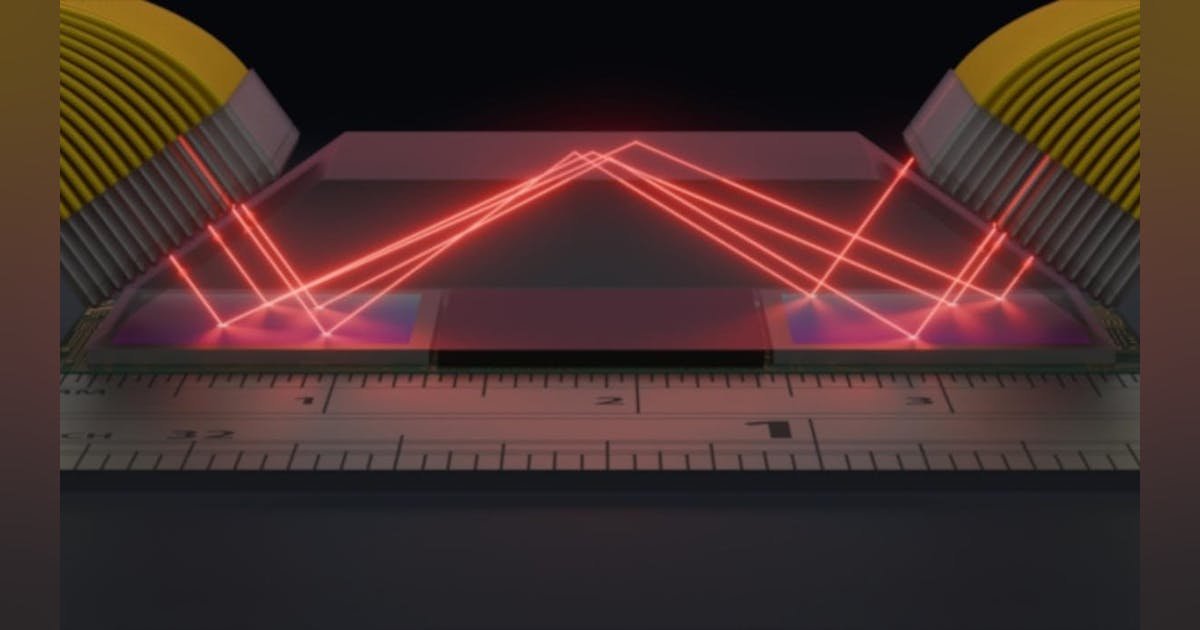
Solid-state programmable optics, particularly approaches based on metasurface beamsteering, begin to address these questions directly. With no moving parts and electronic control of optical paths, they offer better reliability and scalability than earlier mechanical systems.
Just as important are the connectivity patterns that can be defined and redefined in software. Instead of deploying a fixed topology and hoping it fits future workloads, the network fabric can adapt to how compute resources are used.
How Optical Circuit Switching Fits into Real Networks
Rather than replacing packet networks, optical circuit switching complements them in current designs.
Electrical switches still handle short-lived flows, control traffic, and anything that needs fine-grained routing. Optical circuits handle heavy, continuous data that dominates AI training.
This leads to a hybrid fabric where large dataflows bypass congested packet-processing tiers while the existing control plane remains intact. Optical circuits can be coordinated with cluster schedulers or software-defined networking controllers, allowing connectivity to evolve alongside workload placement.
This convergence of scheduling, networking, and optics reflects a broader shift in infrastructure design. Networking is starting to respond to workloads, adapting to application behaviors versus relying on static assumptions.
Optical Circuits: Looking Ahead
Optical circuit switching has been understood for decades. What’s changed is the scale of the systems that need it.
As AI clusters grow, long-standing assumptions about network architecture are being revisited. Radix counts that once seemed unrealistic are entering practical system design discussions. Network layers that were historically unavoidable may not need to exist in the same form.
The AI data center of the future may look less like a rigid electrical hierarchy and more like a flexible optical domain, one where connectivity evolves alongside compute rather than constraining it.
In that environment, the network becomes an adaptable infrastructure layer that responds to workload behavior. Optical circuit switching is no longer just an interesting alternative architecture. It’s emerging as a foundational architecture for connecting the largest AI systems.