Blog
Why IoT platforms must evolve for edge intelligence


As sensor-driven applications scale, integrated platforms combining ultra-low power, multi-protocol connectivity, and edge AI are becoming essential to meet performance, cost, and network demands.
The rapid expansion of connected devices is reshaping how networks are designed, deployed, and managed. As IoT adoption accelerates across industries, the challenge is no longer just connectivity—it’s enabling intelligent, autonomous systems that can operate efficiently at the edge.
From smart infrastructure to industrial automation, today’s devices must process data locally, respond in real time, and operate within strict power and cost constraints. This shift is driving a fundamental rethink of the silicon platforms that underpin modern IoT systems.
Power Efficiency Is Driving the Next Wave of Innovation
Battery life remains one of the most critical constraints in IoT design. Across nearly every market, devices are expected to deliver continuous operation without frequent maintenance or replacement—often in environments where access is limited or costly.
In smart homes and buildings, devices such as door and window sensors, motion detectors, thermostats, smart locks, and environmental monitors must operate for years on a single battery. Industrial IoT deployments—including vibration sensors, predictive maintenance systems, and asset trackers—are often installed in remote or hazardous locations, making longevity essential.
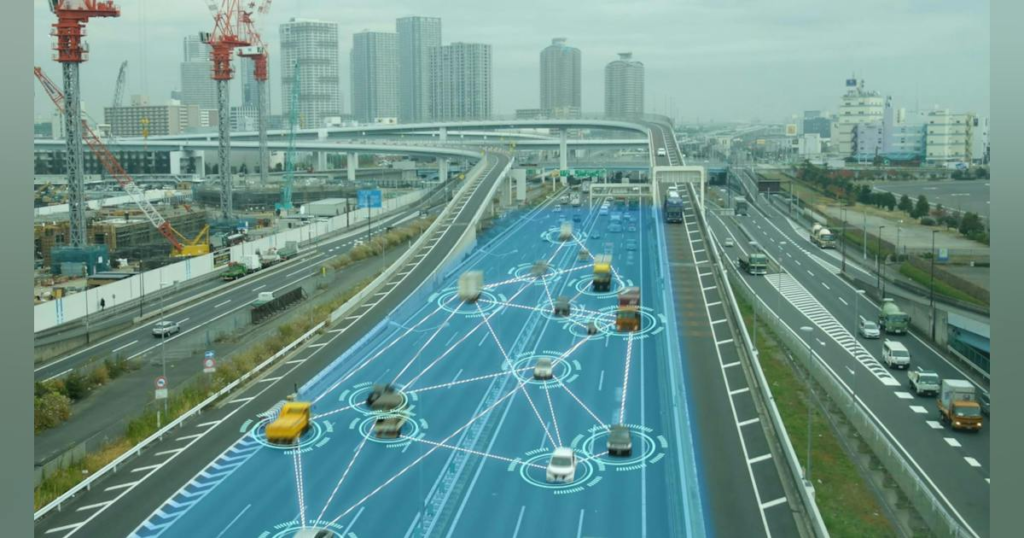
Healthcare and wearable technologies introduce even stricter requirements, where continuous monitoring must be both reliable and unobtrusive. Meanwhile, smart city infrastructure—from air quality sensors to traffic monitoring and utility metering—demands scalable, low-power solutions capable of operating across vast, distributed networks.
In each of these applications, power efficiency is not simply a design consideration—it is foundational to the viability and scalability of the solution.
Connectivity Is Becoming More Complex—and More Critical
As IoT ecosystems evolve, connectivity requirements are becoming increasingly multi-dimensional. Devices must seamlessly support a combination of wireless standards to ensure interoperability, performance, and ease of deployment.
Wi-Fi continues to play a central role, particularly for applications requiring high data throughput such as video streaming, firmware updates, and cloud connectivity. At the same time, Bluetooth is widely used for provisioning and user interaction, while protocols like Thread and Zigbee are enabling unified, interoperable ecosystems across smart homes and buildings.
For sensor-driven applications, this creates a significant design challenge. Devices must support multiple protocols, operate reliably in congested RF environments, and maintain secure, scalable connections—all while minimizing power consumption.
Dual/triple-band operation and next-generation Wi-Fi capabilities are increasingly essential to ensure consistent performance as networks grow denser and more data-intensive. The ability to integrate these capabilities into a single platform is quickly becoming a key differentiator.
From Data Collection to Intelligent Decision-Making
Perhaps the most transformative shift in IoT is the move from passive data collection to real-time, intelligent decision-making at the edge.
Sensor-rich environments are generating vast amounts of data, but transmitting all of it to the cloud introduces latency, increases bandwidth costs, and raises privacy concerns. Instead, intelligence is moving closer to where data is created—enabling devices to process information locally and act immediately.
Across industries, this shift is unlocking new capabilities. Industrial systems can perform predictive maintenance by analyzing vibration and acoustic signals in real time. Smart home devices can respond instantly to environmental changes, improving both efficiency and user experience. Healthcare devices can deliver continuous monitoring with immediate alerts, while security cameras and voice-enabled systems can process vision and audio data directly on the device.
For sensor-driven applications, the ability to analyze and act on data locally is what transforms connected devices into intelligent systems.
Integration Is the New Competitive Advantage
As requirements continue to expand, traditional approaches that rely on multiple discrete components—separate radios, processors, and accelerators—are becoming increasingly unsustainable.
Highly integrated platform-on-chip (SoC) architectures are emerging as the preferred solution, enabling developers to reduce system complexity while improving performance and efficiency. By consolidating connectivity, compute, and security into a single platform, manufacturers can lower bill of materials, streamline certification, and accelerate development timelines.
Equally important is the software ecosystem that supports these platforms. Development environments that simplify integration, enable reuse of existing code, and reduce engineering overhead are critical for organizations looking to bring products to market quickly.
This combination of hardware and software integration is enabling a new generation of scalable, flexible IoT solutions—capable of supporting diverse applications without increasing design complexity.
Building the Next Generation of Sensor-Driven IoT
The convergence of ultra-low power operation, multi-protocol connectivity, and edge AI is redefining what IoT devices can achieve.
For applications spanning smart homes, industrial systems, healthcare, and smart infrastructure, the next wave of innovation will be defined by platforms that can sustain long-term, battery-powered operation, seamlessly connect across multiple wireless ecosystems, and enable intelligent, real-time decision-making at the edge.
Solutions such as the Talaria 6 family of SoCs from InnoPhase IoT, paired with its Green Tea Studio development environment, are designed to directly address these challenges. The platform combines ultra-low power Wi-Fi 6 with a Wi-Fi 7–ready architecture, enabling higher throughput, extended range, and long-term scalability as network demands evolve. Integrated multi-protocol support—including Bluetooth, Thread, and Zigbee —reduces system complexity, while built-in edge AI enables real-time, on-device decision-making without compromising power efficiency.
Green Tea Studio further accelerates development by allowing teams to seamlessly port existing MCU applications or easily create IoT applications from scratch, simplifying integration and reducing time-to-market. Together, this hardware-software approach enables developers to build intelligent, battery-efficient, and future-ready IoT devices that meet the growing demands of sensor-driven applications at scale.
Sarath Govind is senior director, systems engineering at InnoPhase IoT.
InnoPhase IoT will exhibit at booth #715 at Sensors Converge 2026, May 5-7, Santa Clara Convention Center. The event with also feature an Edge AI Foundation Pavilion with eight vendors. Registration for Sensors Converge is online. The advance savings deadline is April 10.