Blog
UK government caps student loan interest rates at 6% from September | Student finance

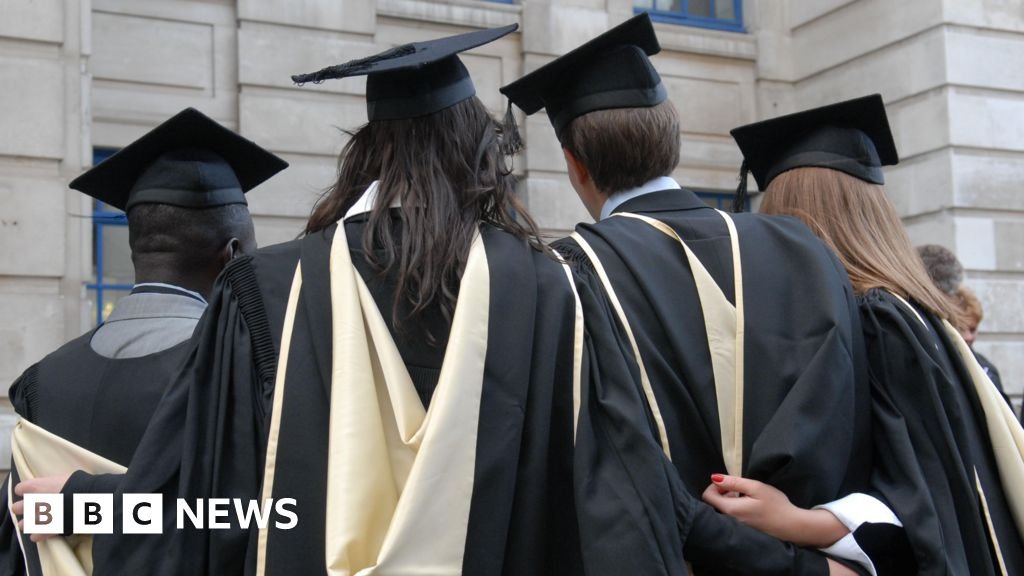
Millions of graduates will have the interest on their student loans capped at 6% from September as a temporary measure to protect them from the risk of rising inflation driven by war in the Middle East.
Ministers acted after months of criticism over the loans becoming a “debt trap” that often leave graduates in England and Wales paying tens of thousands more than the original loan amount.
The cap, which will apply to plan 2 and plan 3 loans, was welcomed by the National Union of Students and other campaigning groups, but they said it did not go far enough to address the unfairness in the student finance system.
The Conservatives, meanwhile, accused Labour of “tinkering around the edges”. Shadow education secretary, Laura Trott, said: “These proposals do not go far enough and they confirm Labour have no serious plan to stop graduates being ripped off.”
Graduates with plan 2 loans pay interest rates based on the retail prices index (RPI) measure of inflation – currently 3.2% – plus up to 3%, when they earn more than £29,385. At present, students on plan 2 and plan 3 loans attract an interest rate of RPI plus an additional 3% while they are studying. The latest RPI figure is due to be published on April 22.
Plan 2 student loans cover those taken out for undergraduate courses and Postgraduate Certificates of Education (PGCE) since 1 September 2012 in Wales, and between 1 September 2012 and 31 July 2023 in England. Plan 3 student loans cover postgraduate master’s or doctoral courses for borrowers in England and Wales.
Making the announcement, skills minister, Jacqui Smith, said: “We know that the conflict in the Middle East is causing anxiety at home, and while the risk of global shocks is beyond our control, protecting people here is not.
“Capping the maximum interest rate on plan 2 and plan 3 student loans will provide immediate protection for borrowers, supporting those who are most exposed within this already unfair system. We’re acting now to defend against the consequences of faraway conflicts in an uncertain world.”
Tuesday’s announcement will, however, do little to stem criticism of the system, with graduates already paying high interest rates compared with other forms of debt, and many seeing the amount they owe balloon beyond all expectation.
The government admitted the move was a short-term protective measure lasting a year. “We know this isn’t a silver bullet for solving all of the problems with the student loan system that we inherited from the last government,” Smith told broadcasters.
She said the government would continue to look at ways to support graduates from low incomes, but said the cap would “provide some certainty and reassurance” to graduates on plans 2 and 3.
Labour MPs have lobbied the government to think again about a freeze on the student loan repayment threshold – which will be kept at £29,385 for three years until 2030 and is likely to cause graduate repayments to rise by up to £300 a year.
Amira Campbell, the president of the National Union of Students (NUS), welcomed the cap announcement as “a huge win”. She said that ministers “have woken up to the unfairness of student loans and are taking action to prevent our debts from spiralling further out of control”.
“For too many years,” said Campbell, “we’ve been forced to weather these economic shocks and finally a government have listened to our concerns.
“But this change cannot come alone. For most graduates, the impact on their day to day lives is felt through the repayment thresholds, which are being frozen for three years and will get very close to the minimum wage by 2030.
“We still need to see the chancellor stick by the terms we signed at 17 years old and raise the threshold in line with our incomes. The government have said they will look into the unfairness of the student loan system and we will continue to hold them to that.”
Tom Allingham, from Save the Student, a student money website, said he was glad to see the government act ahead of a likely rise in inflation, but called for “far more substantial changes that create a truly fair system”.
Oliver Gardner, founder of the Rethink Repayment campaign group, also welcomed the cap but said it was “by no means a solution to the student loans crisis”. Nick Hillman, director at the Higher Education Policy Institute thinktank, said it was “a stopgap” that was unlikely to “assuage the concerns” of many graduates.
The prime minister, Keir Starmer, has previously told MPs he would look at ways to make the student loans system in England fairer. The promise was made after comments by the Conservative leader, Kemi Badenoch, who said the system was “at breaking point” and had become a “debt trap” for graduates.