Blog
Police drop charges against Palestinian Australian protester arrested at Isaac Herzog rally as more set to be withdrawn | Sydney

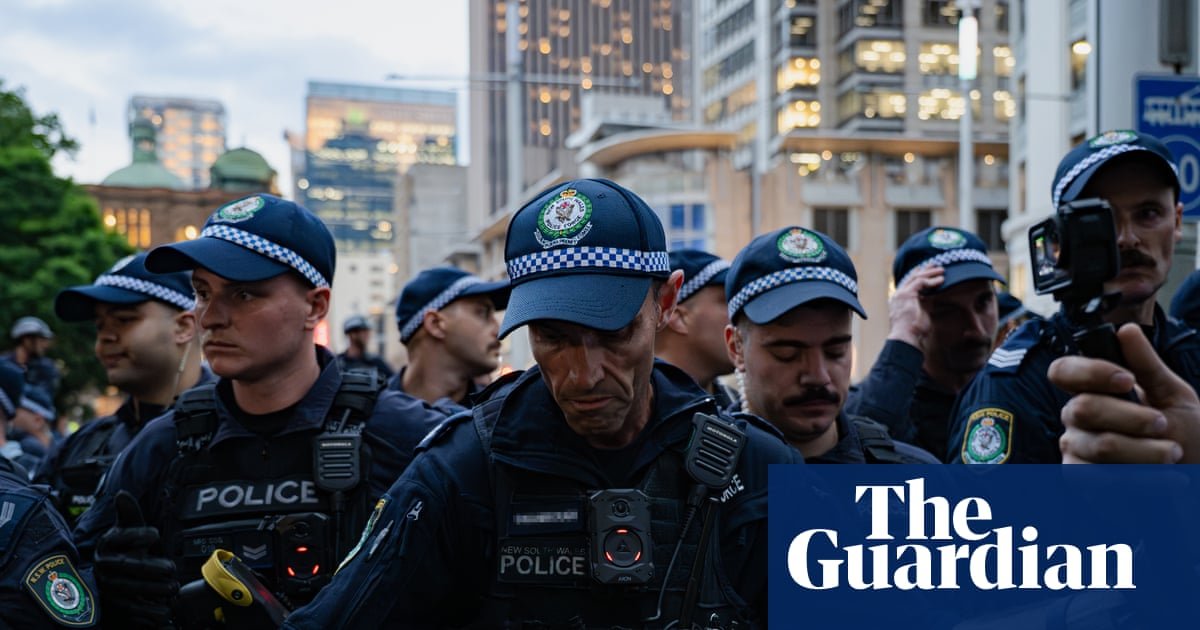
Police have withdrawn their first charges against a protester from Sydney’s anti-Isaac Herzog rally just hours after confirming any charges laid under a now-defunct law would be dropped.
Eyad Shadid, a 25-year-old Palestinian Australian man, was arrested near where a group of Muslim men were praying when they were grabbed by police officers. A police prosecutor told Downing centre local court on Wednesday they were withdrawing the two charges that were later laid against Shadid, which included refusing to comply with a police direction and resisting or hindering an officer.
Shadid’s lawyer, Nick Hanna, told Guardian Australia after the charges were withdrawn on Wednesday afternoon that in his view “the evidence served by the police in this case clearly established that Mr Shadid did not commit any offence and he should never have been charged to begin with”.
“Today’s outcome is an important first step in the path to justice for Mr Shadid and the rest of those arrested at the Herzog protest,” he said.
It comes after the New South Wales police commissioner, Mal Lanyon, said on ABC Radio on Wednesday morning that, pending a review, police would drop charges laid under the public assembly restriction declaration (Pard) law.
The decision to drop the charges against Shadid were separate to this review. Court documents show police had alleged that he contravened the now-defunct law.
It remains to be seen how many of the 29 other protesters charged after the February rally will be affected by the decision. The protesters face various offences that fall outside the Pard, including assaulting a police officer, behaving in an offensive manner, and throwing an object. Lawyers have indicated that it is unclear whether charges of failing to comply with a direction fell under the Pard law or not.
The Pard law was in force during the protest at Sydney’s town hall against the Israeli president’s visit to Australia and was cited by police as the reason a march could not go ahead.
Last month, the court of appeal struck down the Pard law, ruling in favour of the Palestine Action Group and Blak Caucus, and finding giving police the power to restrict all protests for a period of 90 days after a terrorist attack was unconstitutional. The law was introduced after December’s Bondi beach terror attack, in which 15 people were killed and more than 40 injured when two gunmen opened fire on a Jewish celebration of Hanukah at a park.
Lanyon said on Wednesday that police were also investigating if directions given under a separate “major events” declaration, which gave police expanded move on and search powers, were lawful.
The premier, Chris Minns, had said in the wake of the Pard being struck down that because the anti-Herzog protest was also covered by a major events declaration charges would still stand for those who did not comply with police directions.
In a Downing Centre local court on Wednesday morning, 14 of the protesters had their matter adjourned to make way for the review of the charges laid under the Pard. Police withdrew the charges against Shadid before the same court later that afternoon.
Lawyer Osman Samin, who is acting for five of the 14 protesters, told the court on Wednesday morning: “The Pard has fallen over and that might have consequences for a number of these prosecutions, so I understand the police will be reviewing these matters to determine whether they proceed from this point onwards.”
The police prosecutor then told the court that there were “further reasons” for the review, including “considerations to other challenges in relation to other acts”.
The Palestine Action Group has indicated that it may challenge the constitutional validity of the major events declaration, which was in force for the duration of Herzog’s visit and is typically used for major sporting or music events. A major events declaration may limit civil liability claims against police.
Outside court on Wednesday morning, Hanna, who is representing Shadid and three other protesters, said he hoped charges would be dropped against all 30 people.
He said it remains unclear what police intend to do for the charges that are not relevant to the Pard, but said attempts to “untangle” who was charged under the Pard was an “artificial exercise”.
“The simple reality is that the police crackdown was, in no small part, due to the police refusing to facilitate the peaceful march from town hall to Parliament House, and that refusal was based almost entirely, if not entirely, on the existence of that Pard,” Hanna said.
The full bench in the court of appeal found in its ruling on the Pard that restricting all protests in order to protect social cohesion was not a “constitutionally legitimate purpose”.
Legal experts have said the landmark judgment could have far-reaching consequences by limiting future attempts by the government to control speech and protests on the basis of “social cohesion”.