Blog
Palazzo Sogni Florence Blends Renaissance and Modern Design

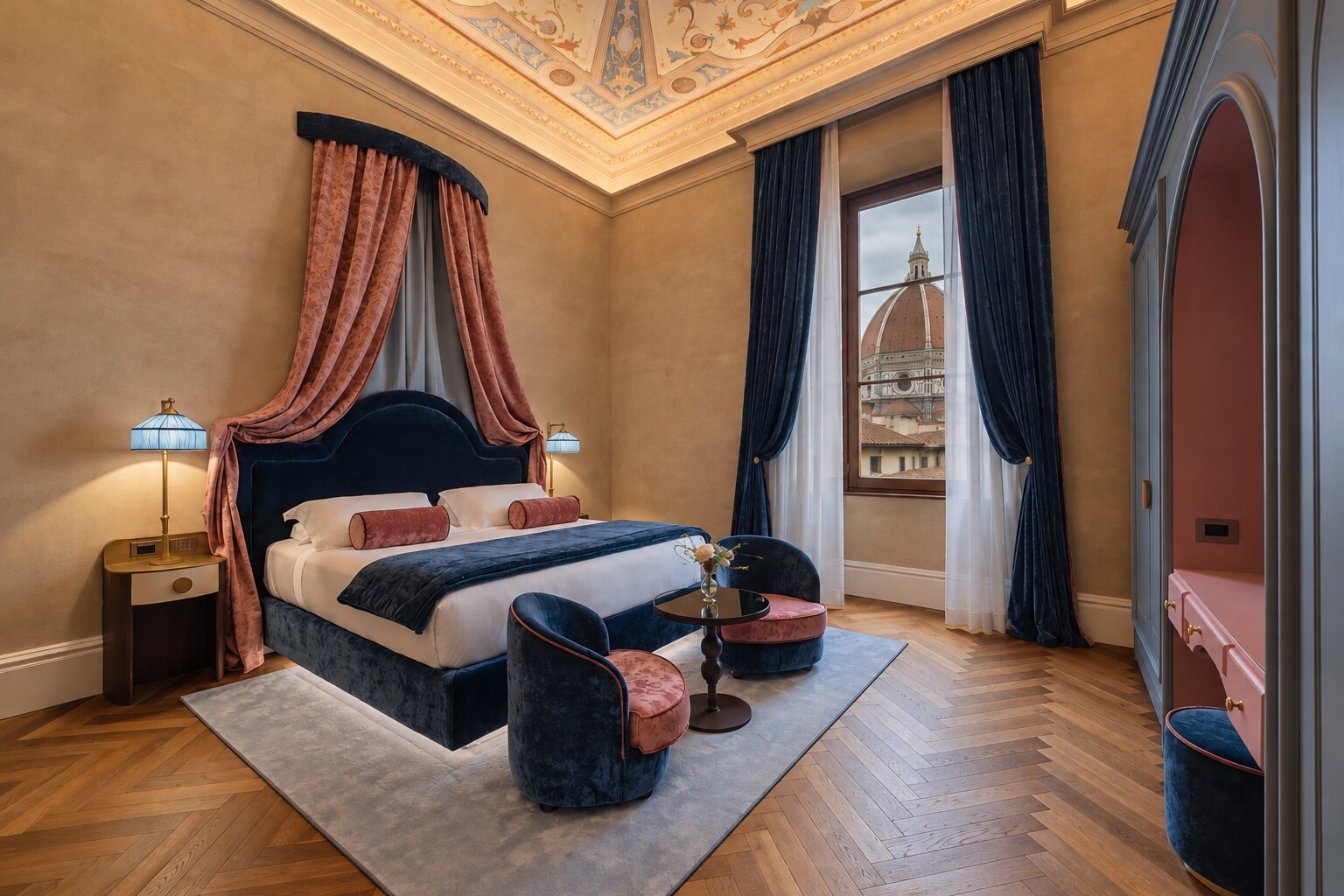
In Florence, the past is never far from the present, but designing within a centuries-old palazzo requires more than an appreciation for history. At Palazzo Sogni, a new 30-room hotel steps from the Duomo, designers Elena and Giulia Sella faced the challenge of preserving Renaissance architecture and historic frescoes while introducing their own interior identity. Their approach brings together Florentine craftsmanship, contemporary furniture, and a playful sense of discovery, with the idea of “dreaming” connecting spaces throughout the property.
Photography courtesy of Palazzo Sogni
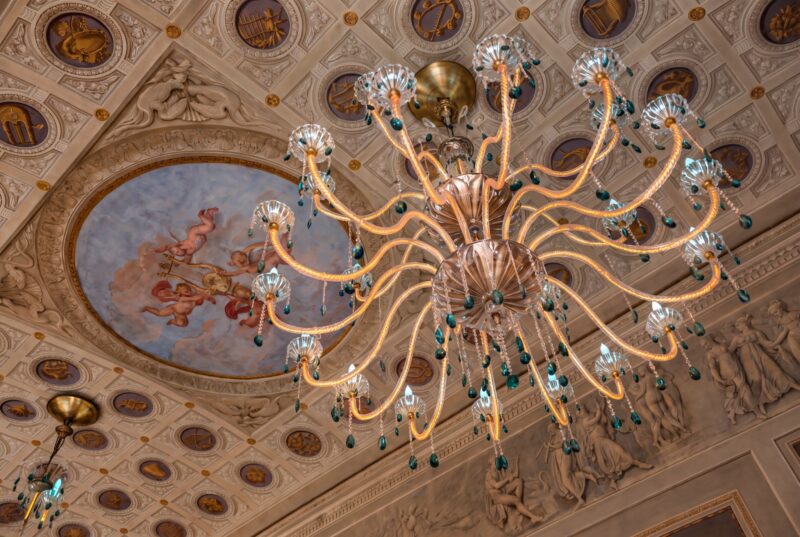
The building dates to the 16th century, when it formed part of Palazzo Testa, constructed by the Martelli family. Among its most significant features are a monumental nymphaeum with a stone fountain traditionally attributed to sculptor Baccio Bandinelli and historic frescoes spanning several centuries, including works by Luigi Catani and Antonio Marini. The conservation process involved removing layers of paint to reveal decorations that had been hidden for years. Rather than treating these historic elements as decorative backdrops, the designers used them to inform the new interiors.
Photography courtesy of Palazzo Sogni
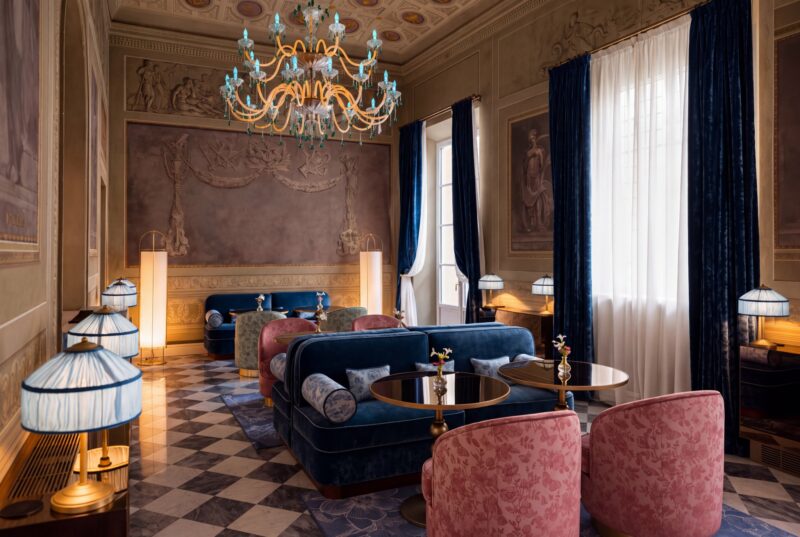
“From the beginning, it was essential to preserve the character and soul of the palazzo,” the Sella sisters explain. Original ceiling frescoes were carefully restored, while marble flooring was recreated to echo the building’s original checkerboard pattern. Contemporary additions, including amber-toned mirrors, custom furniture, and richly textured fabrics, were developed in response to the existing architecture.
Photography courtesy of Palazzo Sogni
That relationship between old and new is particularly evident in the hotel’s 30 rooms and suites, where no two interiors follow the same formula. Historic frescoes informed individual color combinations and material selections, while the proportions of each room determined furniture arrangements and the inclusion of pieces such as chaise longue or dedicated seating areas. Lighting was equally considered, with integrated architectural illumination drawing attention to ceiling paintings and dedicated fixtures highlighting wall frescoes.

Photography courtesy of Palazzo Sogni
The color palette takes its cues directly from the historic decorative schemes. Powder blue, which the designers associate with the hotel’s dreamlike concept, became its signature shade, appearing throughout the reception, corridors, and boutique. Mint green, blush pink, and ochre provide complementary tones, often paired with velvets, silks, and warm metallic accents.

Photography courtesy of Palazzo Sogni
“We focused on materials that create richness through texture rather than excess,” the designers explain. Some velvets have a subtly iridescent finish that introduces depth and movement, while original lime-based wall finishes were preserved wherever possible. The combination allows contemporary furnishings to hold their own against the elaborate historic architecture without competing for attention.

Photography courtesy of Palazzo Sogni
Rather than sourcing existing furniture collections, Elena and Giulia designed every piece specifically for Palazzo Sogni, working with specialized artisans and workshops in Florence and the surrounding region. The resulting collection includes sculptural wardrobes, four-poster beds, upholstered headboards, benches, armchairs, occasional tables, and custom lighting.

Photography courtesy of Palazzo Sogni
“One of the key ideas behind Palazzo Sogni was to create an interior identity that could only belong to this place,” they explain. “Rather than sourcing existing products, we developed what we like to describe as a couture design collection: a bespoke language conceived for the hotel, where wonder, history and contemporary design come together.”

Photography courtesy of Palazzo Sogni
The emphasis on local production extends to the textiles. The hotel’s signature Floral Butterfly pattern was developed in collaboration with Florence-area textile company Alessandro Bini, which created a dedicated loom setup to translate the design into silk-based jacquard with a distinctive texture and relief. The fabric appears on bed canopies, armchairs, and wardrobe interiors, while bespoke linens and terry collections by Italian manufacturer Rivolta Carmignani add another layer of craftsmanship.

Photography courtesy of Palazzo Sogni
The custom design language extends to the tableware, with Ginori 1735 reinterpreting its Antico Doccia collection in the hotel’s signature powder blue and incorporating floral and butterfly motifs into the porcelain.
One of the project’s more unexpected materials is aged amber mirror, which appears throughout the interiors, from bathrooms and elevators to larger architectural surfaces. Its reflective quality helps visually lighten substantial volumes while introducing warmth.

Photography courtesy of Palazzo Sogni
“It feels elegant and warm while visually lightening larger volumes through reflection,” the designers explain. Repeated throughout the property, the material became a subtle visual connection between otherwise distinct spaces.
Beyond the guest rooms, the hotel’s Secret Garden centers on the historic nymphaeum and its fountain. A visual axis from the entrance draws visitors toward the architectural feature, while planting inspired by traditional Italian gardens, custom furnishings, and carefully positioned lighting frame the space without overwhelming it.

Photography courtesy of Palazzo Sogni
“We wanted the nymphaeum to remain one of the strongest architectural moments of the property,” the designers say. Their approach allows the fountain to retain its prominence while giving the surrounding garden a softer, more contemporary character.

Photography courtesy of Palazzo Sogni
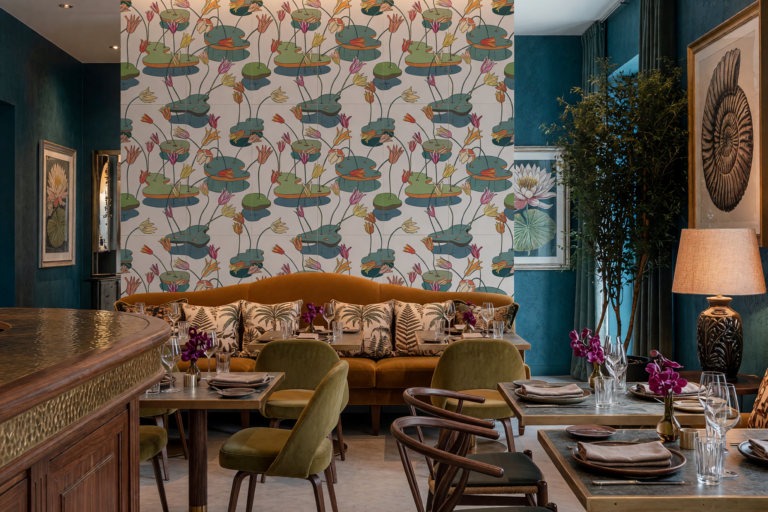
Elsewhere, the hotel’s public spaces offer different interpretations of its historic setting. Segreto, the signature restaurant, pairs botanical references with views of the courtyard garden, while La Sala della Musica preserves the atmosphere of a historic salon through original frescoes and contemporary furnishings. Above it all, the Sotto le Stelle rooftop provides a more open-air experience, with views of Florence’s Duomo.

Photography courtesy of Palazzo Sogni
Not every intervention is quite so restrained. Brass “Press for Champagne” buttons introduce an unexpected moment of playfulness in the guest rooms, reflecting the designers’ interest in creating experiences that go beyond the purely visual.
“Conservation was always the starting point, and every intervention was carefully designed not to interfere with the historic frescoes or architectural features,” they explain. “Within that framework, we wanted to introduce a stronger sense of experience and discovery.”

Photography courtesy of Palazzo Sogni
Throughout Palazzo Sogni, the designers have resisted the temptation to reproduce a traditional Florentine interior, instead allowing contemporary forms, custom craftsmanship, and historic ornamentation to coexist. The result is a hotel that draws much of its character from the past without remaining confined to it.
Editorial Transparency: This article was developed with the assistance of AI tools, which may have been used for research, outlining, editing, or copy refinement. Reporting, fact-checking, and editorial decisions were made by the Design Milk editorial team.