Blog
Carlo Nason’s 1969 Design Returns

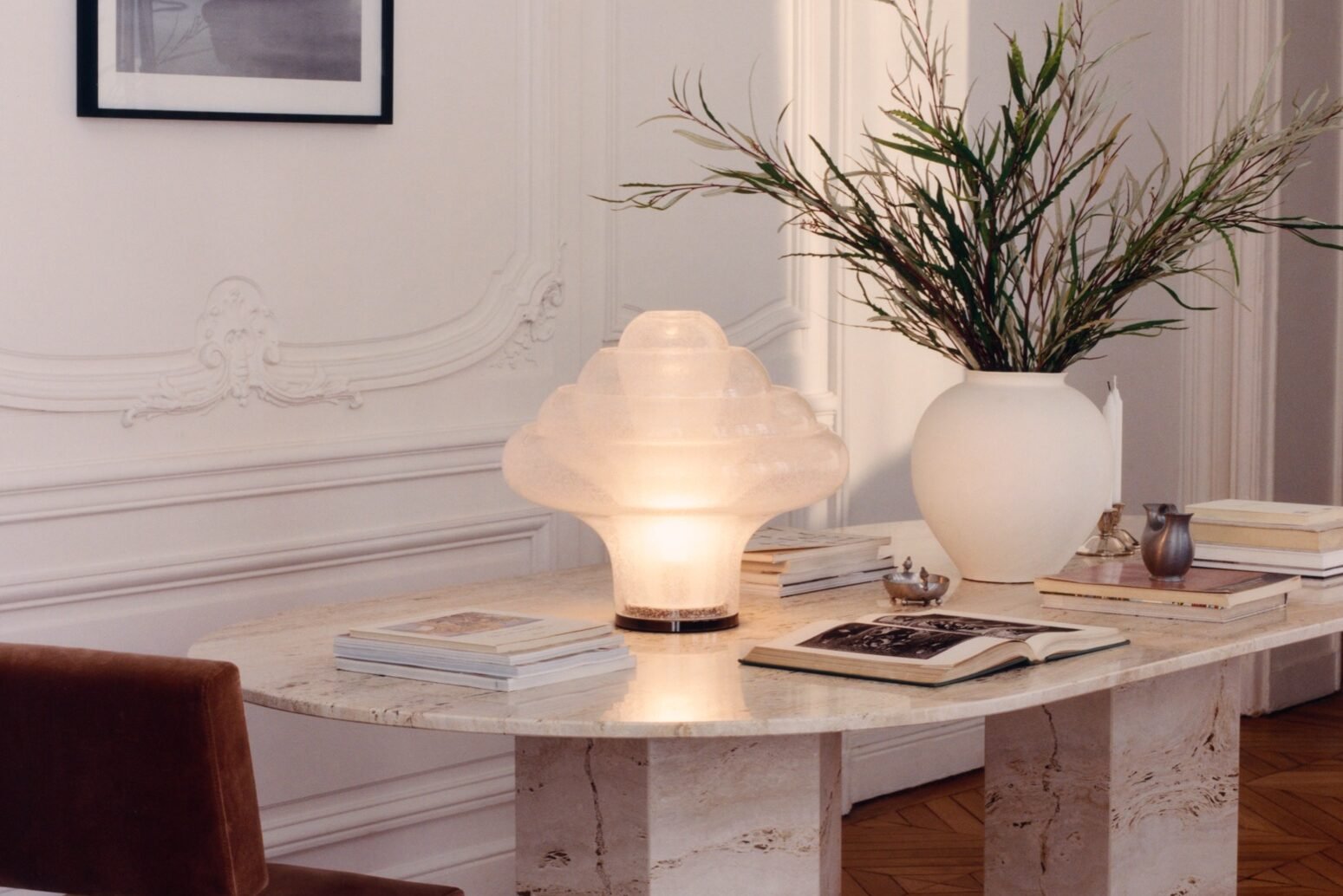
The lotus—a flower known for blooming in challenging conditions—has long been a symbol of resilience. Now, more than five decades after its original debut, another Lotus is getting a second life. Italian design brand Gubi has revived the sculptural table lamp, bringing Carlo Nason’s 1969 design back into production.
Photography courtesy of Gubi
First introduced by Italian glassmaker Carlo Nason in 1969 as the LT305, the light remained in production for only a few years. Nevertheless, it went on to develop a cult following among design collectors, who nicknamed it the “Lotus lamp,” a moniker that Gubi embraced for the revival.
“It was a very natural decision,” Gubi CEO Marie Kristine Schmidt says of officially adopting the nickname. “Collectors had already given the lamp a name that captures the design beautifully. The name had become part of the design’s identity and history, and we wanted to respect that.”
Photography courtesy of Gubi
The design’s enduring appeal is a testament to just how ambitious it was when it debuted. Growing up in a family of Murano glassmakers, Nason acquired an expert command of the Italian island’s glassblowing traditions. But while most of his ancestors and peers applied their skill to highly decorative forms, Nason was eager to move in more experimental, contemporary directions.
Photography courtesy of Gubi
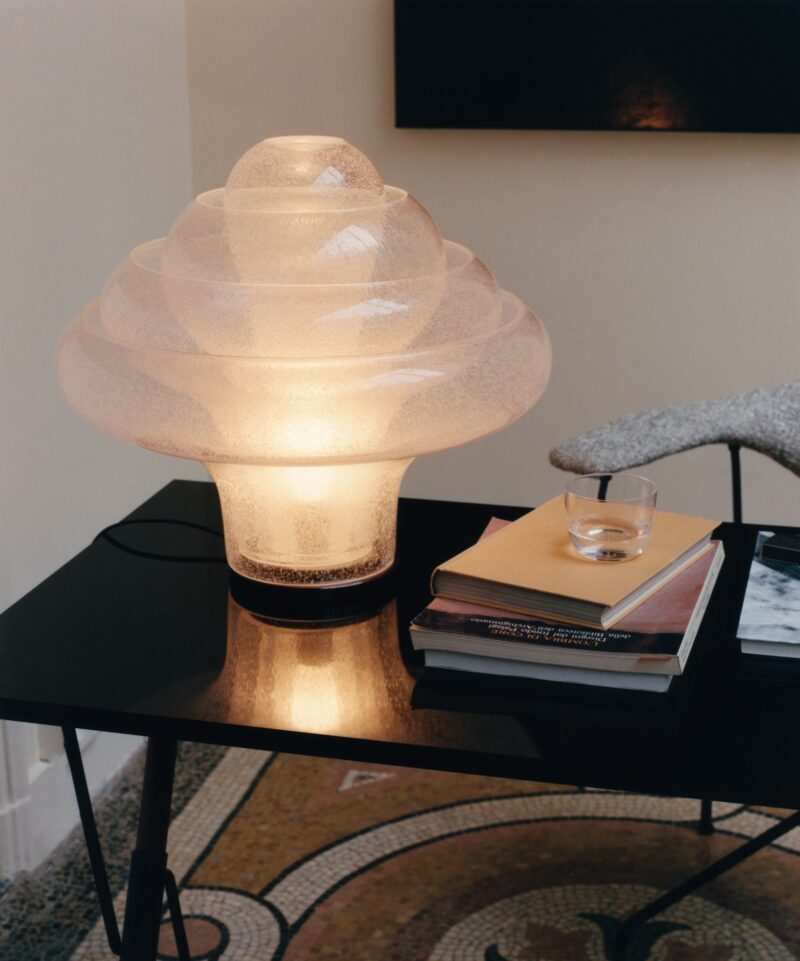
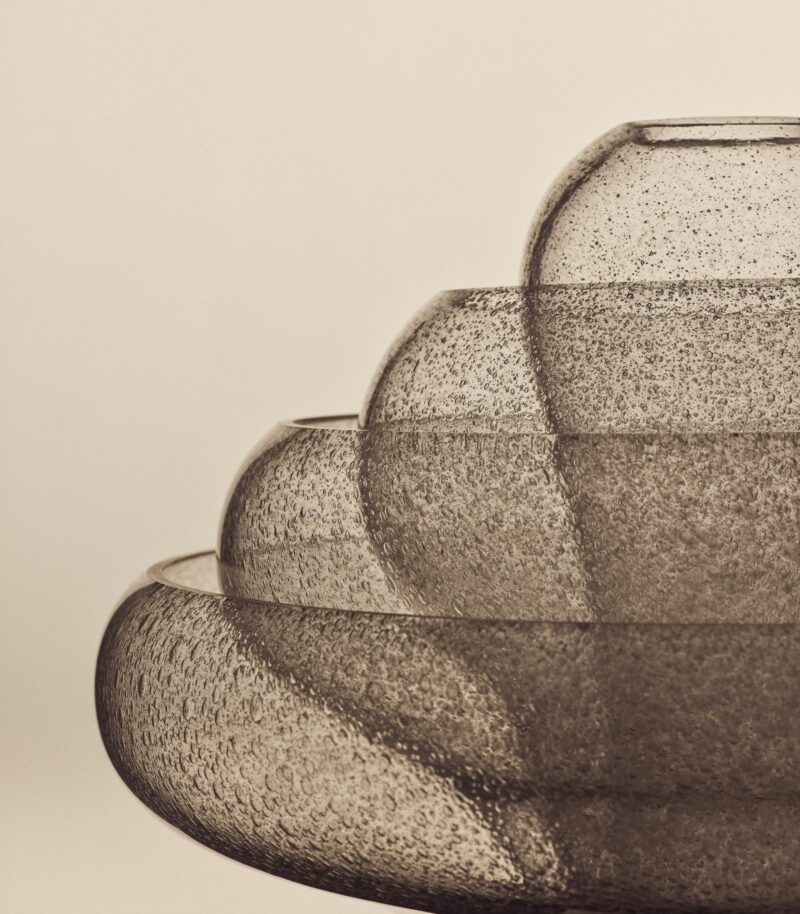
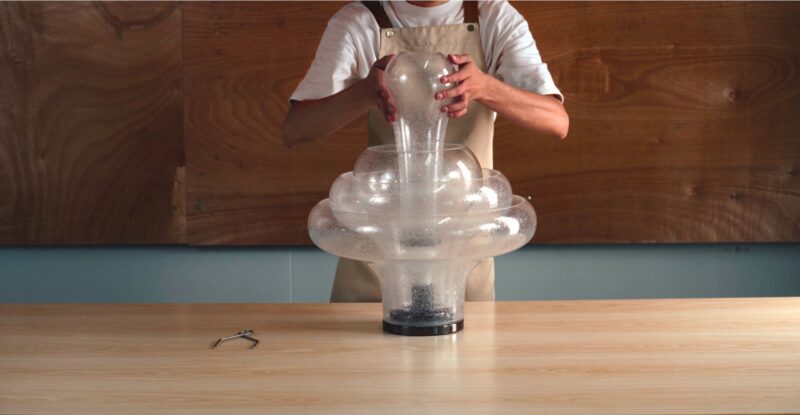
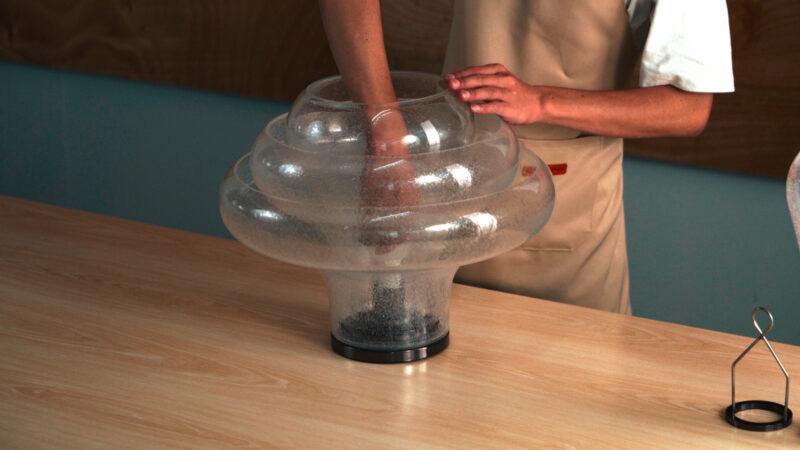
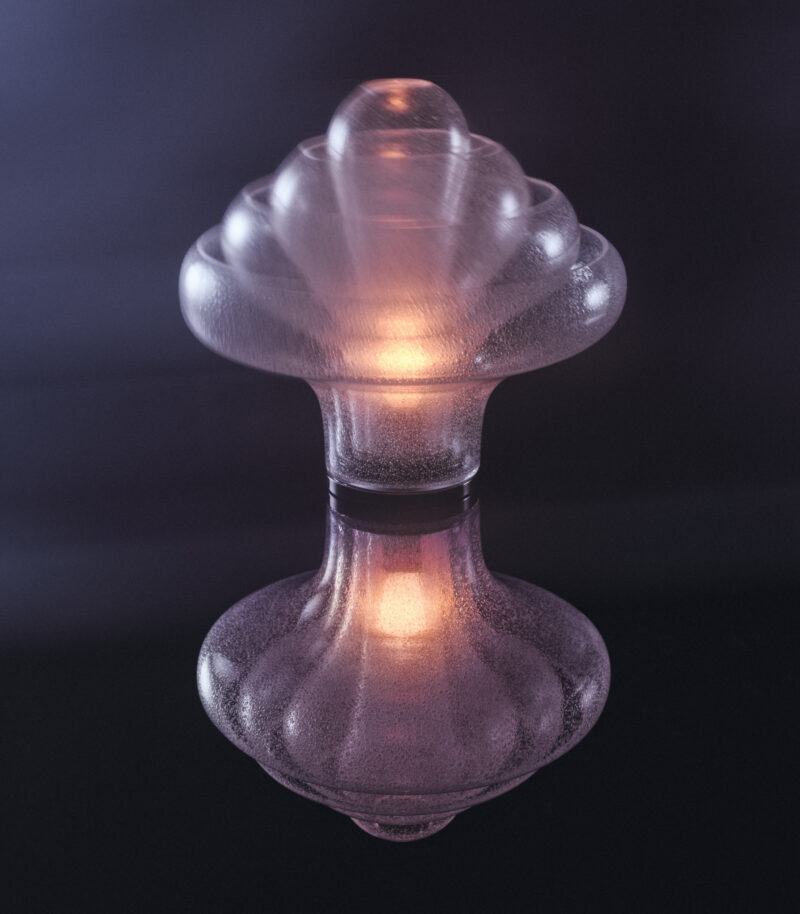
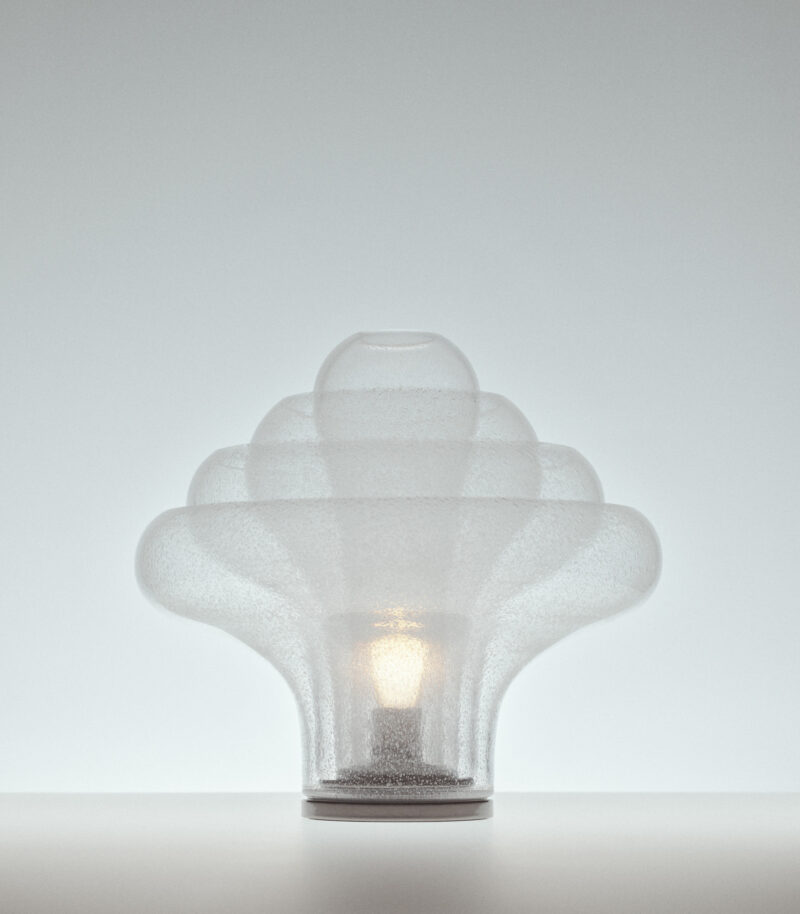
Influenced by the rise of industrial product design—particularly the Space Age style popular in the 1960s—Nason developed the LT305 lamp with a bulbous, streamlined silhouette. But behind this pared-back profile is some fairly complex glasswork. The light is composed of four distinct mouth-blown shades—each one nested within the next to create an arrangement that calls to mind a lotus flower in bloom. “The four layers of mouth-blown glass give it an almost architectural presence,” Schmidt says.
Photography courtesy of Gubi
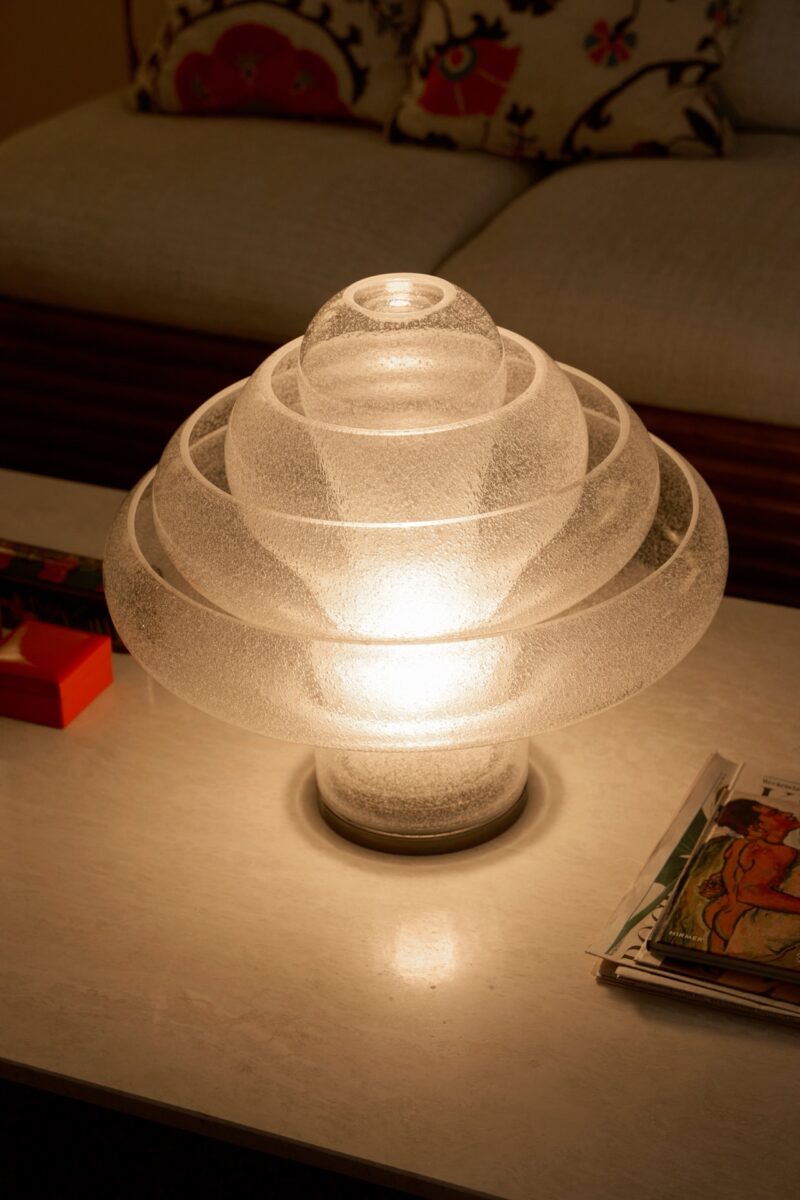
This construction method also contributes to the lamp’s carefully calibrated glow, which is free from both glare and harsh shadows. While the design’s opaque central portion, where its four shades overlap, completely obscures the bulb inside, the fixture’s outer curves—expressed with just a single layer of glass—exhibit delicate transparency.
Photography courtesy of Gubi
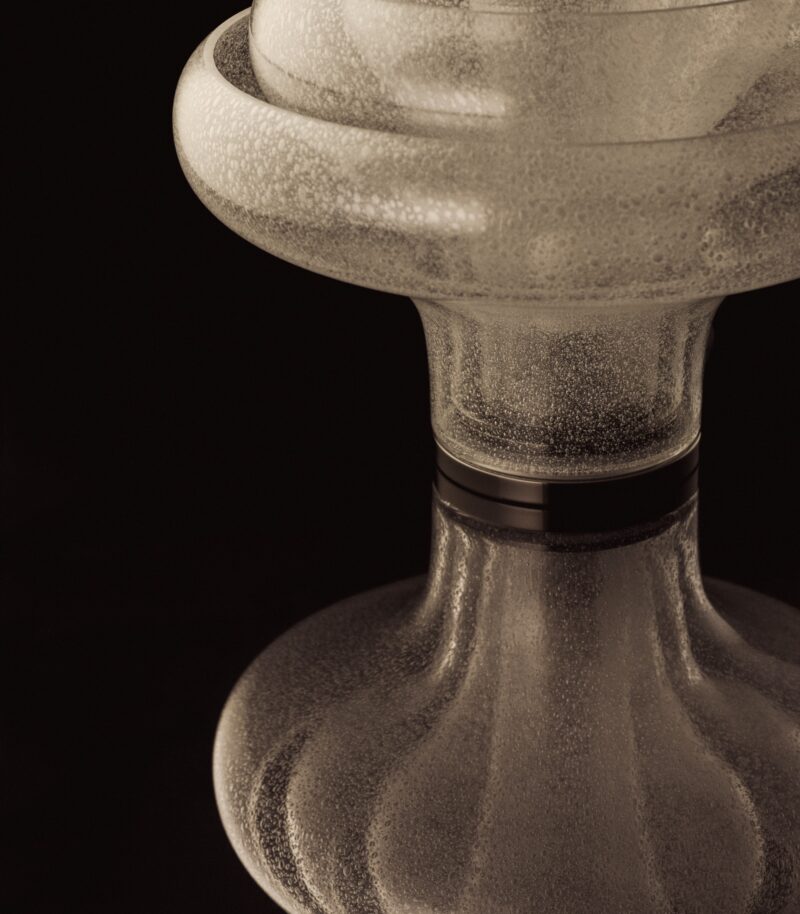
Adding to the design’s dynamic sense of depth, each mouth-blown shade is produced using a Murano technique known as “pulegoso,” in which small air bubbles are blown into the glass to give it a textured, semi-opaque appearance. Originally developed in the 1920s, the method further highlights the human skill behind each element.
Photography courtesy of Gubi
“Each of the four shades is mouth-blown, and the natural variations in the glass and the distribution of the bubbles mean that no two lamps are exactly alike,” Schmidt explains. “I think that is an important part of the design’s appeal. The craftsmanship is visible, and it gives each piece its own character.”
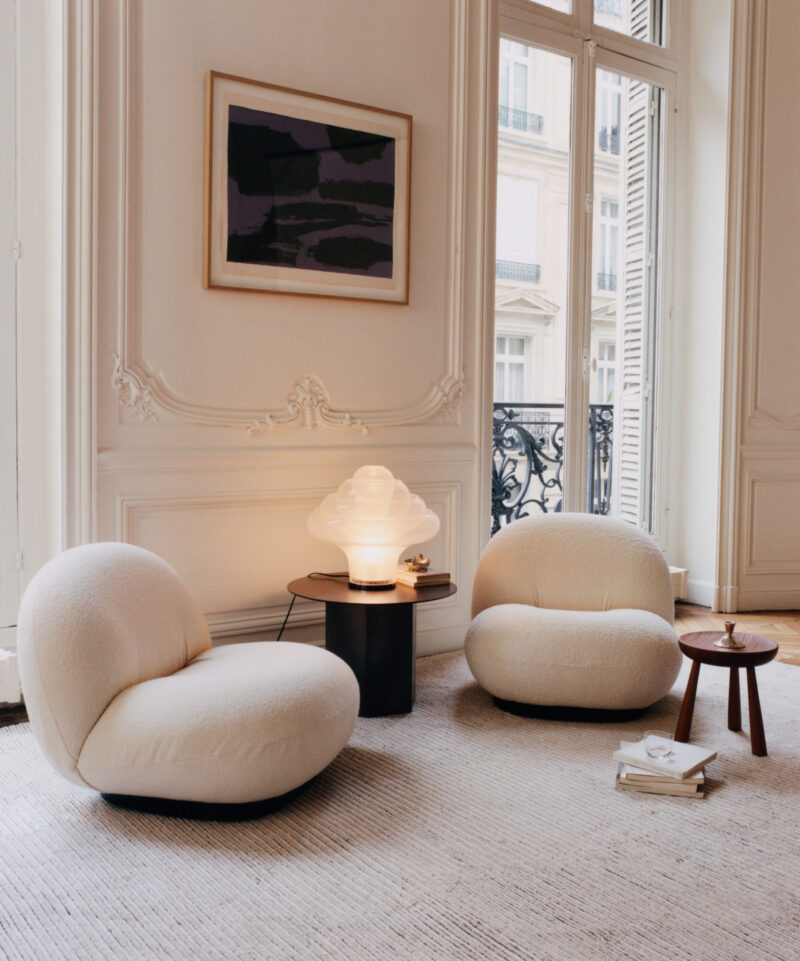
While staying faithful to Nason’s original specifications, Gubi did make one contemporary refinement: The lamp’s steel base, which houses the bulb socket and secures the four glass shades, has been re-engineered for greater stability. The updated construction also makes it easier to disassemble the lamp for cleaning and bulb replacement.
Photography courtesy of Gubi
“These are discreet improvements that do not change the expression of the design but ensure that it works beautifully in everyday use,” Schmidt notes. “Whenever we bring a design back into production, our starting point is to understand the original intention and preserve what makes it special. We worked closely with Nason’s son, Alberto, throughout the development process.”
The result is a reissue that preserves the sculptural character that has made Lotus a favorite among design collectors for decades.
Photography courtesy of Gubi
“A design has to earn its place in the Gubi Collection,” Schmidt says. “We look for pieces with a strong identity, a distinct point of view and qualities that make them as relevant today as when they were first created. Lotus has all of those qualities.”
Nason’s death earlier this year gives the revival added significance as a continuation of his legacy. Alberto is especially grateful that Gubi’s reissue will allow a much larger audience to experience his father’s design firsthand.
Photography courtesy of Gubi
“The more you observe it, the more it unfolds, layer by layer, allowing you to discover its beauty over time,” Alberto says. “There is a quiet magic to it: a softness, a depth, a tactile presence that makes the light feel almost like a material in itself.”
Like the flower it’s named for, Lotus is back in bloom.
Photography courtesy of Gubi
The Lotus Table Lamp is available at gubi.com and select retailers.