Blog
NVIDIA CEO Claims Gamers are “Completely Wrong” About DLSS 5

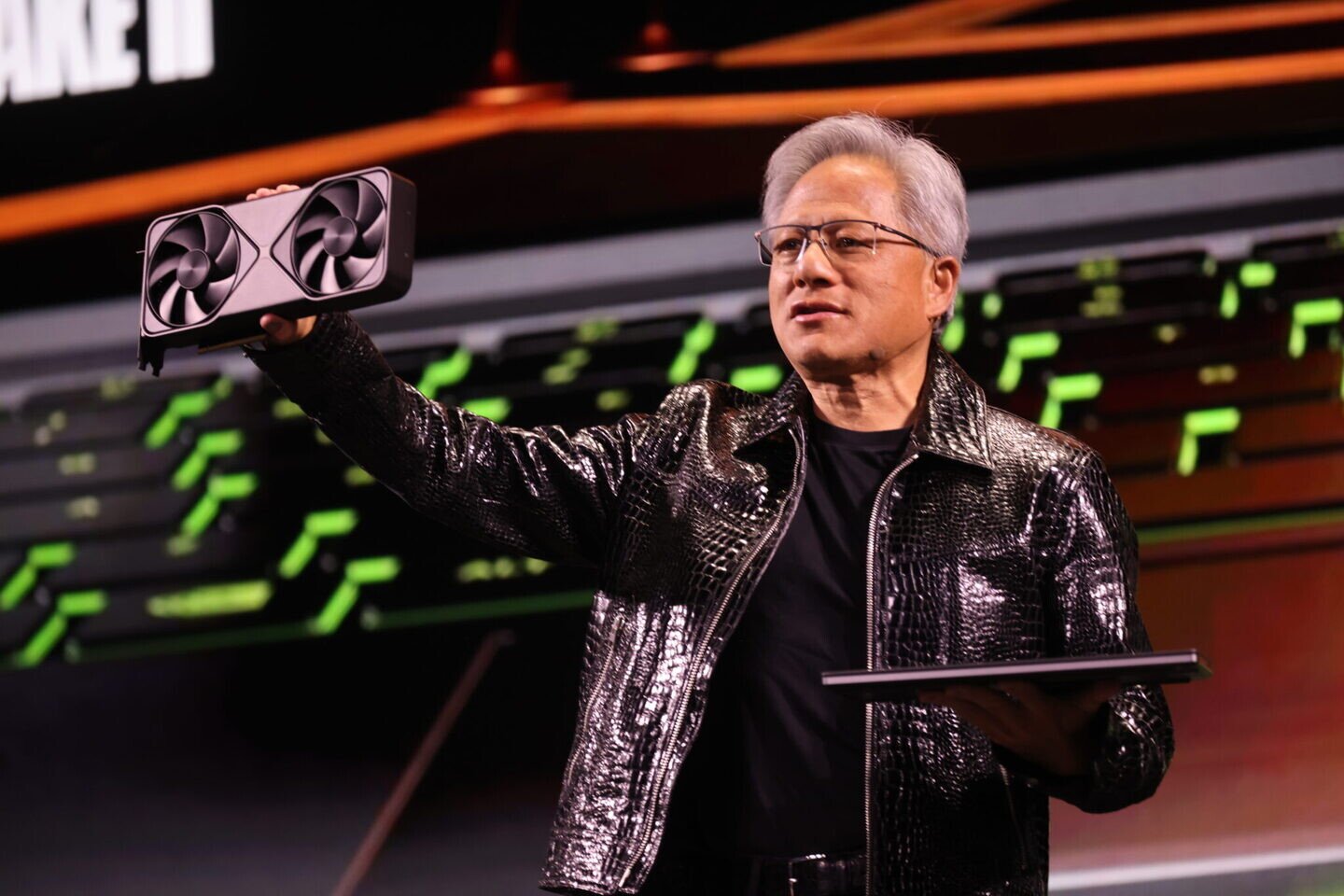
For example, much of the criticism focuses on how DLSS 5 alters the visual definition of various in-game elements beyond the original developer’s intention. Jensen Huang explains that DLSS 5 is not merely a post-processing tool for games but rather a system that gives developers generative control at the geometry level, not just a filter applied on top of the graphics processing pipeline. Huang noted that developers have complete control over what the technology does from the very beginning. DLSS 5 uses the game’s color and motion vectors for each frame, and the model aligns with what the game developer originally intended for the image. Even the extent to which DLSS 5 enhances visual fidelity can be controlled, and it is entirely up to the developer to decide. “It’s not post-processing, it’s not post-processing at the frame level, it’s generative control at the geometry level,” iterated Huang.

Gamers have the freedom to choose how they want to experience scenes with photorealistic lighting and materials. DLSS 5 can be completely turned off for a regular gaming session, or it can be set to the maximum for its new visual fidelity enhancements. As NVIDIA positions DLSS 5 as a supplement to traditional technologies, no process or technology is dependent on it. Therefore, any major AAA game that receives an update to support DLSS 5 can also run normally without it. Players can still default to DLSS 4.5 for upscaling and visual enhancements, while DLSS 5 remains an option for those who want neural rendering to handle much of the visual heavy lifting.