Blog
Mandarin Oriental The Landmark Gets an Update

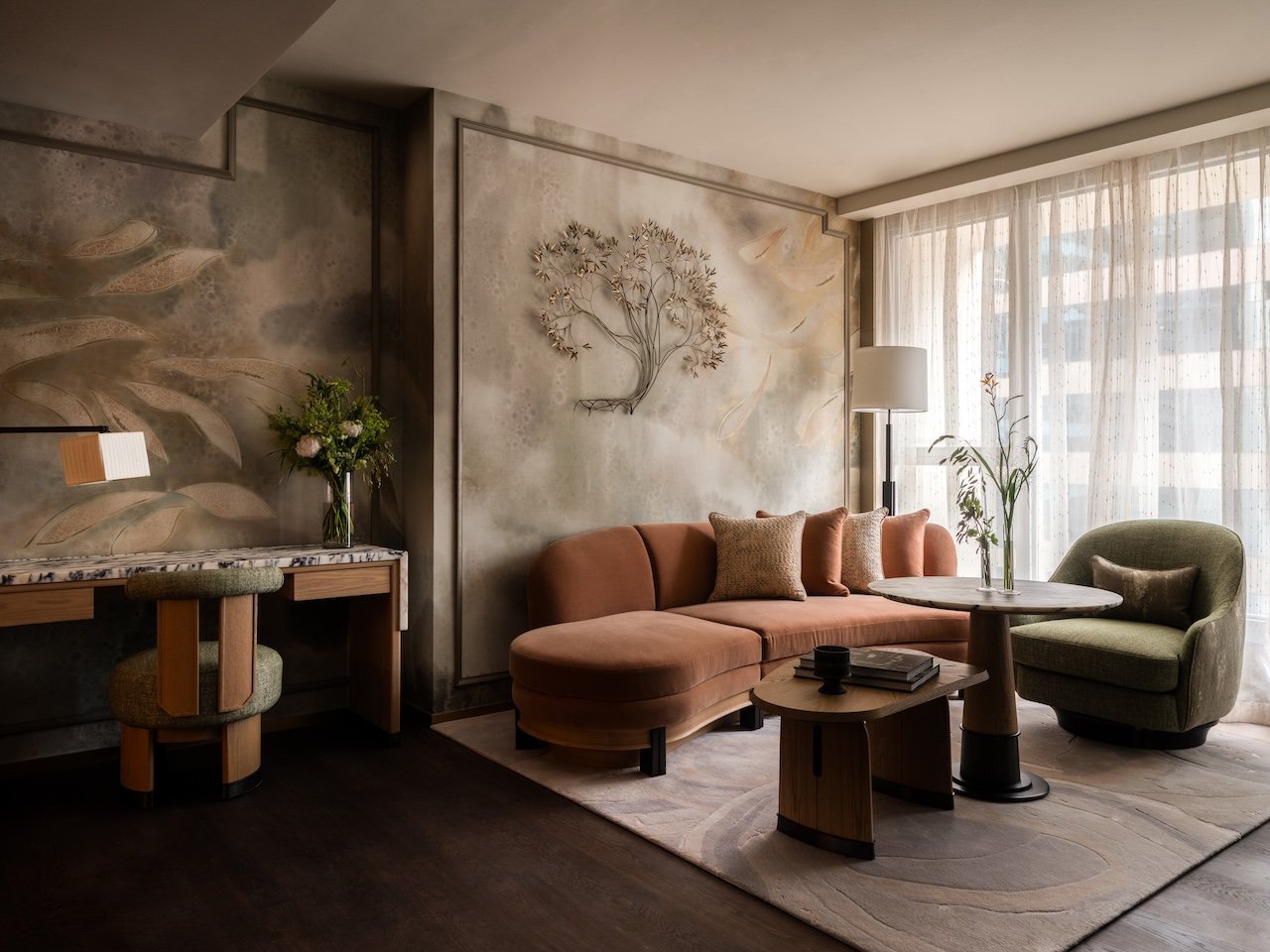
More than a decade after first reimagining Mandarin Oriental The Landmark in Hong Kong, Joyce Wang Studio has renovated the hotel a second time. The new work covers its 109 rooms and suites, the mansion foyer, the spa, and the former MO Bar.
Photography by Common Studio
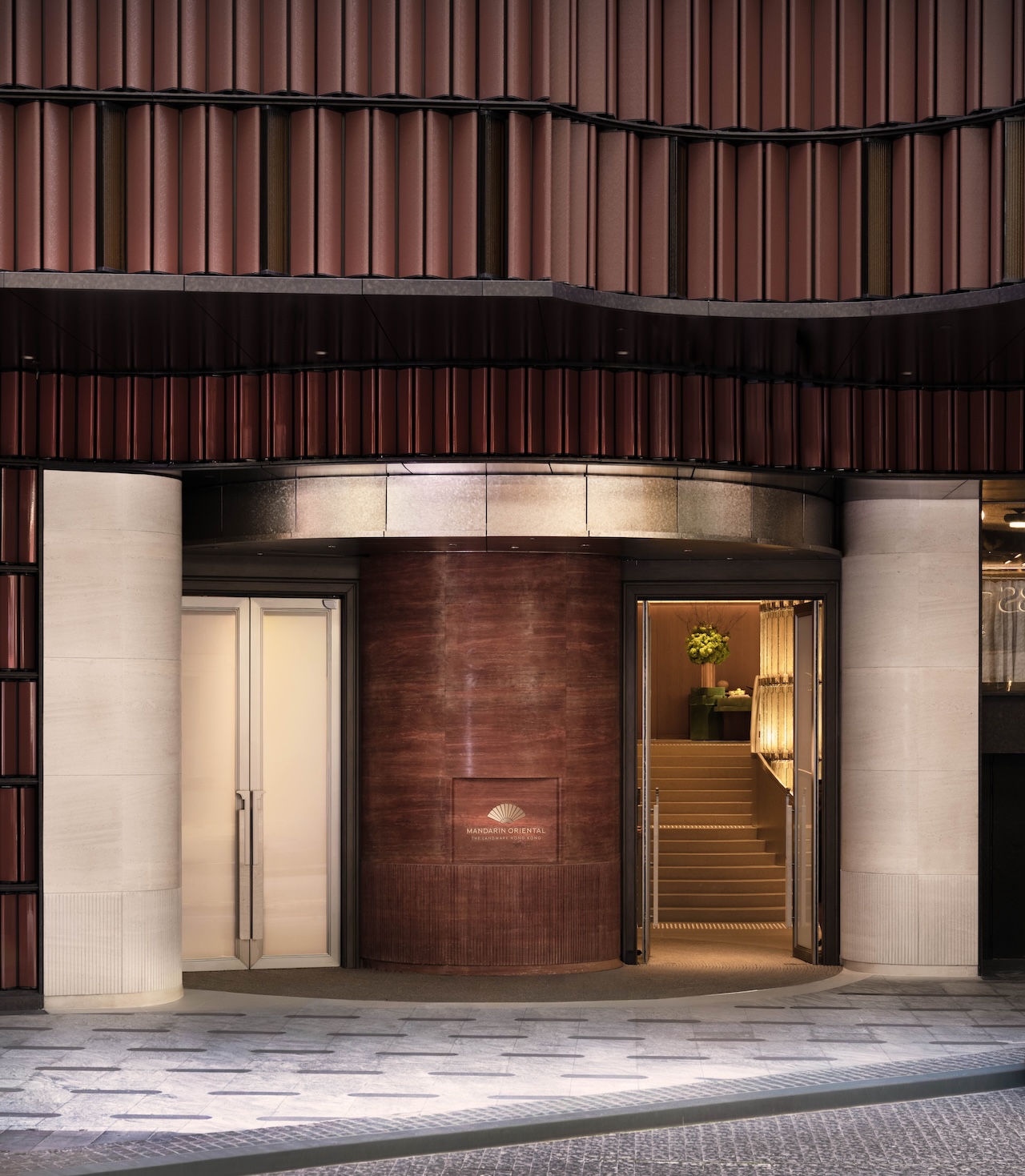
Joyce Wang, the studio’s principal, says the latest brief placed greater emphasis on the hotel’s connection to Hong Kong. “We took inspiration from the colonial country manors frequented by the Tai Kwuns of a bygone era to celebrate the beauty of these historic homes that still fascinate today,” she says. “Our vision this time has a greater focus on local relevance and the heritage of the building.”
Photography by Common Studio
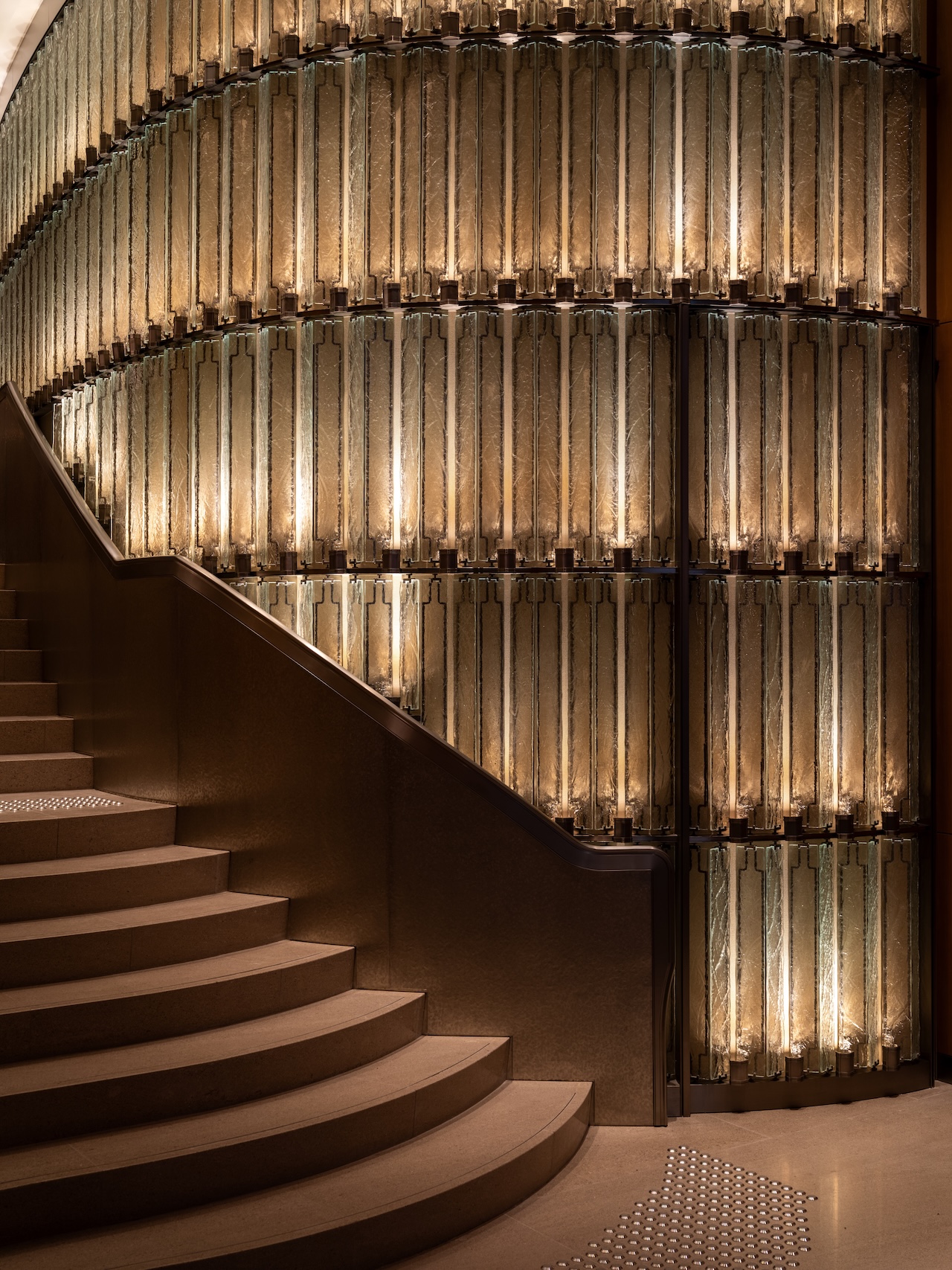
The redesign is organized around the idea of a lived-in mansion, a type with many historical examples in Hong Kong. Green and orange anchor the palette, drawing on the city’s lush gardens and the terracotta tones of its colonial architecture. In the lobby and arrival sequence, classic architectural gestures meet contemporary detailing in stone, timber, textured wallcoverings, and custom eglomisé glass. An undulating staircase, artwork bays, and sculptural plinths guide guests through an arrival sequence modeled on that of a grand residence.
Photography by Common Studio
The city’s skyline runs through the building as a motif. The studio created custom artworks of the Hong Kong silhouette and produced them as carpets, tapestries, and eglomisé glass for the lobby, the elevators, and the guestroom corridors. In the rooms, custom rugs take their pattern from Hong Kong’s historic brickwork. They sit on lightened timber floors alongside cracked gesso wall finishes and a Fromental wallcovering incorporating hand-painted and silk elements.
Photography by Common Studio
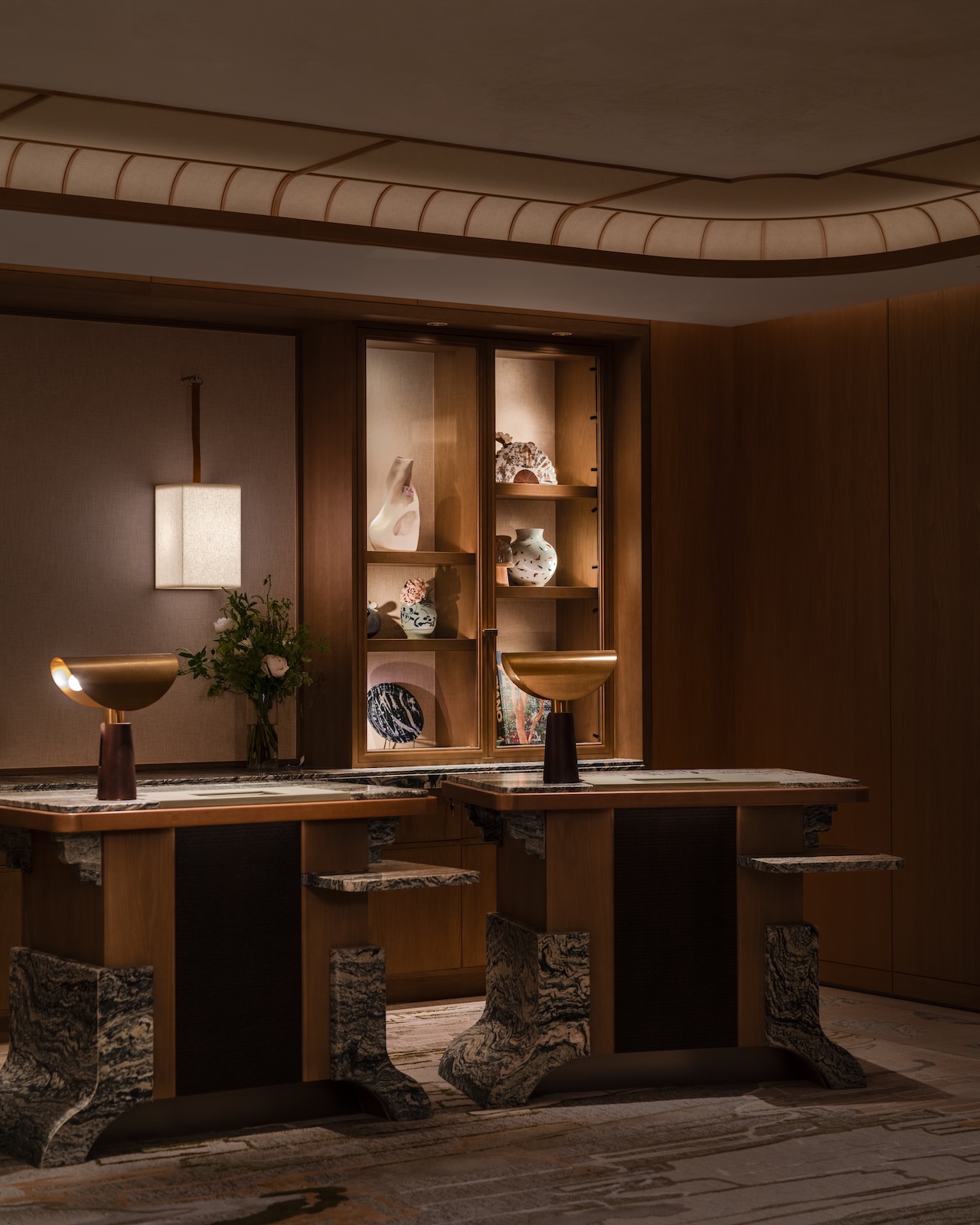
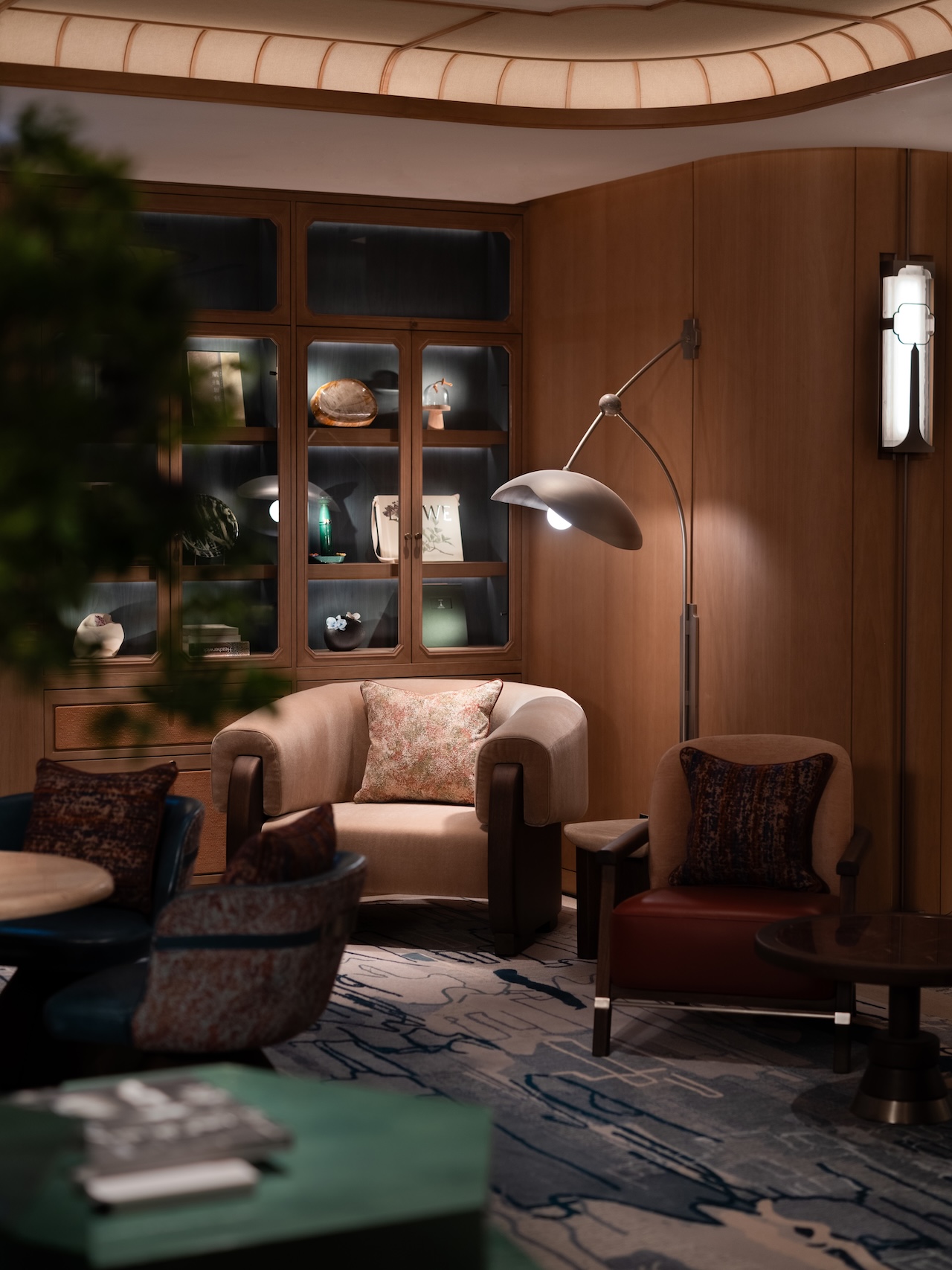
Art was integrated into the design program from the start. Wang says the artwork program “is rigorous in that there is a story behind each piece.” The collection brings together work by emerging and established artists, both local and international. Wang describes the hotel as a pied-à-terre for guests to experience the city up close. Sculptural vases, artisanal vessels, and other objects were selected to look like things gathered over time in a private home.
Photography by Common Studio
Together, these details give the hotel the layered character of a private residence, while the references to Hong Kong’s architecture, landscape, and artistic community keep the design firmly rooted in its setting. Rather than simply revisiting the studio’s earlier work, the renovation offers a more distinctly local interpretation of the luxury hotel.