Blog
Intel launches Core Series 2 and intros healthcare edge suite

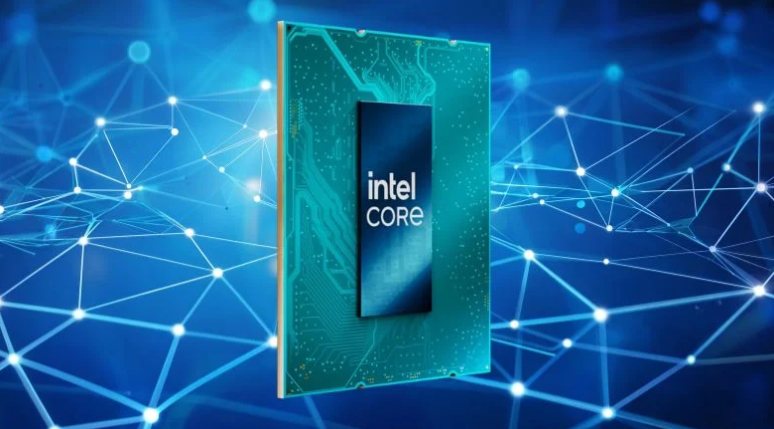
Intel announced edge AI processors and introduced a healthcare suite for patient care on Monday one week after Qualcomm touted its AI-based Snapdragon Wear Elite chip for wearables.
While the focus of the two markets from the two vendors will be different, there is plenty of crossover, and one analyst said Intel has an advantage over Qualcomm due to Intel’s history in the space. At any rate, the impact on sensors and related components promises to be large simply because the two mega-vendors are hot and heavy in the arena. To that end, Intel named several of its early edge customers in the robotics and physical AI realm.
“Intel is going after its installed base of industrial chips, where it claims to have 250 million shipped in the past 10 years. That’s a huge base to tap into with an upgraded design. It also has a huge amount of x86 code that it can leverage,” Jack Gold, president and principal analyst at J. Gold Associates, told Fierce.
“Qualcomm is announcing new capability, but other than a generic ARM industrial base, is really starting more from scratch. AI is a competitive differentiation, but in the inference-based Edge world, CPUs are more important than GPUs as they offer better performance and costs. Inference at the edge is a broad market and just emerging so there is room for many players. But having an installed base you can leverage and upgrade gives Intel an advantage in my opinion.”
Maybe it doesn’t matter to compare both Intel and Qualcomm at this point, but the fact that both are active in edge certainly increases resources for edge application developers.
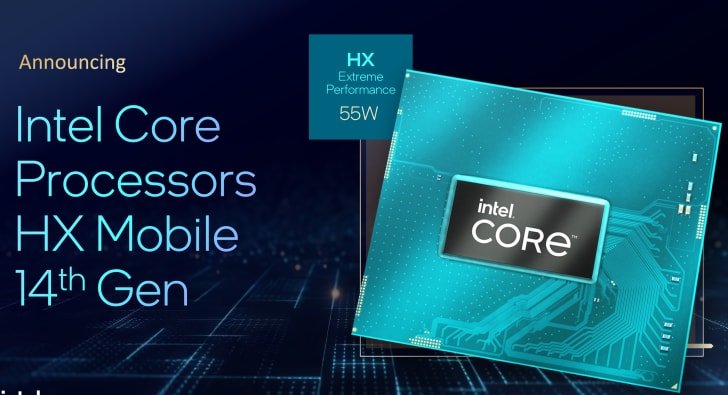
Intel launched Core Series 2 processors with P-cores and introduced the Edge AI Suite for Health and Life Sciences, references and benchmarks for AI-powered monitoring applications. At Embedded World 2026 in Germany, the company’s general manager of Edge Computing, Dan Rodriguez, claimed Intel leads in edge computing and called it one of its “fastest-growing business segments.” He added, “We continue to deliver comprehensive platforms that meet diverse edge customer needs with breakthrough performance, reliability and integrated AI acceleration.”
Intel compared its Core Series 2 processors to AMD Ryzen 7 9700X and claimed 4.4 x lower max PCXIe latency and up to 2.5 x more deterministic response time and 1.5 x higher multi-thread performance.
The Health and Life Sciences AI Suite is designed to address patient monitoring needs in connected ecosystems, using AI for earlier insights and reliable operations. Intel said its suite can showcase concurrent multimodal workloads running locally on Intel processors such as AI- based electrocardiogram arrhythmia detection, remote photoplethysmography and anonymous 3D visual tracking.
Intel shared four four edge partners in its announcement: Nanox.AI, Circulus, Sensory AI and ISS. Also, Intel customer Oversonic makes a humanoid where models are orchestrated across CPUS, GPU and NPU engines with “exceptional performance while maintaining minimal power consumption,” according to Vinenzo Latino, R&D engineer manager at Oversonic, in a statement.
Another customer, NanoX.AI, uses Intel for medical imaging at the edge, achieving near-real-time performance that “accelerates clinical decision-making while keeping sensitive xardia data securely on device,” said Sharon Saban, general manager, in a statement.
ASRock runs an entire AI stack on a single platform from Intel with nearly double the energy efficiency and half the cost as before, according to Kenny Chang, chief operating officer in a statement.
Other customer testimony from Intel included Cartken, a maker of mobile robots, Circulus, a humanoid robotics maker and Trossen. Trossen lead software engineer Luke Schmitt said Intel Core robotics technology has provide to run 8.3x faster than Nvidia’s Jetson AGX Orin.
Over at Qualcomm, at least two major sensors players announced they are supporting the AI-based Snapdragon Wear Elite chip—ST Microelectronics
and Bosch Sensortec.