Blog
Bryan Young Shares His Friday Five Inspiration Picks

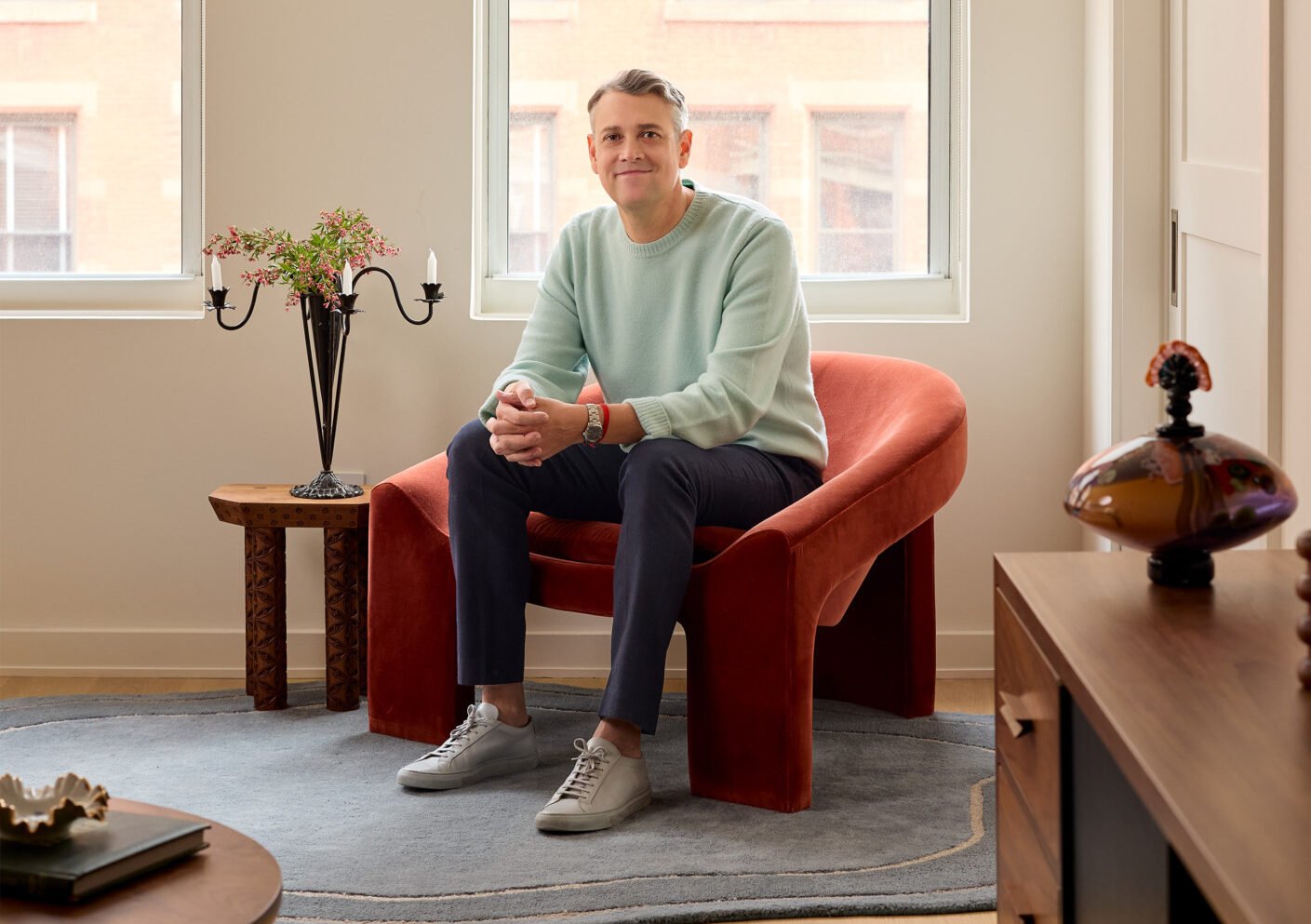
Originally from Los Angeles, Bryan Young noticed buildings even when he was young, and one by Louis Kahn left a lasting impression. As a teenager, he surfed Black’s Beach in San Diego, California, where you could see the Salk Institute for Biological Studies.
“It is still one of the clearest and most authentic buildings I have visited,” Young says.
He decided to pursue his interest in the built environment at UC Berkeley, where he earned his bachelor’s degree in architecture, before completing his studies at Harvard Graduate School of Design.
Founded in 2010, Young’s NYC-based studio, Young Projects, emphasizes materiality and often explores unique fabrication techniques like growing crystals or pulling plaster by hand.
Young is also interested in interiors and display objects. He collaborates with artisans to develop one-of-a-kind items and runs VERSO, a Tribeca design gallery he founded in 2002 with Amauri Aguiar; its curated collection includes bespoke furniture and art pieces.
Today, Bryan Young joins us for Friday Five!
Photography by Bryan Young
1. Girard
When you stare at something for a long time over many years, it is exciting to realize that it is becoming more interesting.
The Blue Triangles by Alexander Girard dates to 1972 — my wife Marina’s birth year, which made it a lovely 40th birthday gift in 2012. Over the past 14 years, we have repeatedly examined this seemingly simple silkscreen with extreme fascination. Groups of triangles bundle together. Groups of groups of triangles bundle together. The blue triangles are both figures and ground to the naked white triangles of the canvas. After some duration of time, the surface seems to vibrate.
Under very close examination, one can see that some triangles actually do not touch while others clumsily overlap. Discovering these nuances and related optical effects influenced the development of the tiling strategy at our Glitch House project in the Dominican Republic, and the subsequent silkscreens we completed in collaboration with the Soho gallery a83.
Photography by Bryan Young
2. Van Gogh’s Roses by Raina Lee
When you know a painting for as long as you can remember and then see it anew, it is deeply mesmerizing.
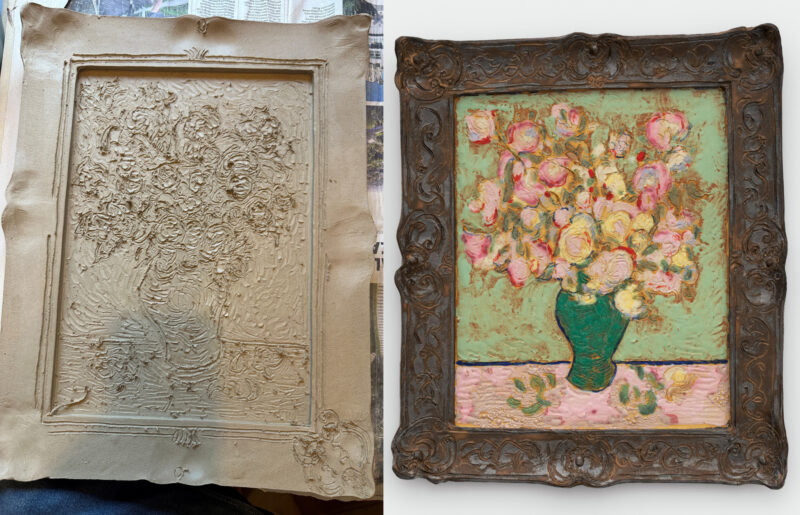
Raina Lee’s ceramic Roses, which sit in our kitchen in Brooklyn, is based on Van Gogh’s Roses from 1890, which are on display as part of the permanent collection at The Met. Her version is a truthful replica, restoring the pink color of the roses originally painted in geranium lake and faded over time. Yet the effect of the ceramic glaze casts an uncanny reflection on the masterpiece, as the surface’s sheen and the clay’s subtle dimensionality create a sense of depth that is both analogous to and foreign to Van Gogh’s brushstrokes.
Lee’s unique glaze to make the pink color is the result of a chemical reaction between chrome and tin. A hand technique in which craft emerges through trial and error, and the actual making is engaged in the final aesthetics.
Photography by Bryan Young
3. The Parrot and The Falcon
When things so familiar start to change because of their proximity to other things, it is quite exciting.
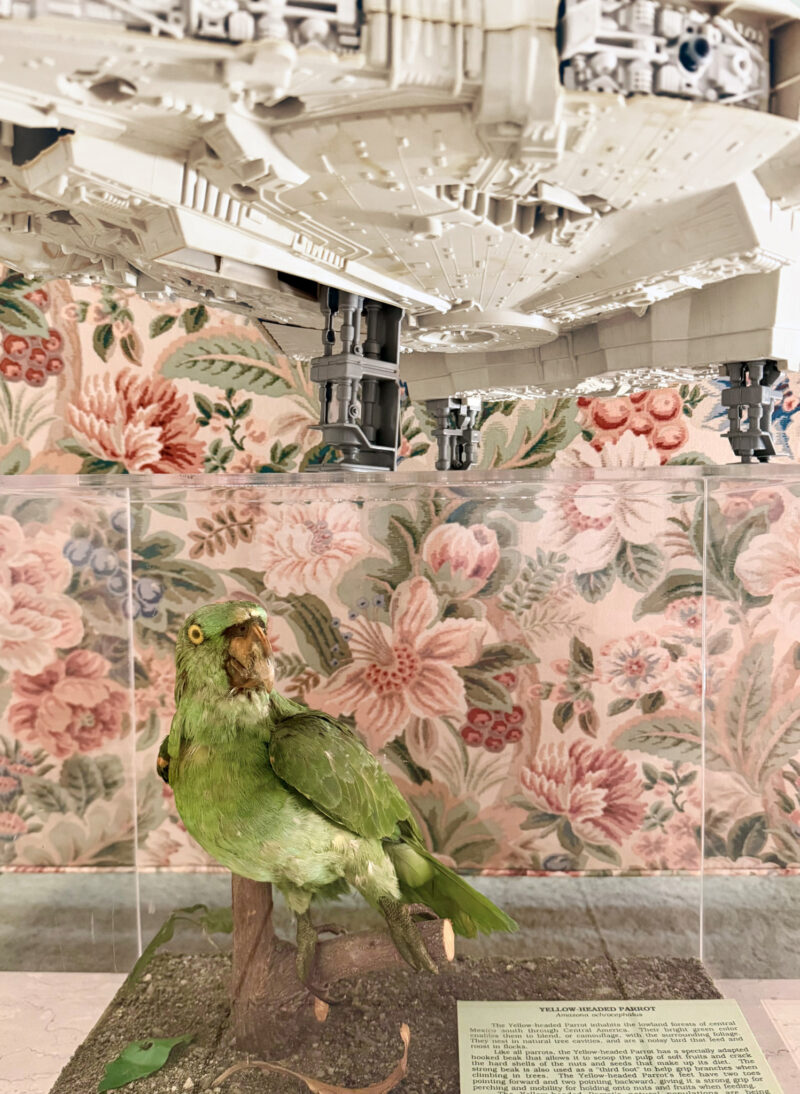
The yellow-headed parrot inhabits the lowland forests of Central Mexico. The artwork came to me via my grandmother, who was a docent at the Los Angeles Natural History Museum. My brothers Mike and John and I share the Millennium Falcon by Kenner, which was released in 1979. The cockpit cover has been missing since 1981.
Nostalgia and pop-culture references are as important to our concepts as novelty. The strange juxtaposition of the Parrot with the Falcon in front of my mom’s floral sofa is at once a collage of memories and at the same time seeks to provoke otherworldly qualities through their proximity. As objects from my childhood, these pieces fueled a fascination with collecting, shoebox dioramas, plex vitrines, and fictional narratives.
Photography by Bryan Young
4. Playa Grande
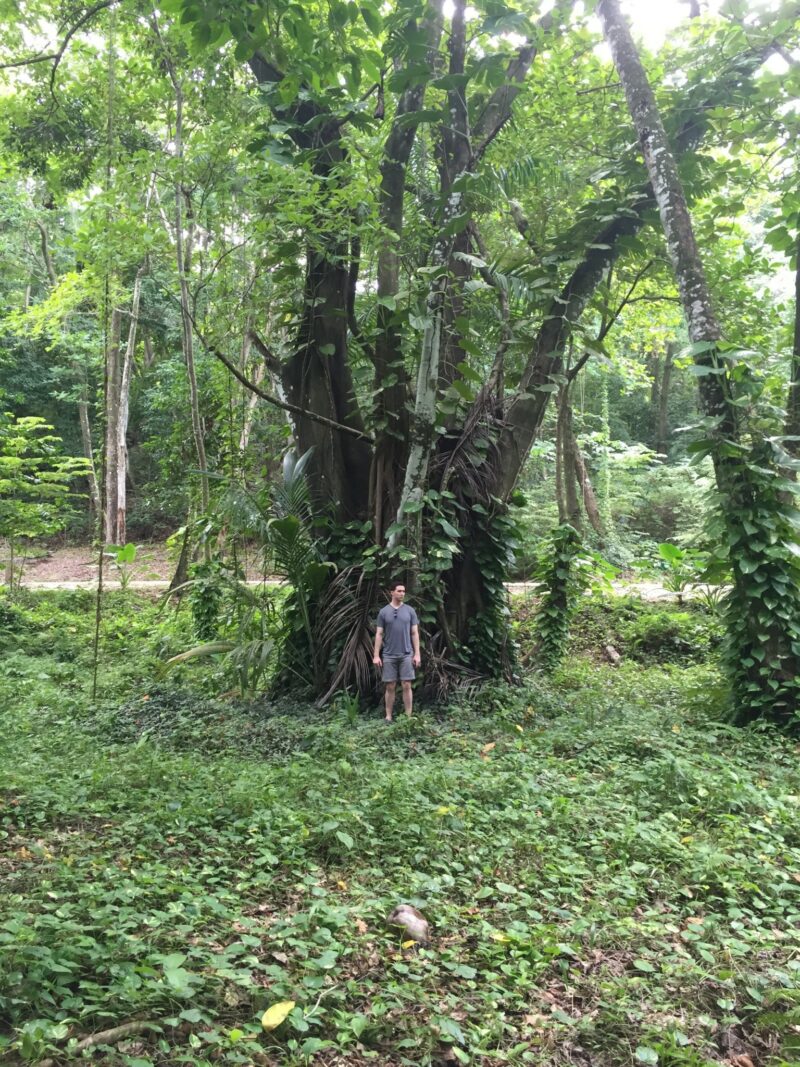
When you live in the concrete jungle where dreams are made of, the landscape of the actual jungle is even more dynamic than you can ever dream of.
The photograph is of Young Projects’ partner, Noah Marciniak, standing in front of a magnificent ficus tree during an early site visit to Playa Grande in the Dominican Republic in 2015. It is a place that insists on being felt before it can be understood. Light moves through the canopy in rays. The air is thick and alive on your skin. It was clear from the beginning that any architecture placed here would have to answer to all of it.
The main house for the retreat at Playa Grande takes its cues from the undulating canopy above. Its roof—assembled from 160 scissor trusses that shift and rotate—mimics the restless, fluid geometry of the jungle without touching it. At the center of the house, a courtyard holds another ficus tree. The architecture wraps around it like a conversation rather than a frame.
Courtesy of Bryan Young
5. Shows
When you have not done something you love for a long time, and then you get to do it again, it is astonishing to realize how much you had missed it.
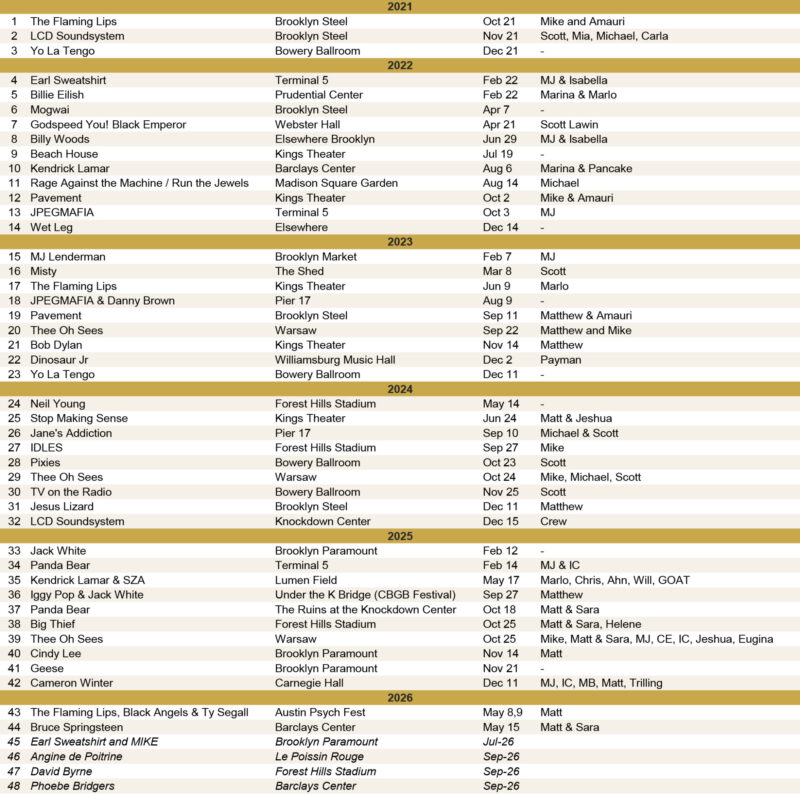
My first concert after lockdown was The Flaming Lips at Brooklyn Steel in October 2021. The room was full of people who had not been in a room full of people for a very long time, and everyone knew it. Something was released that night, something that had been held tightly for two years of isolation. Wayne Coyne reminded everyone in his space bubble that we must remain connected, even in bubbles.
What followed is an ongoing list of concerts across five years: Kendrick Lamar with SZA, Billie Eilish, Bob Dylan, Wet Leg, IDLES, Iggy Pop under the Kosciuszko Bridge, Cameron Winter, The Boss at Barclays, Earl Sweatshirt and Peggy (with no beef on who is experimental). Small rooms and enormous ones. Solo acts and massive bands. The venues themselves are mapped throughout NYC: Bowery Ballroom, Carnegie Hall, Kings Theater, Warsaw, the Knockdown Center, MSG.
What stays with you is not the setlists, but the people you went with. It is the special electricity of strangers dancing wildly next to people you love. Being fully in it. Being stoked.
Works by Young Projects
Photography by Iwan Baan and Karla Read
The Glitch House in the Dominican Republic
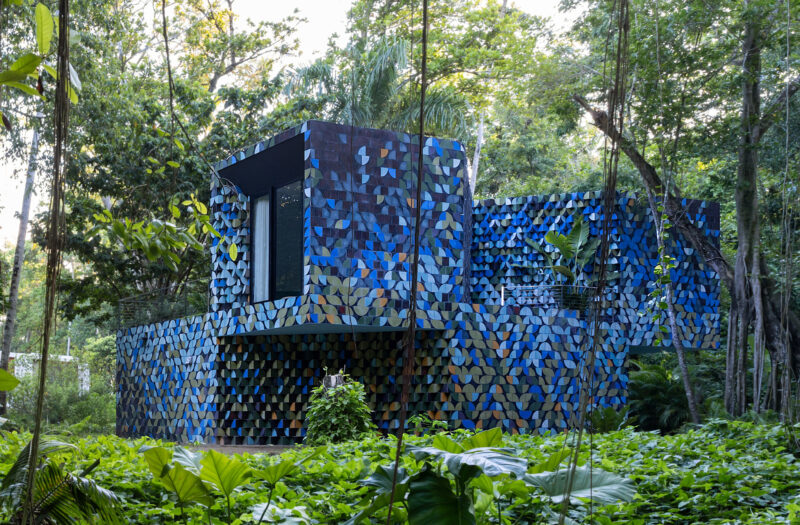
The Glitch House nestles into the jungle further inland from the Retreat House at Casa Las Olas. The small structure provides both guest accommodations as well as necessary landscape and maintenance workspaces for the overall property. The building’s exterior is clad in encaustic cement tiles handmade in the Dominican Republic.
The simple quarter-arc pattern of each tile interferes with the shadows and graphic legibility of the staggered concrete block walls to a vibrating, oscillating effect.
The Glitch House is the first structure a guest sees upon arriving at Casa Las Olas. Rather than marking this moment with a defined boundary or gatehouse, the Glitch House strangely smears itself into the jungle landscape and hints towards the immersive experiences that guide the design for the retreat in general.
Photography by Gieves Anderson
2. Soho Loft in New York City
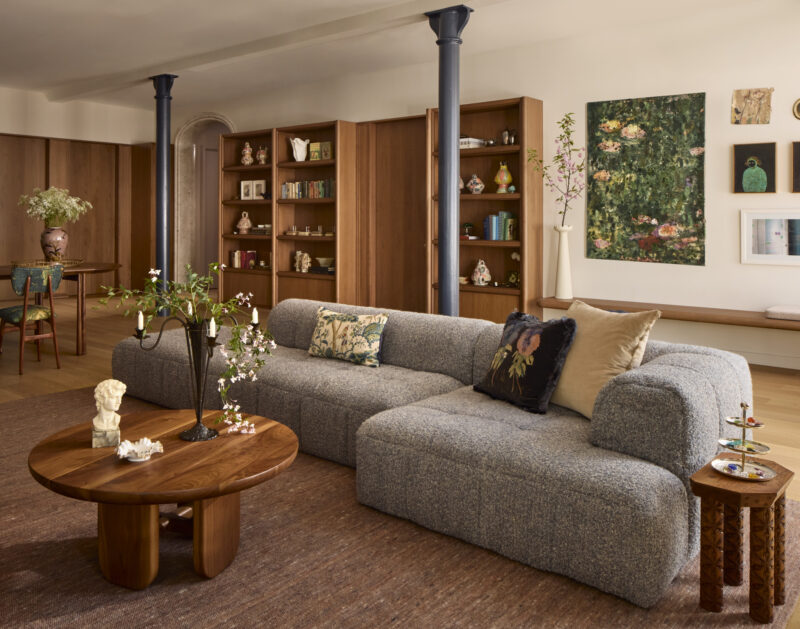
This loft, located in Soho within a warehouse conversion, elevated a previously renovated three-bedroom layout. A plastered mob foyer, ending in a Scagliola archway, marks the entry to the open living area. Millwork of walnut and stainless steel helps ground the kitchen within the open floor plan, while a series of library bookcases wrap around framing entry to the primary suite, powder room, and laundry.
Photography by Brooke Holm
3. French Quarter Cottage in New Orleans, Louisiana
An interior renovation of an 1820s Creole cottage compound with one of the largest private courtyards in the French Quarter, the property includes a main house and carriage house with a gallery overlooking a walled courtyard, swimming pool, and majestic old-growth trees.
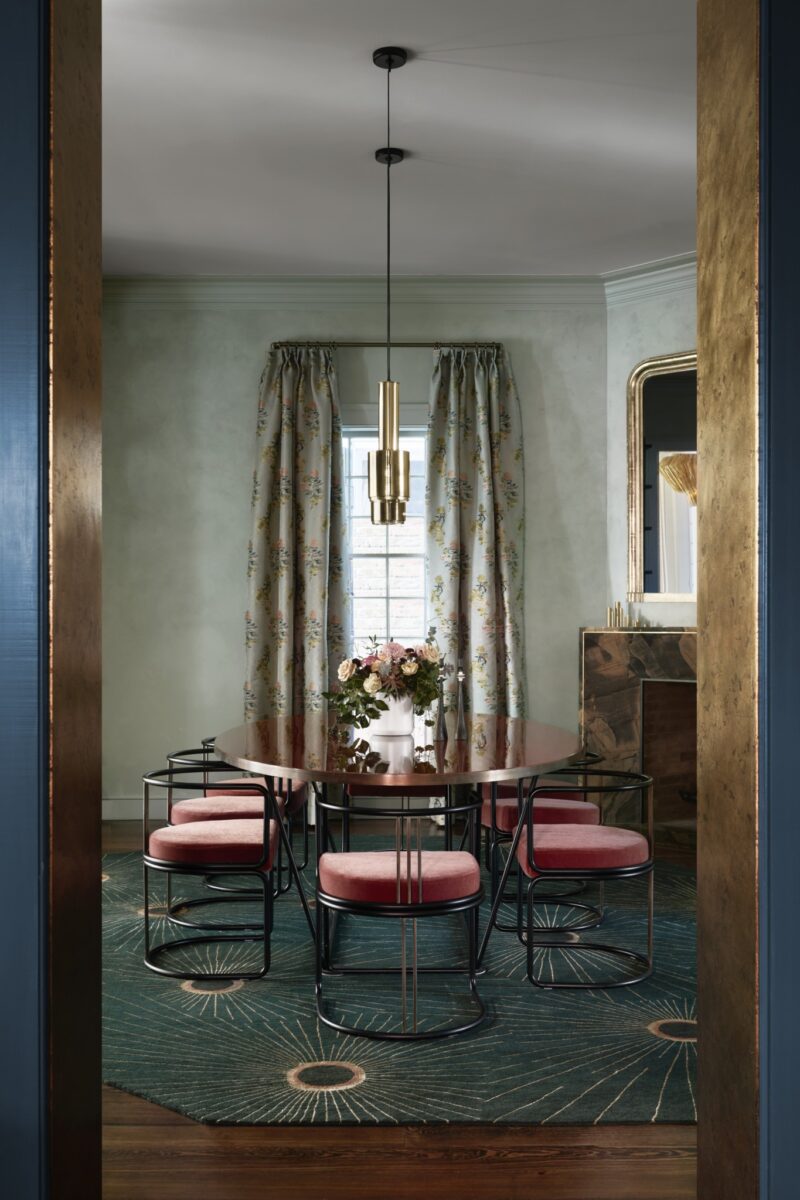
A classic four-square plan houses the primary rooms: bar, music room, salon, and dining room. The four adjacent rooms are treated as distinct spaces varying in color, finish, material, and furnishings. Each of the primary rooms is linked via “portals,” custom ombre-patinated gold-leafed open doorways serving as thresholds crossing from one distinct space to the next.
Photography by Iwan Baan
4. Casa Las Olas in the Dominican Republic
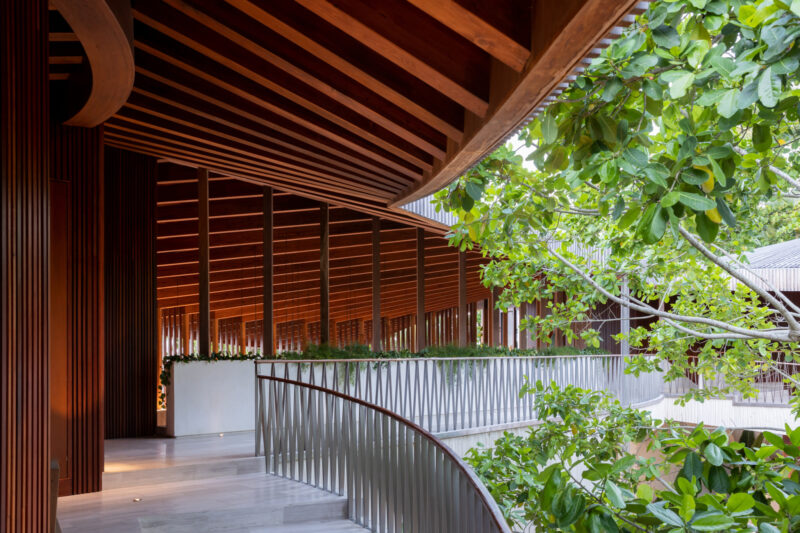
Located on a previously undeveloped site, the Retreat House takes full advantage of the pristine beachscape at the front of the property, balancing expansive views of the Atlantic Ocean with the lush, dense jungle that dominates most of the site. Further inland, the Porch House and Glitch House provide additional guest accommodations and supplementary
program.
In the most diagrammatic sense, the Retreat House is simply a transformed courtyard parti. Directed by solar orientation, natural ventilation, and the desire to preserve all existing trees and vegetation, the evolved form is a drifting ring that shifts in plan and section just below the jungle’s canopy. The roof is a ruled surface of 160 scissor trusses; each is dimensionally unique, but simple in joinery and construction. The result is a highly complex and fluid structural condition that shifts along corridors, curves through primary double-height spaces, and rotates to navigate the geometry at each corner. The design facilitates a panoramic experience of the site, from its
diverse jungle landscape to its vast ocean views.
Photography by Michel Passos Zylberberg; co-designed and fabricated by Art in Construction in Brooklyn, New York; represented by VERSO
5. Upside Down Chair
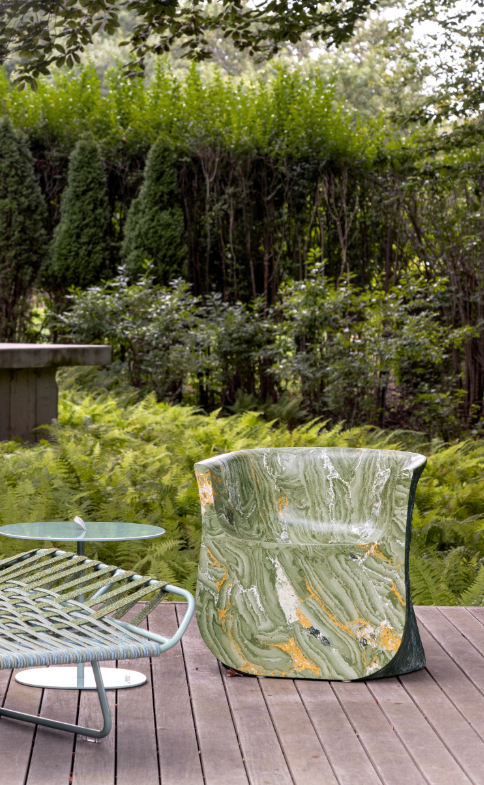
Young Projects worked closely with master plaster artisans Art in Construction to develop this one-of-a-kind piece that combines the 17th-century plaster technique of scagliola with the aesthetics of rough concrete. The outcome is a vibrant marble-like finish that shifts from a smooth, refined sitting surface to a rough geological exterior. The Upside Down Chair’s durable but elegant form and material allow it to be used equally well indoors or outdoors.