Blog
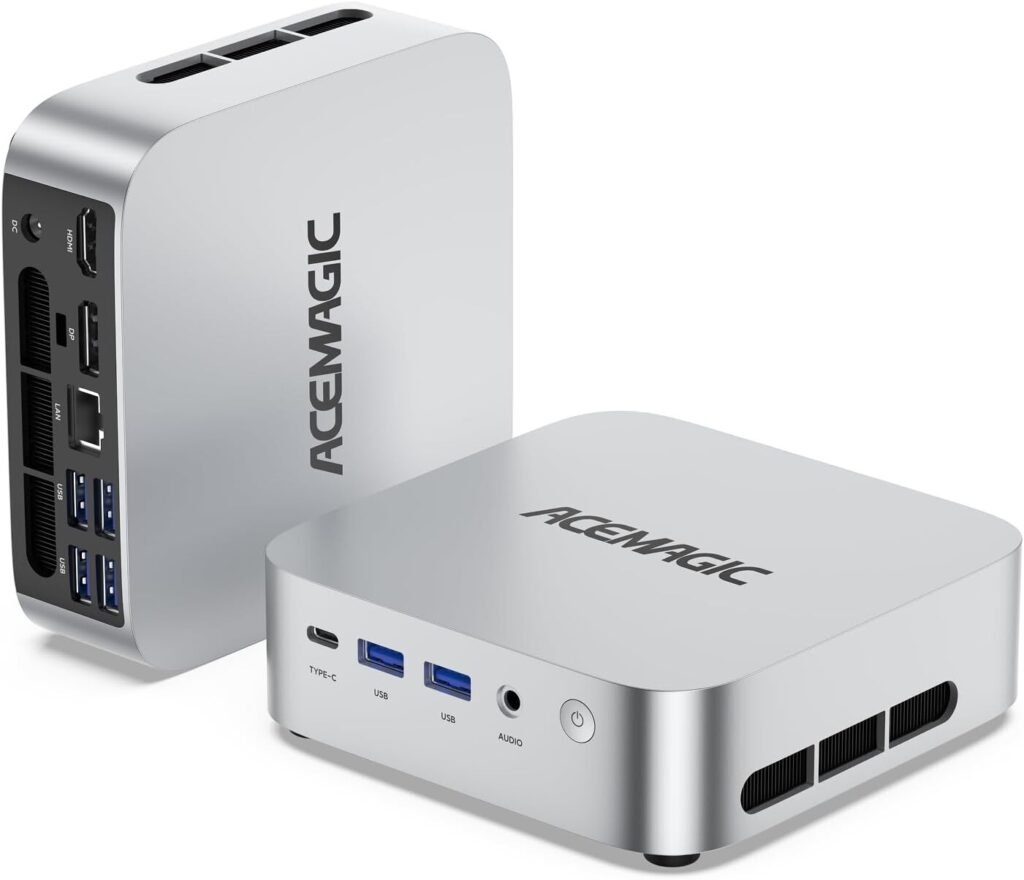
AMD Announces Ryzen AI Halo, the Compact DGX Spark and Mac Mini Rival

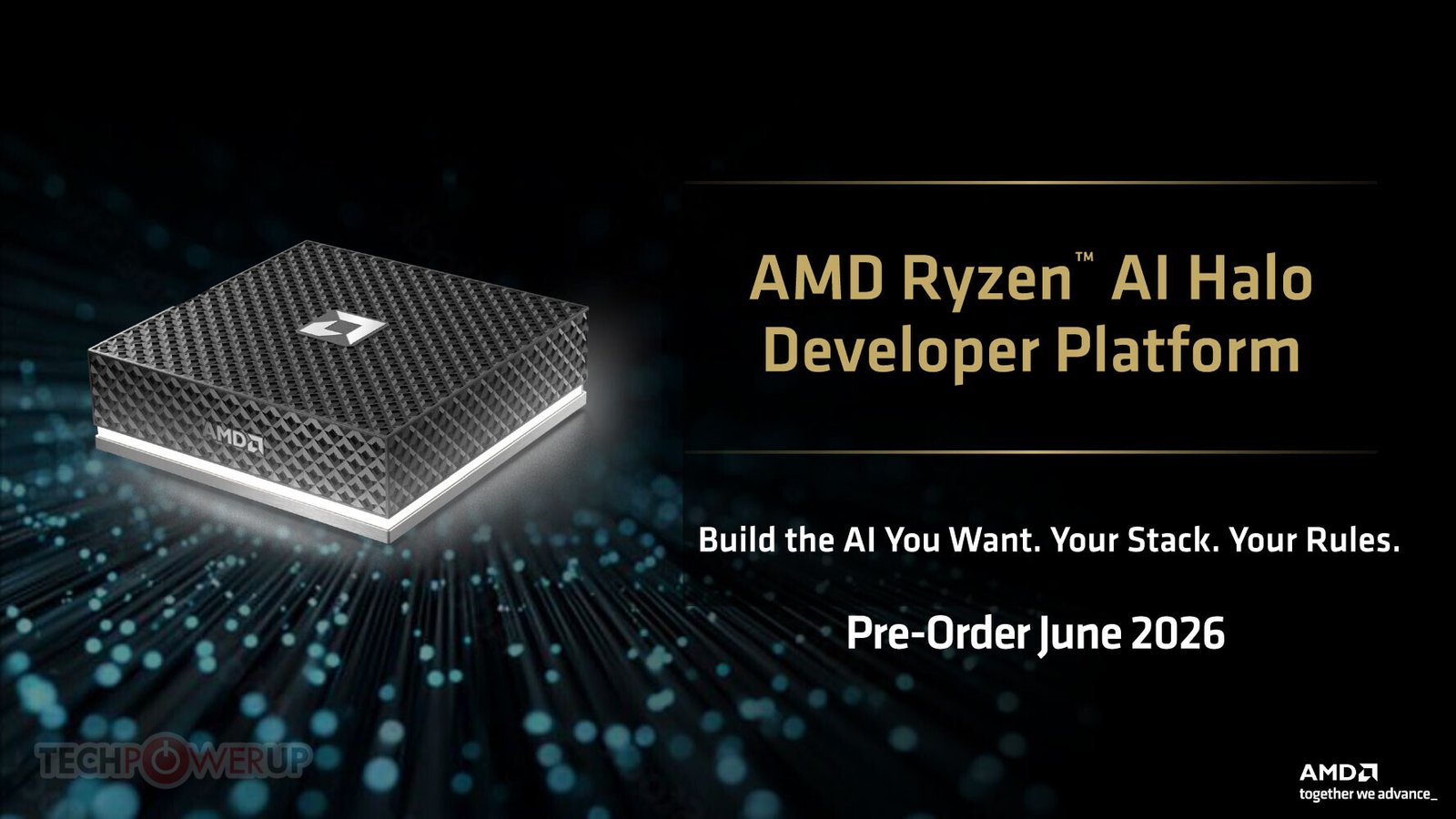
At the heart of the Ryzen AI Halo is the Ryzen AI Max+ 395 “Strix Halo” processor that combines 16 “Zen 5” CPU cores with an oversized iGPU powered by the RDNA 3.5 graphics architecture, featuring compute capabilities. There’s also a nimble 50 TOPS NPU. Perhaps the most interesting aspect that brings this whole device together, is memory. The processor features a quad-channel (256-bit wide) LPDDR5x memory interface, and AMD has crammed 128 GB of memory into this box. Also helping things is a spacious 2 TB NVMe SSD. The large memory size, helps the processor run AI models with up to 200B parameters, with the right quantization. For reference, the current Mac Mini can only be configured with up to 64 GB of memory. Hardware is less than half the story, the bulk of AMD’s engineering effort with the Ryzen AI Halo is on the software side. The company innovated a comprehensive software platform compatible with both Windows and Linux, which helps developers quickly deploy one or more Ryzen AI Halo boxes faster than it takes to set up DGX Spark, AMD says.
AMD Ryzen AI Development Center is an interface developed for Windows and Linux that lets AI developers minimize the time it takes to configure and deploy their tools on the machine so they can get started building and running their AI models. AMD AI Playbooks is a set of documentation and scripts that help developers shorten their learning curve on the platform.
There are highly specific Playbooks for generating images with ComfyUI and Z Image Turbo, running LLMs with ROCm, LM Studio: Chat, etc; advanced LLM use-cases on PyTorch with ROCm; local LLM-assisted software development with VS Code and Qwen3-Coder-30B; and workflow automation with n8n and GPT-OSS-120B models. Five of these Playbooks come pre-installed, and 10 of them are available online at the AMD website. The company plans to release new Playbooks each month.The AMD AI Developer Program is a free initiative designed to empower developers on AMD platforms with specialized tools, training, and community resources. Upon joining, members receive 100 AMD Developer Cloud credits and a one-month complimentary DeepLearning.AI Pro membership. The program fosters collaboration through a private Discord channel that connects members directly with AMD technical experts. Developers can also participate in monthly sweepstakes to win AMD hardware, attend exclusive workshops, and showcase their projects on official AMD channels. Additionally, users of the Ryzen AI Halo platform receive exclusive tier benefits, including prioritized AMD support, direct feedback loops with internal teams, and a dedicated academy track featuring AI Playbooks.Here, AMD compares the Ryzen AI Halo to its two key rivals. When compared to the DGX Spark, AMD claims up to 7% tokens per second lead in GPT OSS 120B model, and up to 12% lead in Qwen 3.5 122B model. Even in scenarios that aren’t as memory-intensive, AMD claims some performance gains. Qwen 3.6 35B model shows the Ryzen AI Halo 4% faster, and GLM 4.7 Flash 30B model is shown favoring the AMD platform at 14%. Next up is a maxed out Apple Mac Mini with M4 Pro. Here, given its 64 GB maximum memory, it can’t run GPT OSS 120B and Qwen 3.5 122B, while generative AI workloads are shown with an average 4x performance gain. The Mac Mini also lags behind in certain advanced generative AI models.AMD makes the case for how online, cloud-based video generation models can cost around $250 a month with limited credits, while music generation models can cost around $24 a month, while a $3,999 investment into a Ryzen AI Halo would recover this cost in 16 months with unlimited tokens. The slides below show AMD’s math.The complete slide deck covering this section of the launch follows.