Blog
a Cinematic Collection for Crate & Barrel

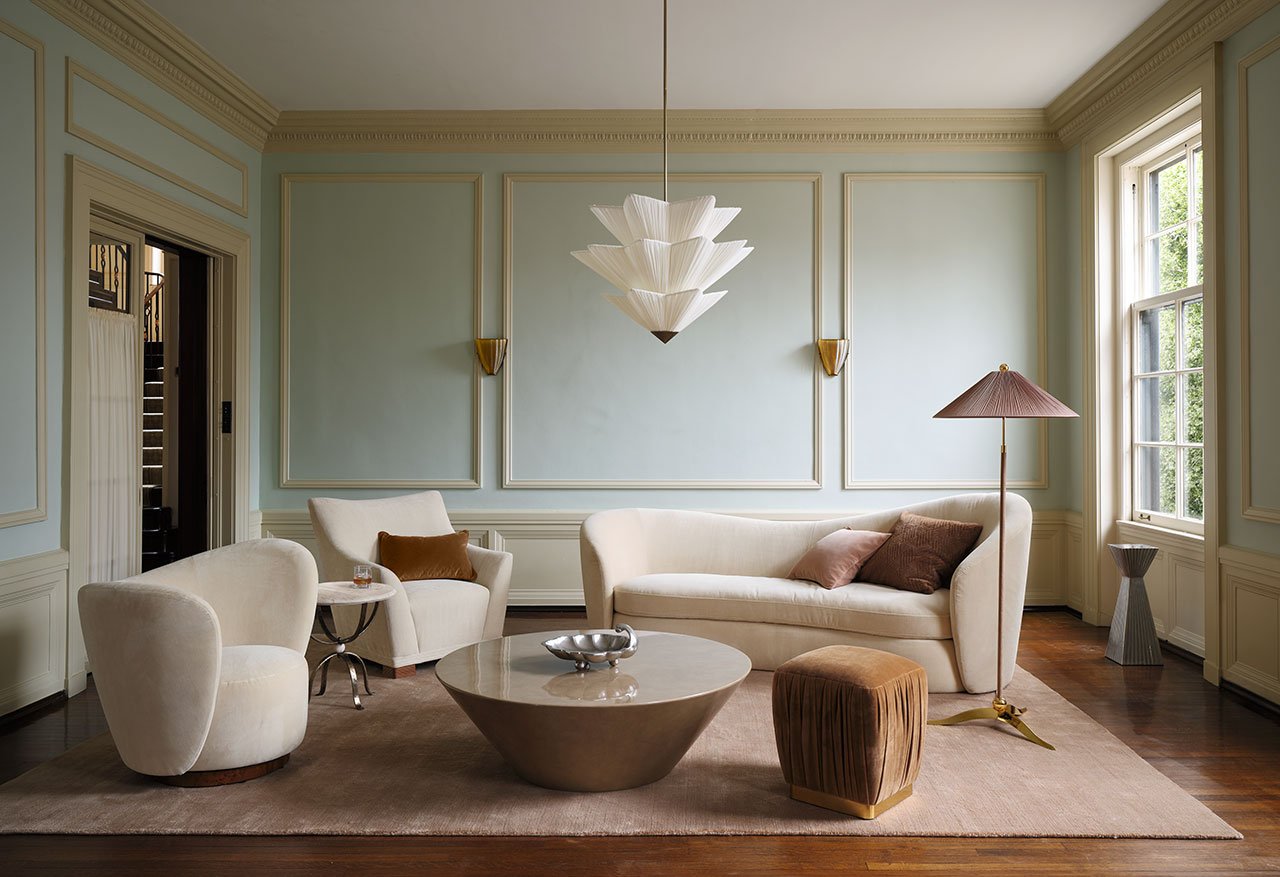
There’s a particular alchemy that happens when interiors are conceived less as static arrangements and more as scenes waiting to unfold. The room becomes a set, the objects actors, the materials a kind of performance—each element calibrated to evoke mood, memory, and narrative. With the new collaboration between Laura Harrier and designer Tiffany Howell for Crate & Barrel, that sensibility takes center stage.

Debuting an 87-piece collection spanning furniture, lighting, textiles, and decor, Howell and Harrier approach the home not as a backdrop, but as a compositional tool capable of constructing richly layered interiors that feel cinematic in both atmosphere and intent.


The foundation of that world-building lies in a shared visual language. What began as a long-standing friendship evolved naturally into a creative partnership rooted in overlapping references—vintage cinema, archival fashion, photography, and the quiet drama of 1970s design.


“We were always pulling from the same references,” Harrier notes, describing a process translating image into object and memory into form.


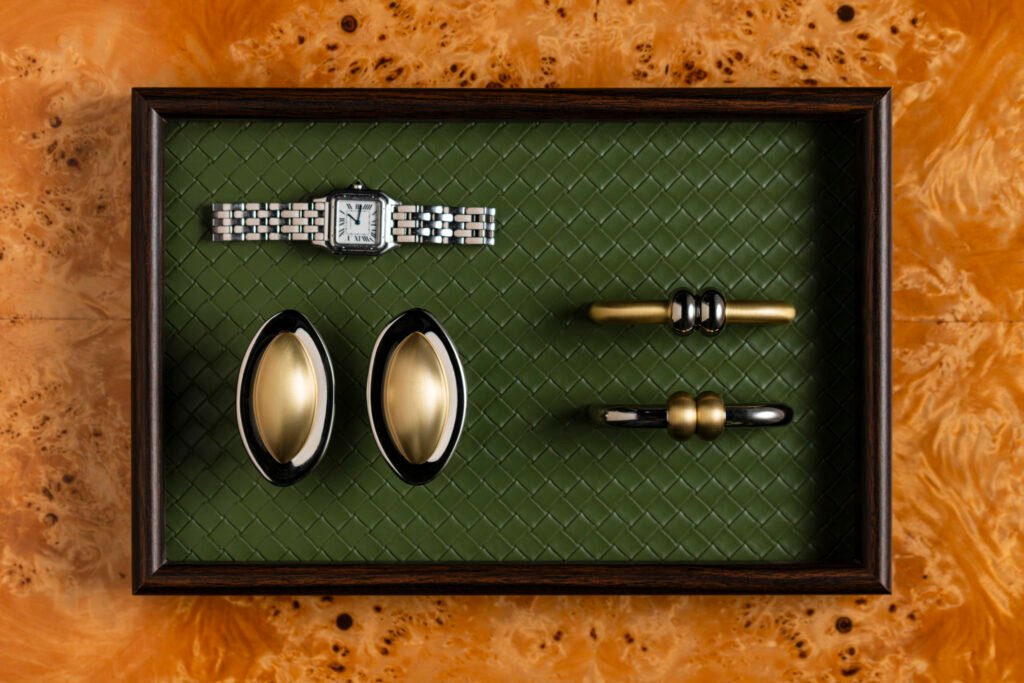
Rather than starting with furniture typologies, the duo looked elsewhere: the curve of a dress, the glint of a cufflink, and the structure of a vintage heel. These fragments became the collection’s generative DNA, reinterpreted through material and scale. Upholstered silhouettes echo the cutouts of eveningwear; wood joinery carries the precision of jewelry detailing; lacquered finishes recall the gloss of accessories worn smooth over time. It’s a methodology that sidesteps conventional product design in favor of something more associative, and ultimately, more narrative-driven.


That narrative is steeped in a palette saturated in reverie. Tobacco, copper, and cream saturate the collection, conjuring the amber glow of old Hollywood interiors and late-day California light. Materials—burl wood, velvet, grasscloth, and mouth-blown glass—are deployed not just for their tactile richness, but for their ability to hold atmosphere. Together, they build a visual density that reads like a well-composed film still, both intimate and expansive.


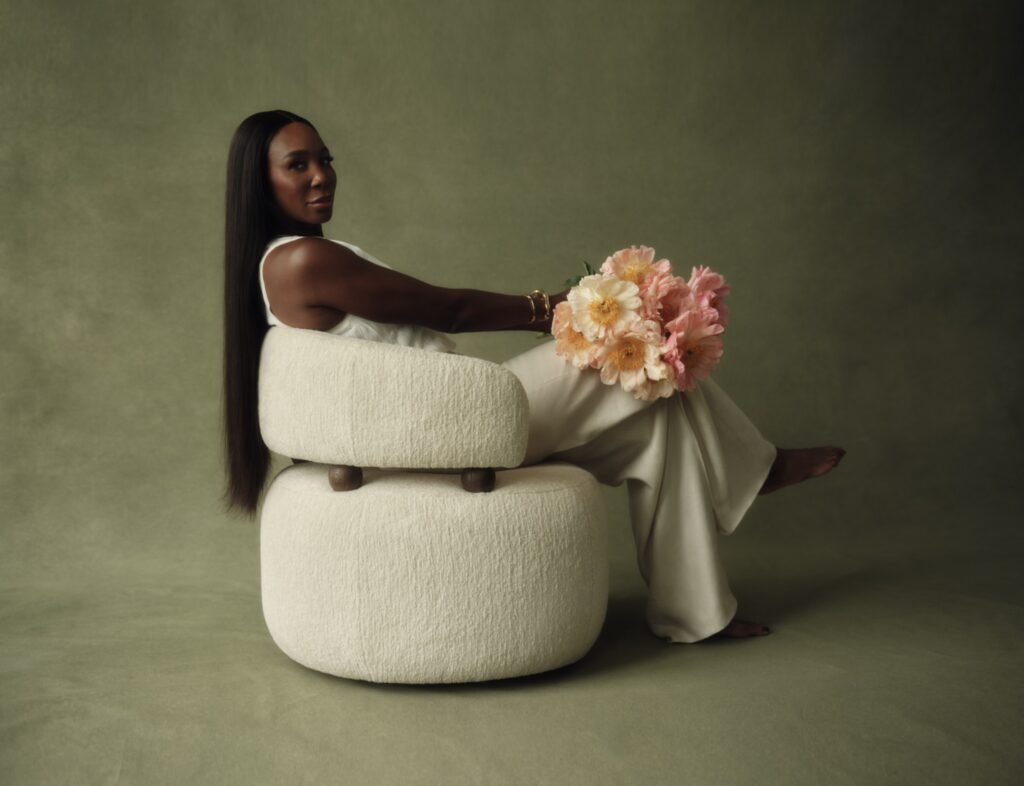
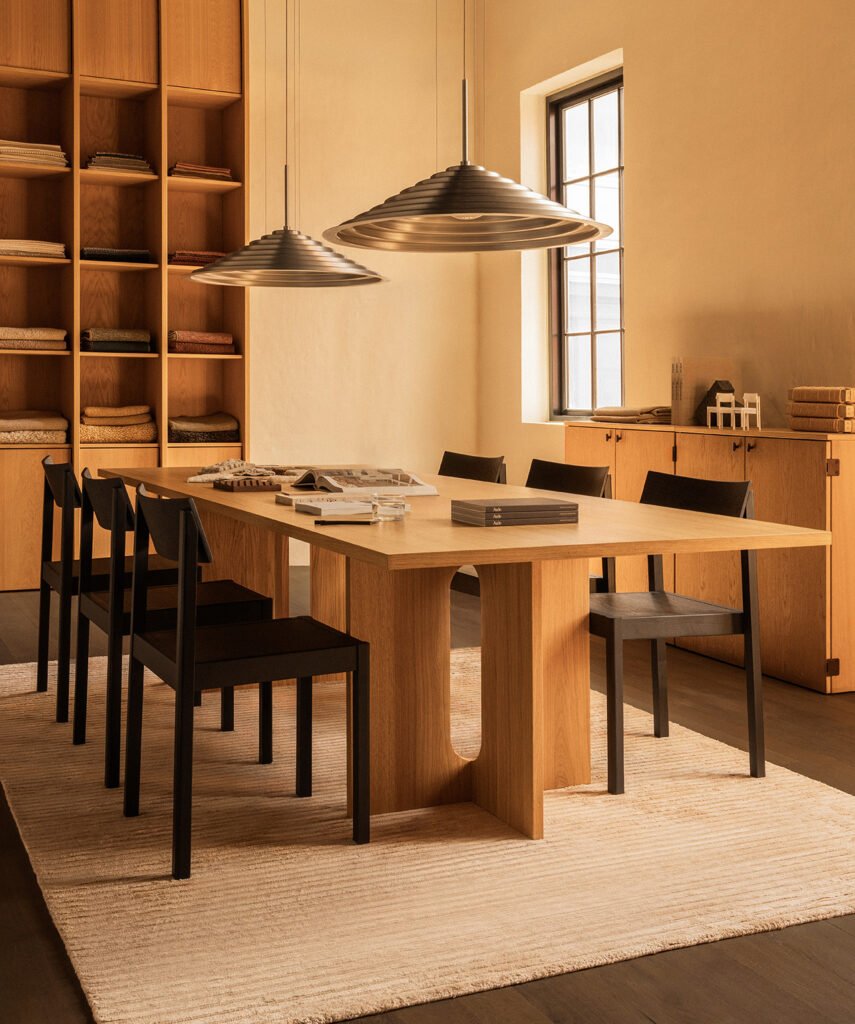
Key pieces act as anchors within this scenography. The bar cabinet, a standout for both Harrier and Howell, distills the collection’s ethos into a single object: lacquered surfaces meet generous proportions, while interior compartments are scaled to accommodate vinyl records. Elsewhere, the dining table’s sculptural legs and brass detailing introduce a sense of tension and release, while seating elements subtly reference the architecture of garments, with curves and cutouts that feel at once tailored and relaxed. Together, the pieces become an invitation to ritual, to gathering, and to performing.


Even the smaller gestures carry weight. The curvature of a headboard, the interplay between upholstery and wood, the faint irregularity of a finish—each detail contributes to what Howell describes as a sense of “soulfulness,” a quality that resists perfection in favor of something slightly worn, slightly undone. The effect is a kind of softened glamour that favors lived-in elegance over pristine surfaces.


Crucially, this cinematic approach doesn’t abandon livability. Working within the framework of Crate & Barrel’s customer, the duo balanced expression with usability, ensuring that the pieces remain functional without sacrificing their point of view. The result is a collection that feels immersive but not prescriptive—capable of transforming everyday rituals into something more intentional and composed.


To see this and other works by the designer, visit nightpalm.com.
Photography courtesy of Crate & Barrel.