Blog
Passive 3D Thermal “Cloak” Hides Objects from Heat, from Any Direction

Note that this isn’t just a thermal barrier preventing heat from reaching or leaving a target. Instead, it directs the flow of heat around the target object. (Although there are some outward similarities, don’t confuse this thermal cloak with the well-known Romulan cloaking device of Star Trek — but then again, you never know what the future will bring!)
Past cloaking experiments have only worked in two dimensions or along a single direction of heat flow, far from the ideal of a true 3D cloak. Therefore, controlled heat only goes across flat surfaces or along one predetermined route. If heat approached from another direction, the temperature disturbance created by the hidden object could become visible.
Transformational Thermotics
To solve this problem, the team went back to the basic of transformational “thermotics” (for some reason, they chose this archaic term for what we now call thermodynamics). They asked, “What kind of material structure could cover almost all of the thermal properties needed for a perfect cloak?”
Their solution investigated and calculated how heat must travel around a protected region to make the surrounding temperature field look unchanged. The idea is similar to rerouting an electrical or water-flow current around an obstacle and reconnecting it on the other side without leaving an obvious disruption.
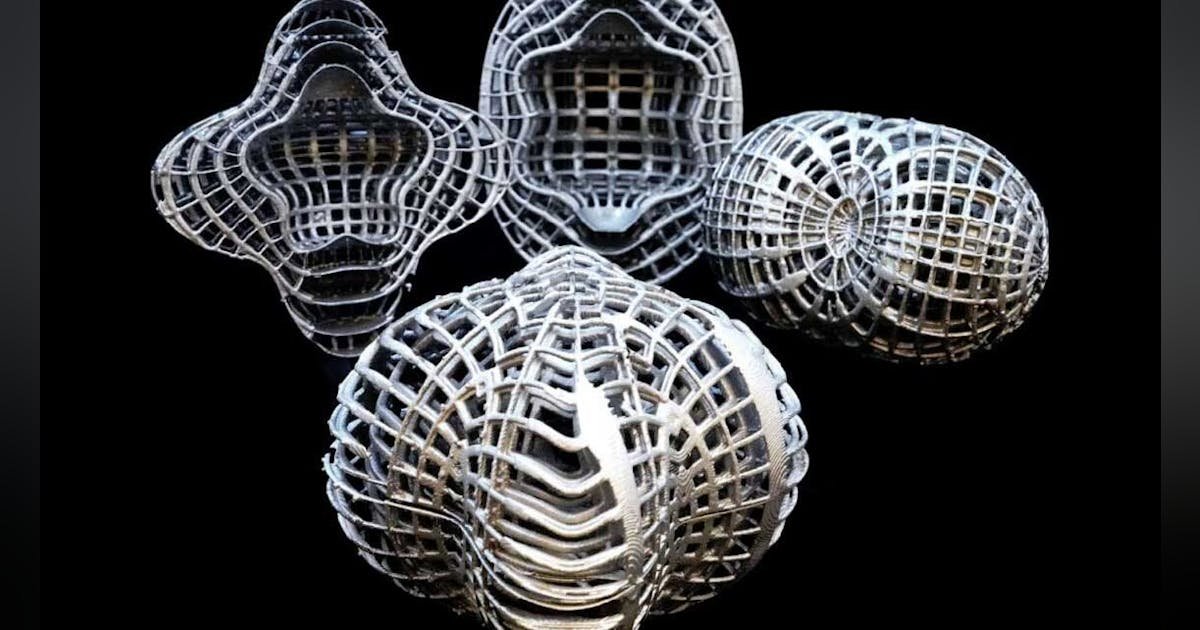
Their implementation is based on a new type of lattice-type material that can be fully adjusted in three directions. By tuning these dimensions, the researchers could precisely control how well different regions conduct heat. This design covers a much wider range of thermal conductivities than previous approaches — sufficient to closely match the theoretical requirements for ideal cloaking.
They used advanced CAD and thermal-modeling tools to calculate how heat must travel around a protected region to make the surrounding temperature field look unchanged. The challenge was turning that mathematical prescription into a structure that could be manufactured. Different regions of the cloak needed carefully selected thermal conductivities, meaning they had to move heat at different rates and along different directions.
Implementation and Test Results
The team’s thermal cloak isn’t just a computer model — it has been physically fabricated and tested. The device is a hybrid material using 3D-printed metal to create a precise aluminum lattice that acts as a high-conductivity material. Mold casting was then used to fill in the structure with a rubber-like material with low thermal conductivity (Fig. 2).