Blog
Novi Space and Ubotica partner on AI-enabled Earth Observation

The former specialises in space AI and the latter in edge computing in orbit. And the collaboration will integrate Ubotica’s SPACE:AI platform with Novi Space’s GENIE smart-satellite platform.
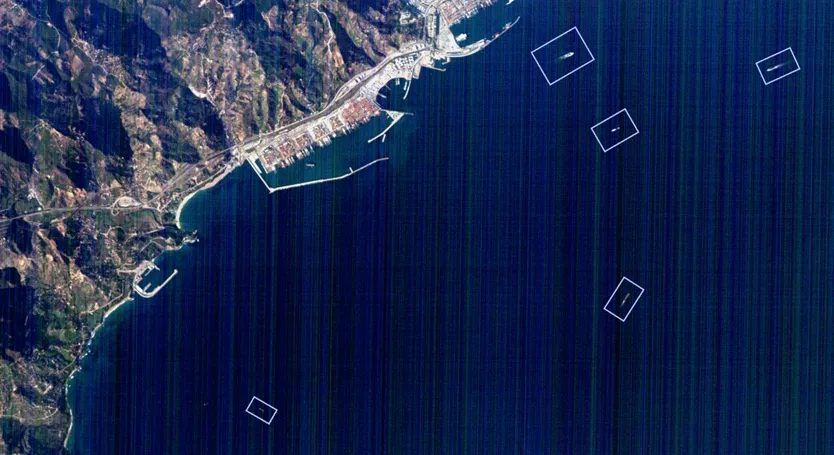
The aim is to enable Earth observation data to be processed directly onboard satellites. In turn, supporting faster decision-making in time-critical domains such as maritime monitoring, pictured.
SPACE:AI is capable of generating intelligence within 90 seconds of acquisition, states Ubotica. And this enables actionable insights in near real-time, without having to transmit the underlying imagery. The result is dramatically lower latency, lower bandwidth cost and higher intelligence value per pass, it highlights.
Earth Observation
“Our collaboration with NOVI brings more AI-enabled Earth Observation capacity into orbit,” Dr. Aubrey Dunne, co-founder and CTO.
“By combining SPACE:AI with GENIE’s onboard compute, we’re shifting satellites from data collectors to intelligent agents, delivering insights in minutes rather than days. That capability underpins our Live Maritime Intelligence service and unlocks new operational models for time-critical surveillance.”
Novi Space
For its part, Novi Space highlighted the importance of real-time intelligence in space:
“AI at the edge is not a future concept, it’s happening now,” said Michael Bartholomeusz, the Novi Space CEO, . “Partnering with Ubotica allows us to demonstrate the full potential of GENIE: delivering real-time intelligence from orbit, not just data. This is a fundamental shift in how space-based systems create value.”
Metadata
The system will not only identify vessels but also extracts metadata, including location, size, and orientation. Such metadata can, in turn, be combined with AIS (Automatic Identification System) data to detect potentially “dark” ships engaged in illegal or suspicious activities.
Ubita has already proved its use of AI in its CogniSAT-6 satellite mission, in 2024, which it described as the first to achieve Live Earth Intelligence. And it is also participating in the European Commission’s ARCHYTAS project, a three-year initiative to develop AI accelerators for defence applications.
Basically, using AI will avoid simply gathering data and downlink it all for delayed on-ground processing. The aim is to enable satellites to understand what they see and then be in a position to deliver real-time and actionable insights.
CogniSAT-XE2
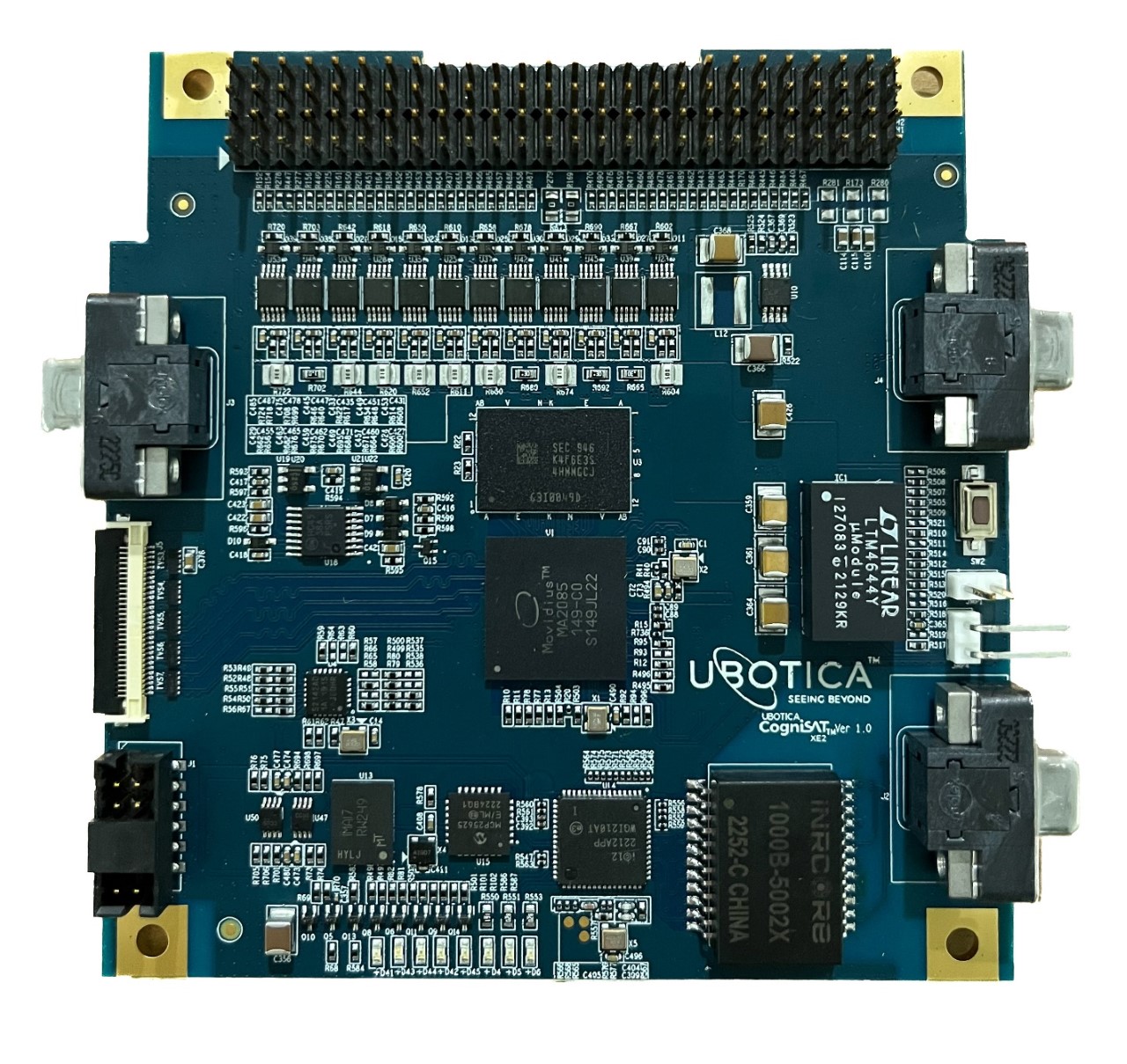
The company’s CogniSAT-XE2 hardware platform – to support the use of AI in space, for in-orbit data analysis – is above.
The mechanical and power envelope of CogniSAT-XE2 (with a PC/104 form factor) is compatible with small satellites, such as CubeSats.
Employing Intel’s Movidius Myriad X VPU (vision processing unit), pre-trained OpenVINO models can be deployed onto the CogniSAT-XE board using the Host Control Software.
Ubotica’s headquarters are in Dublin and Novi Sapce’s in Arlington, Virginia.
Images: Ubotica
See also: Open Cosmos hooks up with Ubotica Technologies