Blog
Peter Metcalfe, Leonardo – EW BrightSparks profile


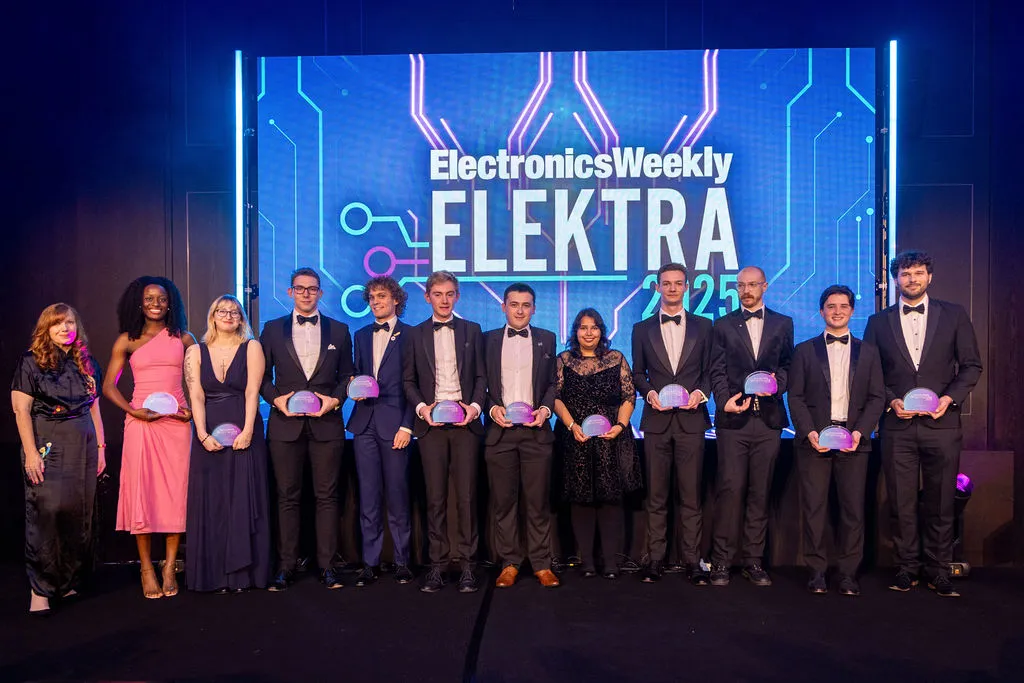
In the next in our series on the latest EW BrightSparks of 2025, we profile Peter Metcalfe, a Software Degree Apprentice at Leonardo. He is also in the final year of a Digital and Technology Solutions Degree at Cranfield University.
Achievements
Peter has shown technical competence, consistent innovation, and the ability to execute at a high level, his entry shows.
He began by highlighting his academic progress at Cranfield University, where he has achieved first-class results across all modules. But he also won outside recognition, he told us:
“I won my company’s internal Balsa Glider competition and led the winning team in the Institution of Mechanical Engineers’ (IMechE) Apprentice Automation Challenge. I was given the opportunity to develop advanced Leonardo technology which I found really stimulating. These early experiences taught me to work on real-world, high-stakes systems with cross-functional teams, and I was awarded the ‘1st Year Apprentice of the Year’ award for my efforts.”
In his second year, he expanded his involvement across different areas. He gave presentations to the IMechE, organised a mountaineering trip to Northern Ireland for apprentices, and completed the National 3 Peaks Challenge for charity in under 23 hours. He also began leading a new STEM outreach competition called MicroMouse, and he initiated a project for the James Dyson Award – a Smart Walking Stick designed to improve independence for those with mobility challenges (see below).
“Technically, my second-year highlight was joining the Team Tempest programme which is developing the UK’s Future Combat Air Systems capability, contributing to the Leonardo led cutting-edge suite of sensors and effectors. I also personally arranged a visit to one of Leonardo’s Italian sites to strengthen international collaboration and deepen my understanding of the global product portfolio.”
In his third year, he undertook a four-month specialist placement at The Defence Science and Technology Laboratory (Dstl) working on advanced robotics, image processing AI, and neuromorphic computing. Following that, he joined Leonardo’s Applied Research team, where he continues to work on pioneering technology.
However, one of his proudest technical achievements, he highlighted, has been leading and delivering the MicroMouse competition.
“I spent over 300 hours of personal time to make the event happen from scratch. I designed and built the full 3x3m maze, developed custom PCBs that worked on the first attempt, soldered all 25 kits over a weekend, and created a detailed user guide and over 1000 lines of support code. I ran mentoring catch-up sessions, hosted the competition itself, organised food, trophies, judges, social media coverage – the entire package. It was a huge logistical and technical challenge, but one that showcased my commitment to quality, community, and engineering leadership.”
Finally, he also completed and submitted an entry to Leonardo’s James Dyson Award project. He has been leading a small team developing a Smart Walking Stick that includes GPS tracking, fall detection, obstacle avoidance using IR sensors, and app integration. There is also a specially designed foot that allows the stick to be easily retrieved without bending over.
Community
In terms of STEM and community outreach work, Peter had a lot to share.
Helping others discover the excitement of STEM has been a constant thread throughout his apprenticeship, he told us, whether helping run national fairs or building online communities.
Peter has been heavily involved in Leonardo’s work experience programme each year, for example, giving students meaningful insight into careers in engineering. He has supported the company’s stand at the Big Bang Fair at the NEC – one of the UK’s largest STEM events – helping thousands of students interact with our Rampaging Chariots robots. In Year 3, he developed a new Rampaging Chariots website to better support schools and students, making it easier for young people to build and learn from these robots.
He also helped with various internal and external events including careers fairs, chess tournaments, STEM days, and more.
Outside of work, he recently became a Volunteer Instructor with the Army Cadet Force, which gives him the opportunity to run STEM-based extracurricular activities for cadets. He’s also become a registered STEM Ambassador, visiting schools to help run events and give talks on career paths in technology and engineering.
He also maintains a STEM-focused website, along with a YouTube channel and Instagram account. He regularly posts about his personal projects – from robotics builds to electronics tutorials – aiming to making STEM more accessible.
“I also lead by example. When I organised the MicroMouse competition, I didn’t just build the system – I mentored participants, created documentation, and made the process accessible to all skill levels. Many had limited experience developing software before, and by the end they were creating custom maze solving algorithms. That’s the kind of transformation I love to see – and it’s why I dedicated over 300 hours of my personal time to make it happen.”
Peter has also been a visible representative of young engineers on a national stage. He was chosen to ask the Prime Minister a question during a visit to the Leonardo Luton site last year.
He has also shown commitment with his efforts for charity. He completed a skydive from 14,000ft to raise money for charity and conquered the National 3 Peaks Challenge in under 23 hours. These experiences combine physical challenge, teamwork, and a sense of mission – traits he brings into his work and outreach.
Finally, Peter has been selected to attend a summer school hosted by NATO for future engineers.
“It’s an opportunity I’ll use not just to learn, but to bring knowledge back and continue inspiring the next generation of technologists.”
Congratulations to Peter Metcalfe!