Blog
This Lounge Design Makes the Case for a Better Return to Office

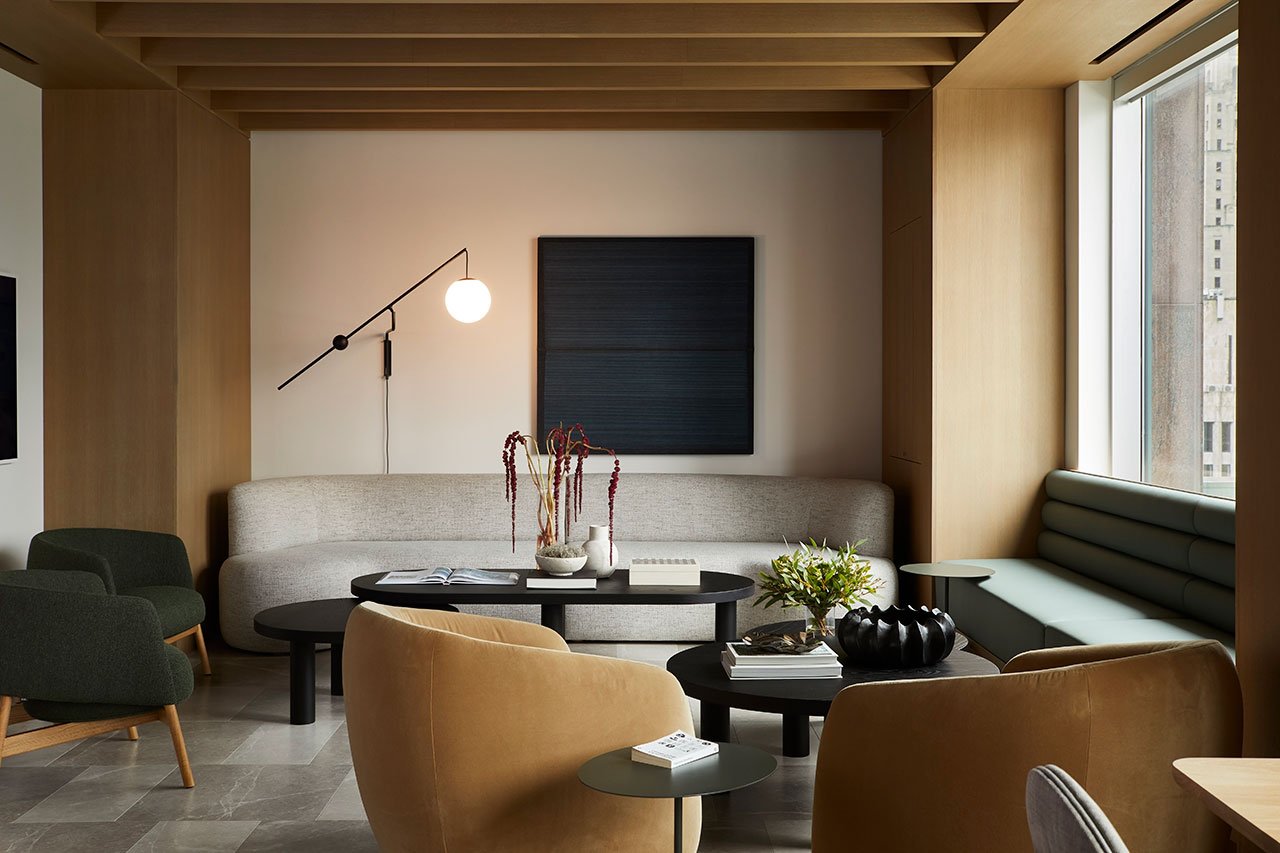
Controversial opinion alert: I miss the office. So much so, in fact, that my revisionist sense of history has managed to wipe away all memory of boring carpet tiles, bad bathroom fixtures, and those awful ceiling tiles that so often define corporate spaces. Returning to the office, though, has required more than reopening doors and reissuing keycards. It has asked companies to consider a more fundamental question: What, exactly, is worth returning for?
For McLeish Orlando Lawyers, a boutique law firm in downtown Toronto, the answer was not another polished-but-perfunctory lunchroom. The firm enlisted Studio Ha/Wa to transform an underused 530-square-foot break space into a 685-square-foot lounge designed for the full range of office life: morning coffee, quiet resets, impromptu meetings, communal lunches, after-hours gatherings, and the everyday social glue that is often harder to manufacture over Zoom.
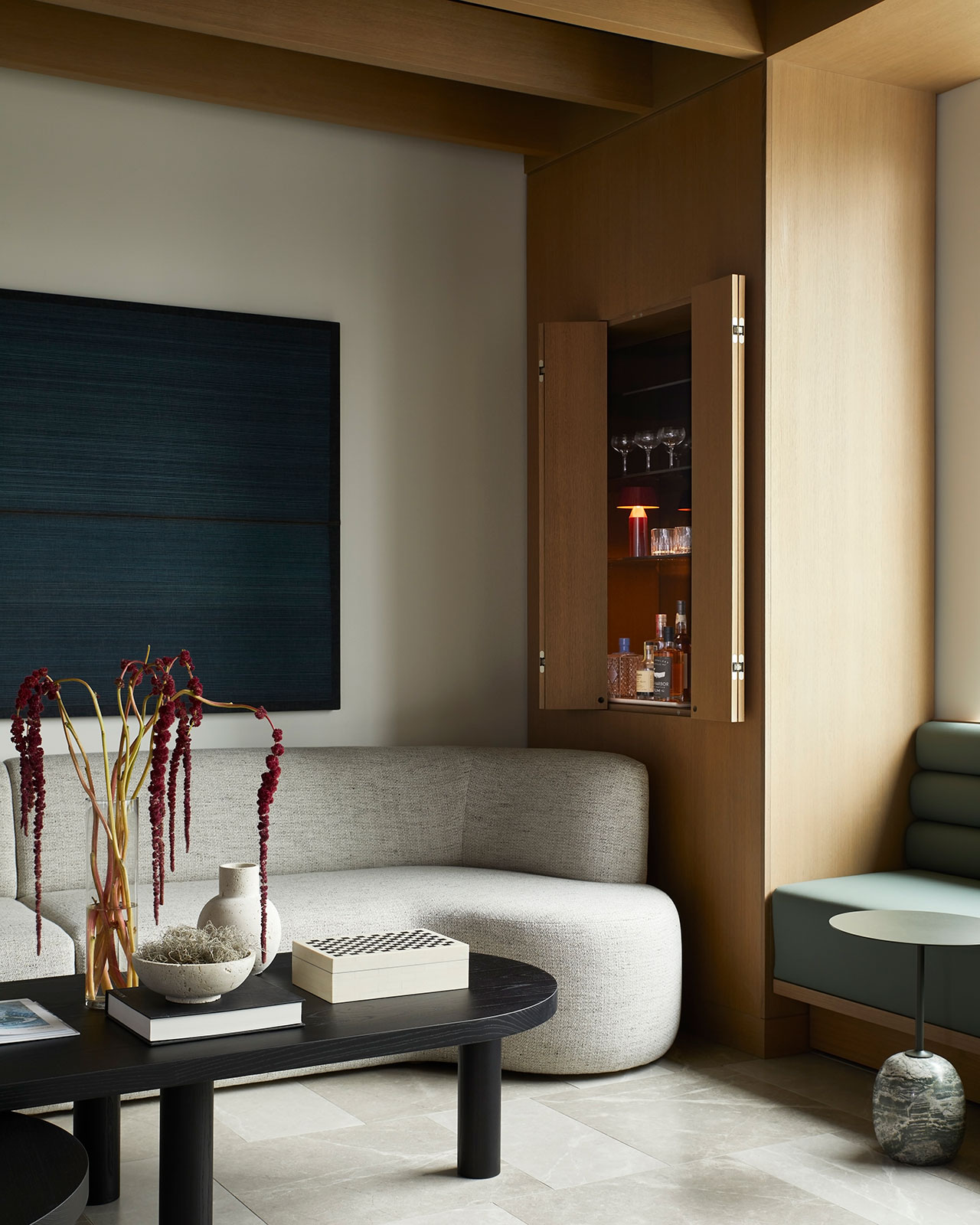
Situated on the 18th floor of a high-rise office tower, the new lounge combines a former lunchroom with an adjacent office to create an open, layered environment that feels closer to a hotel lobby or members’ club than a conventional corporate amenity. It is a particularly timely proposition. As workplaces continue to recalibrate their relationship with in-person culture, Studio Ha/Wa’s design offers a number of useful takeaways for organizations hoping to make return-to-office spaces less transactional and more magnetic.
Start With a Space People Actually Want to Use
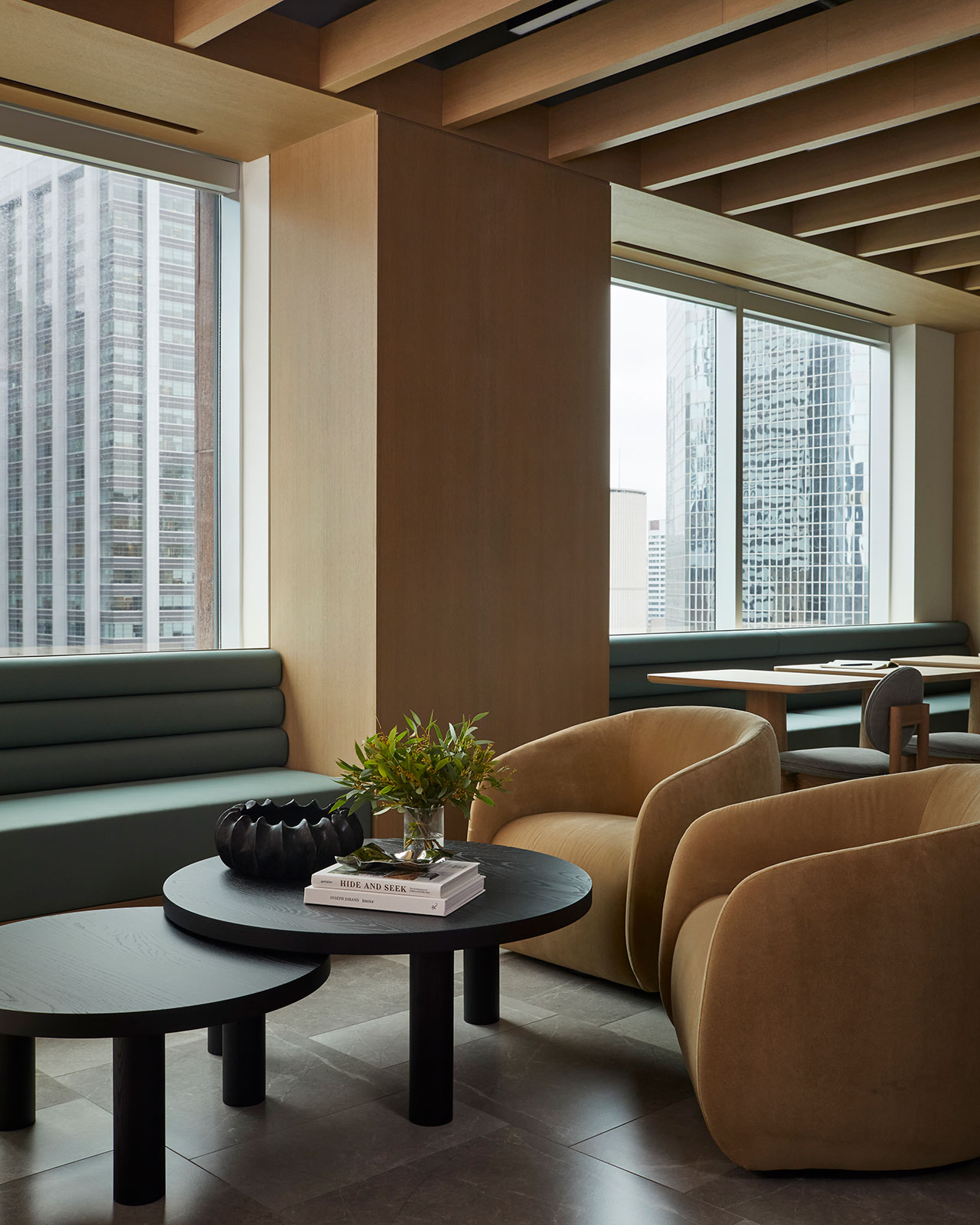
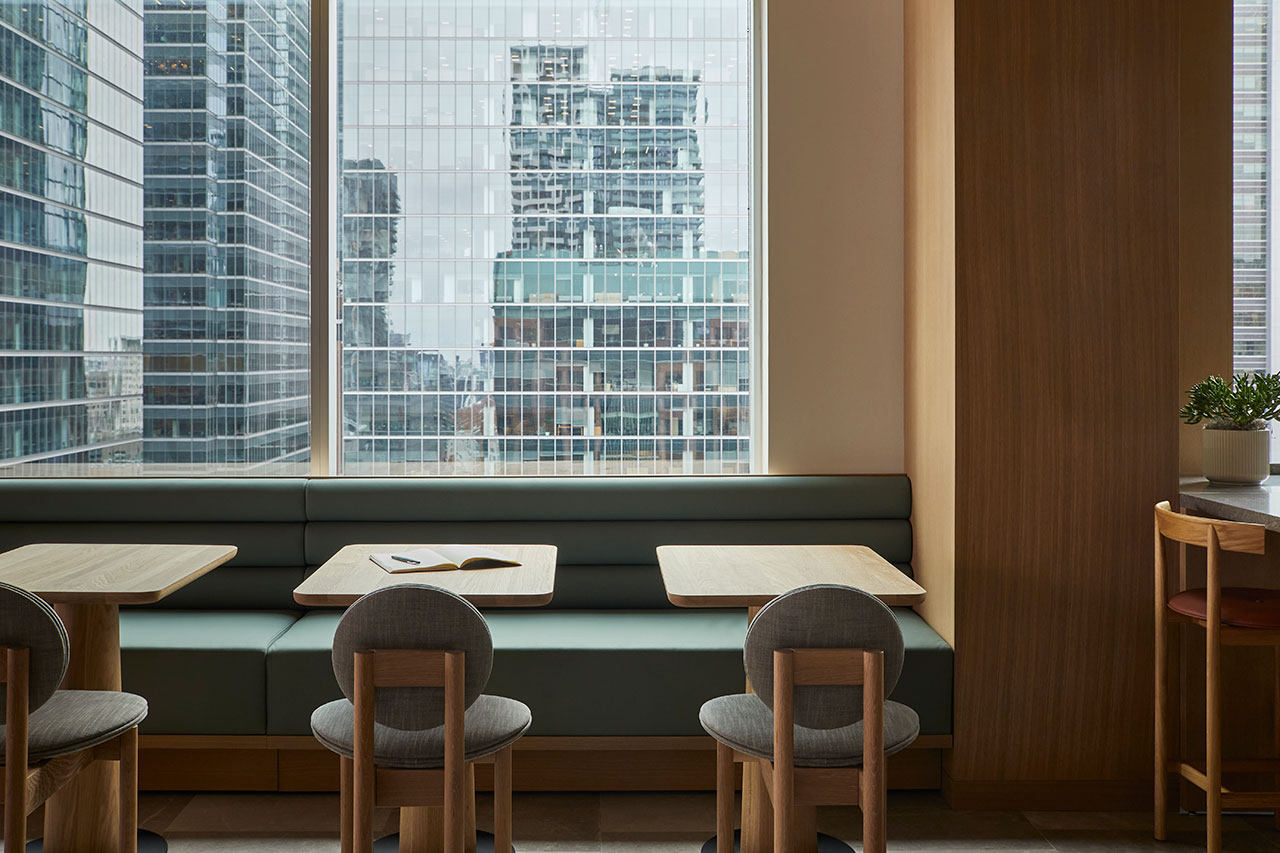
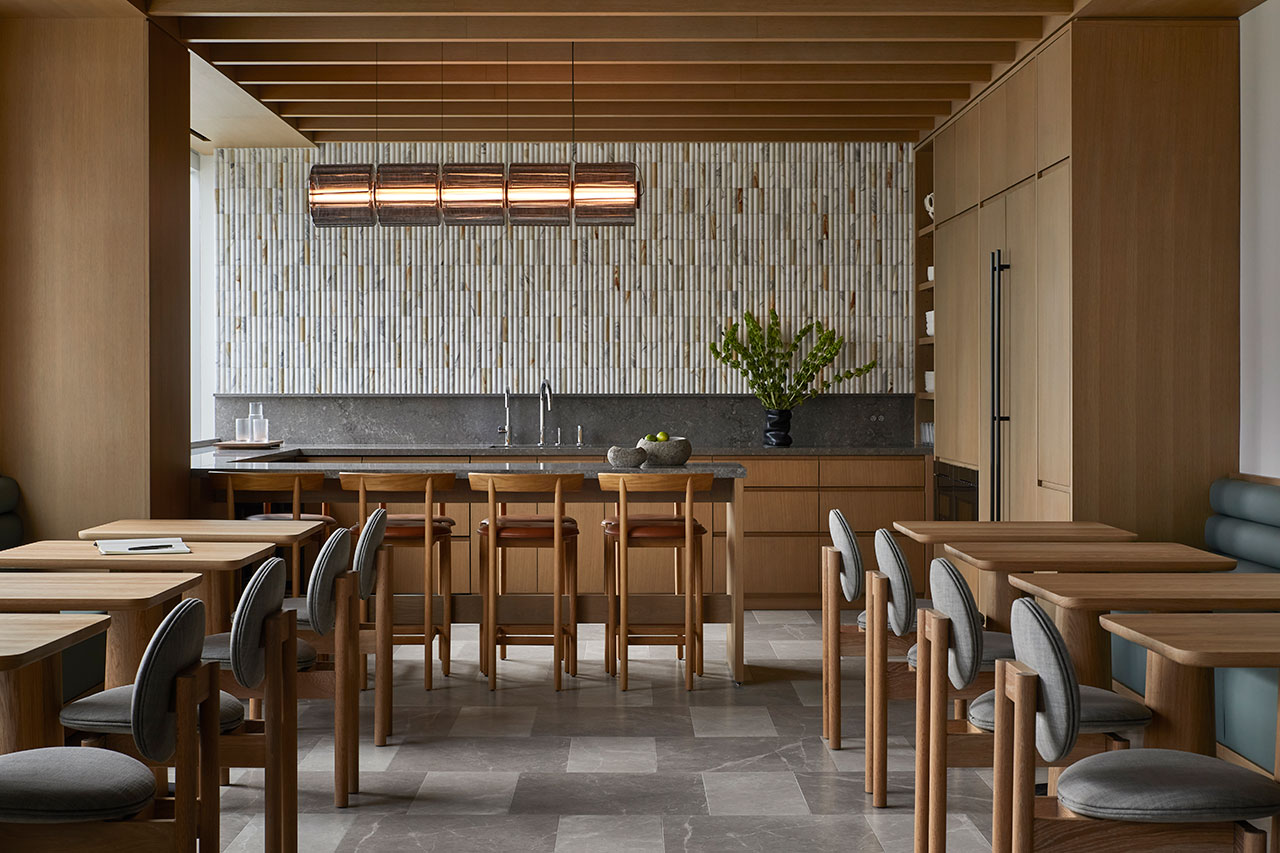
The original lunchroom was cold, utilitarian, and limited in what it could offer employees beyond a place to eat. Studio Ha/Wa’s first move was therefore conceptual rather than decorative: shift the room’s identity from a break area into a social hub. Here, a lounge zone offers softer seating for conversation or decompression; banquettes accommodate informal meetings; dining tables support lunches and group work; and a kitchen anchors the room with the familiarity of a shared domestic ritual.
Think in Zones, Not Rooms
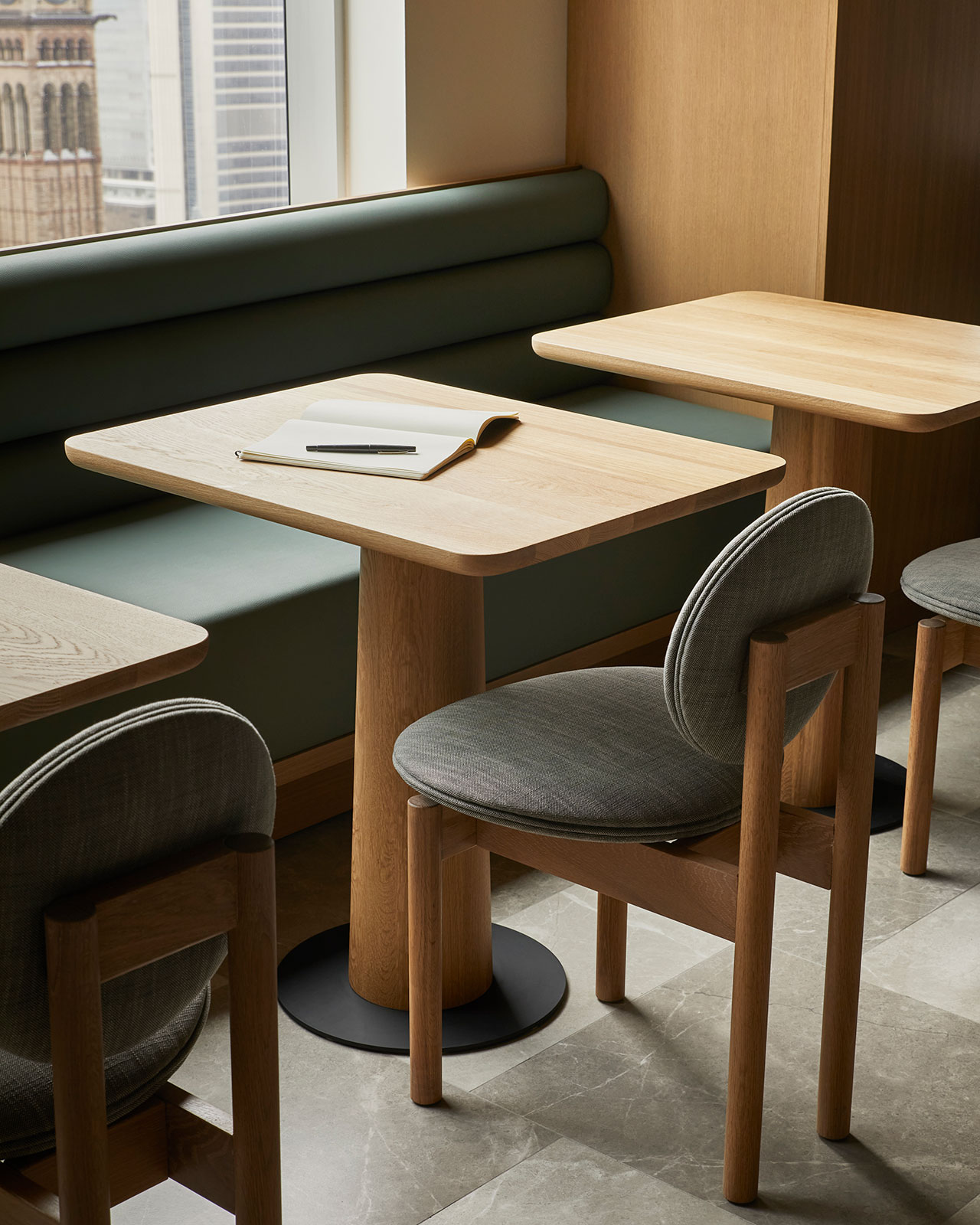
Rather than dividing the lounge into rigid compartments, Studio Ha/Wa used an open plan with distinct dining, kitchen, and lounge areas. The strategy preserves sightlines and circulation while allowing each area to maintain its own rhythm. Here, zoning can be established through furniture groupings, lighting, material changes, and subtle shifts in scale. In the law firm lounge, perimeter banquettes help conserve space and keep the center clear, while rectangular dining tables can operate independently or be pushed together for larger gatherings. Counter stools tuck beneath the island when not in use, and nesting coffee tables can expand or contract depending on the group.
Give the Ceiling Some Credit
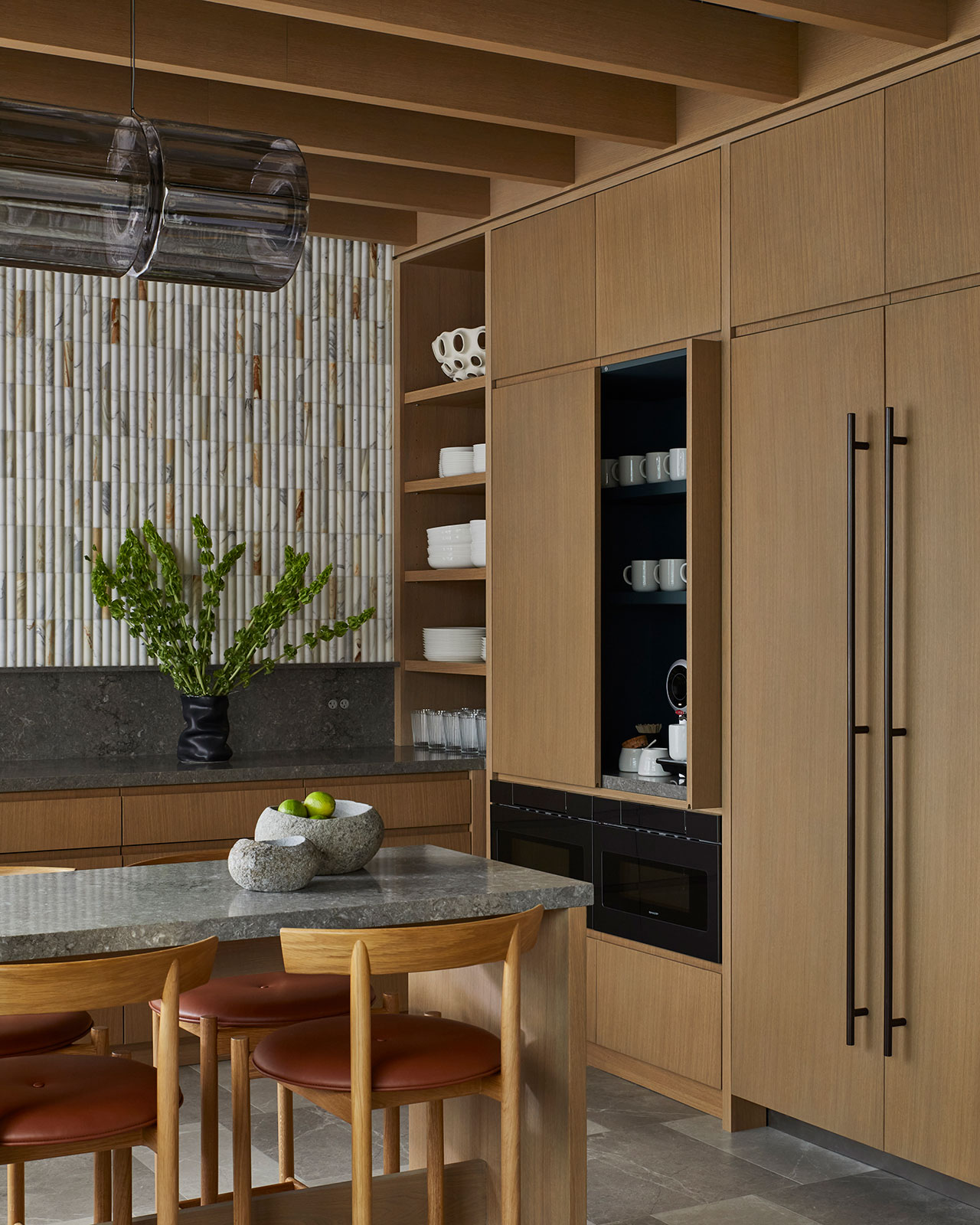
One of the lounge’s strongest gestures sits above eye level. A previously dropped acoustic-tile ceiling was replaced with a beamed, rift-cut white oak ceiling that introduces warmth, movement, and visual rhythm while concealing mechanical systems overhead. The oak also establishes a unifying architectural language throughout the lounge. It wraps columns, continues through the kitchen millwork, and works in conversation with the porcelain flooring below. It is a reminder that ceilings are too often treated as necessary infrastructure rather than an opportunity for atmosphere.
Let Durability Do the Heavy Lifting
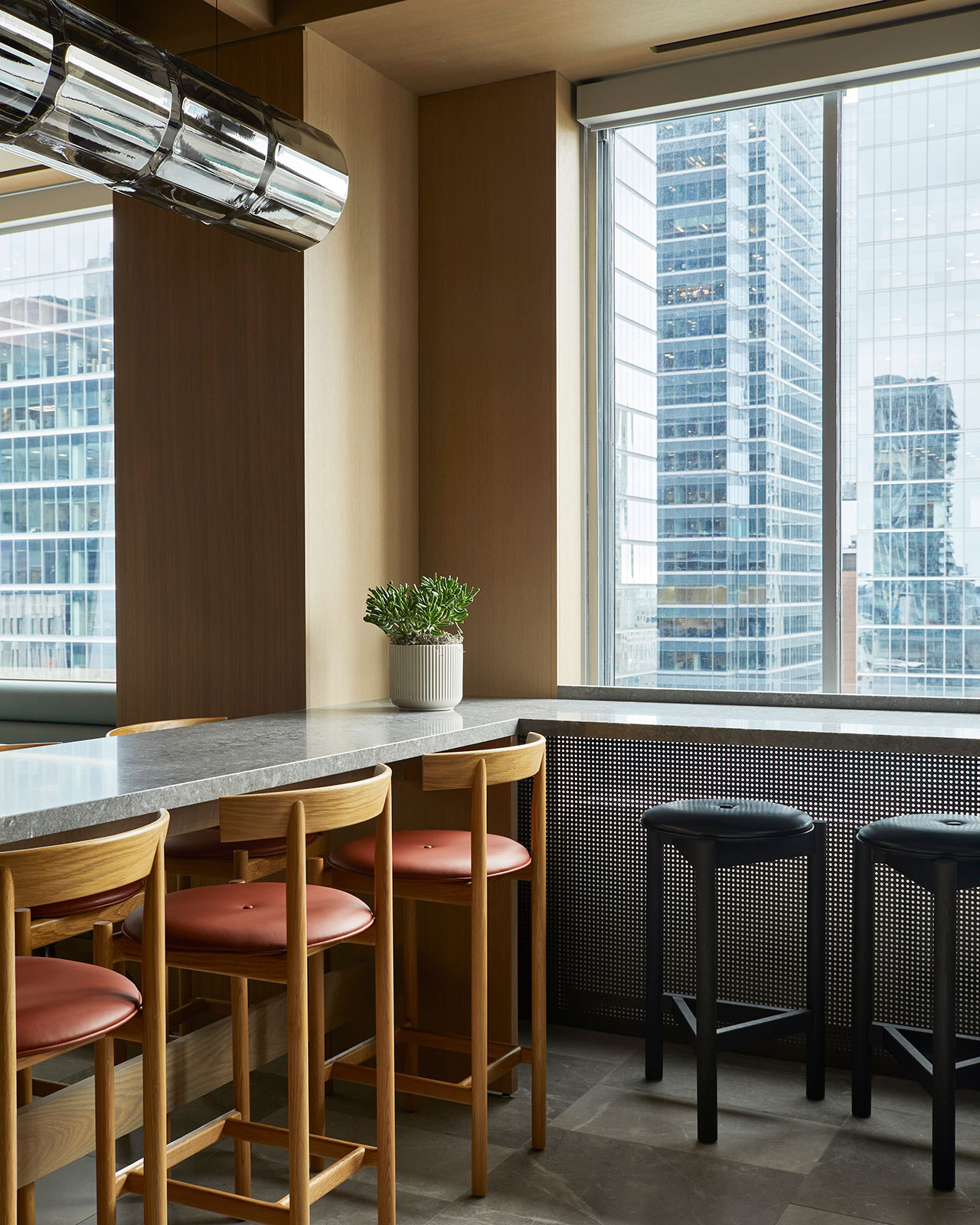
A workplace lounge should feel relaxed, but it cannot be delicate. Studio Ha/Wa balances the softness of a residential-inspired palette with materials built for commercial wear: porcelain tile flooring, quartz countertops, leather stools, vinyl banquettes, and performance-grade fabrics. The lounge’s color palette helps reinforce this balance. White walls, tonal greys, black accents, and warm oak form a neutral base, while green bouclé armchairs, camel performance velvet swivel chairs, sage vinyl banquettes, rust leather stools, and jewel-toned artwork by Toronto artist Alexander Jowett bring personality without tipping into visual clutter.
Make the Kitchen Work After Hours, Too
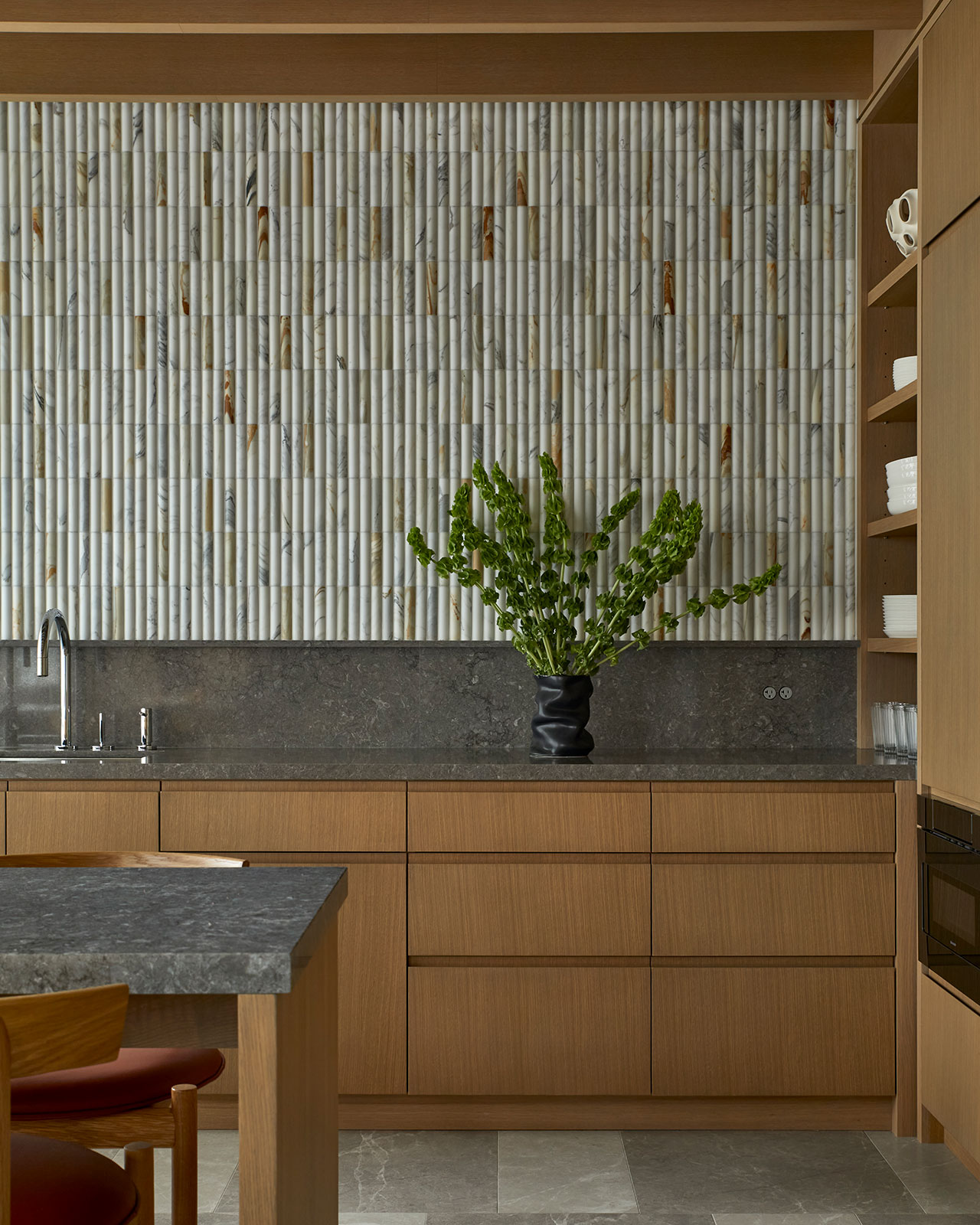
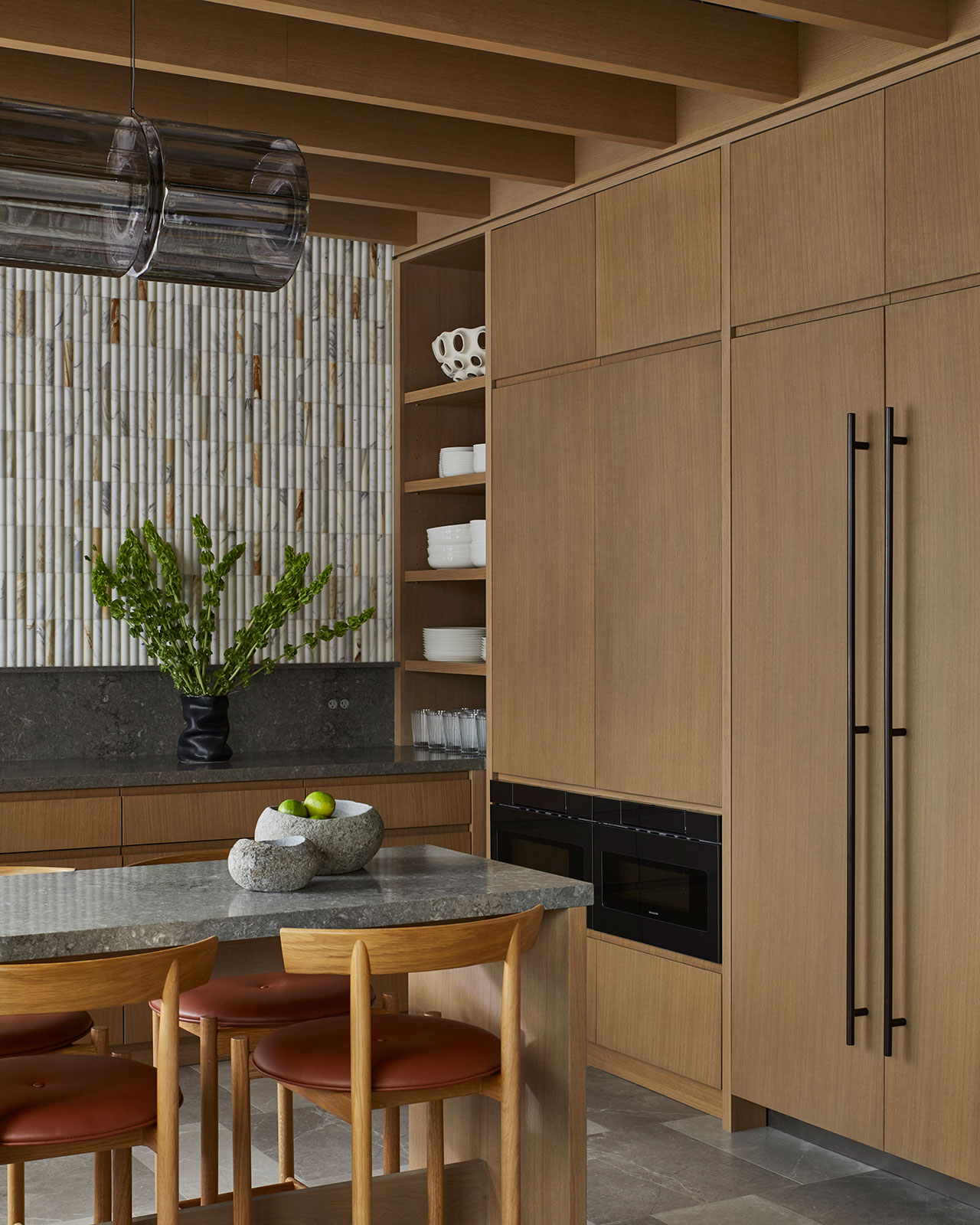
The kitchen is designed to perform double duty: useful during the workday, but discreet enough to recede when the lounge becomes an event space. Integrated appliances sit behind matching oak panels, drawer microwaves are tucked below counter height, and an appliance garage conceals the daily lineup of coffee makers, kettles, and toasters. At the north end of the room, full-height Calacatta Gold fluted tile creates a focal point in lieu of upper cabinets. The natural stone’s warm and cool veining pulls together the lounge’s palette, while its curved profile adds texture and depth behind A-N-D Light’s sculptural Column Pendant.
Style With Restraint, Then Add Character
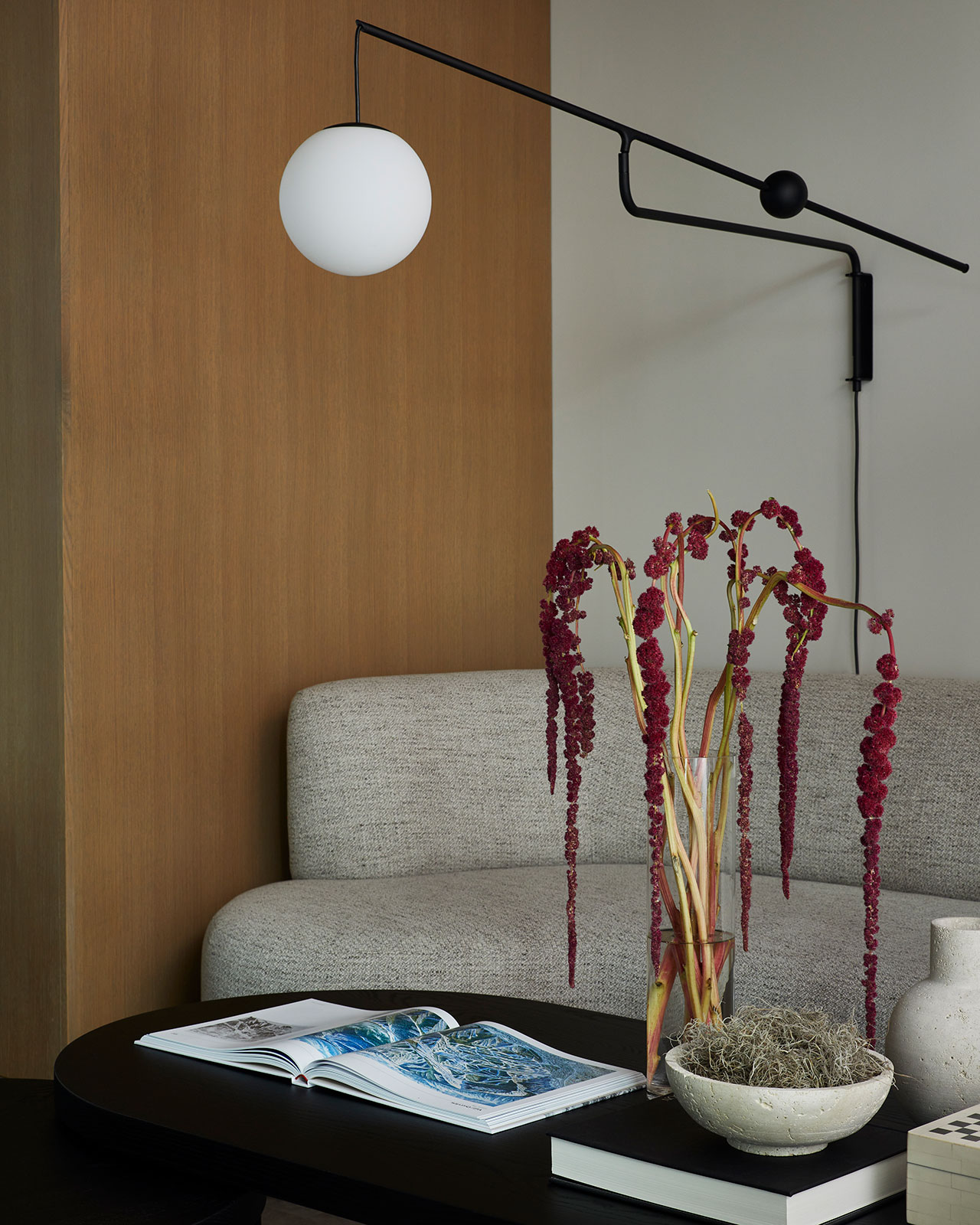
Studio Ha/Wa approached the lounge much as it might a residential interior, combining new and vintage accessories, original artwork, sculptural vessels, and coffee table books chosen to resonate with the people using the space. But the styling remains edited rather than overfilled.
Designer Erin Hannon-Watkinson
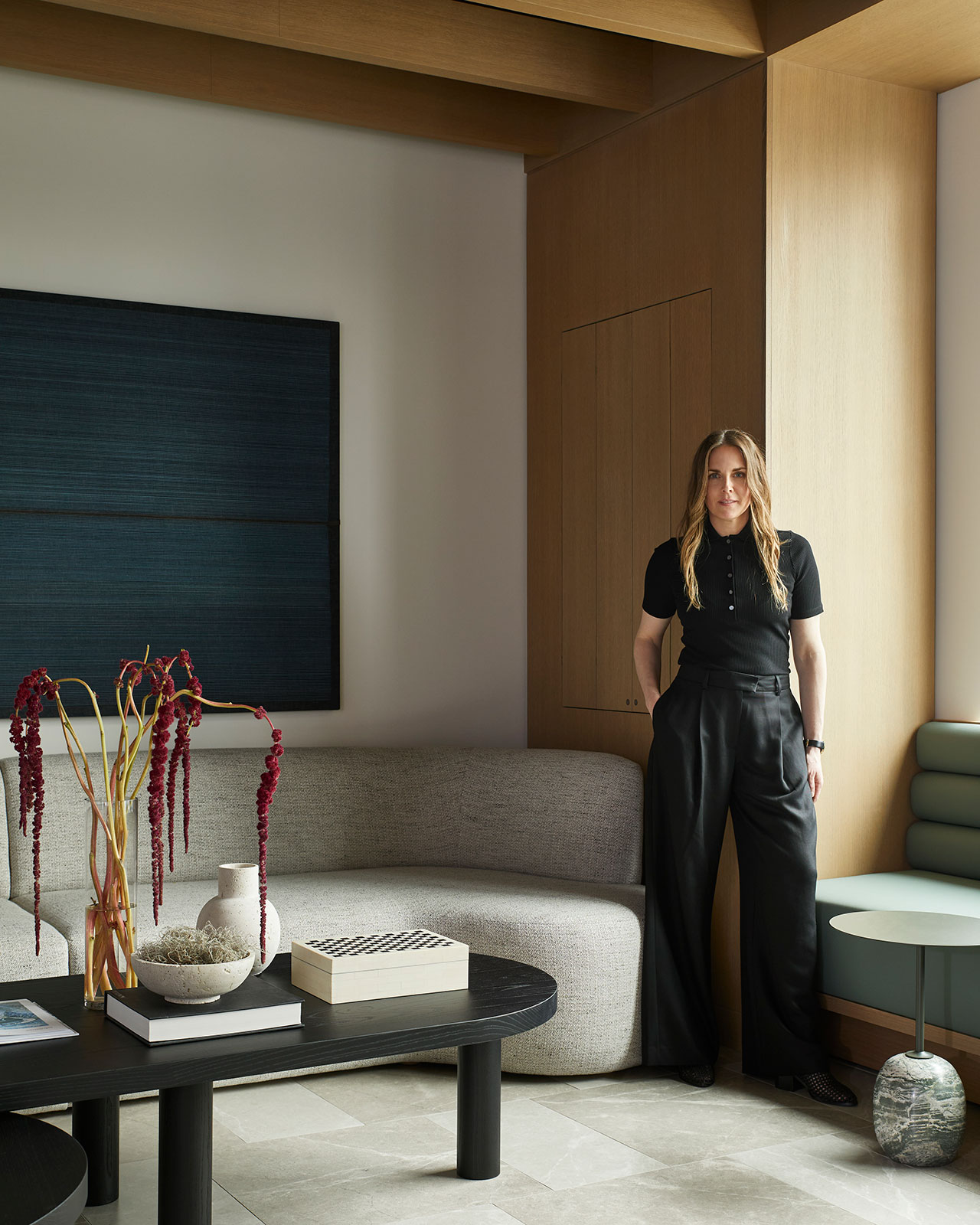
“The intention of the space, despite being designed to be multifunctional and within a corporate environment, was ultimately to be a refuge for the law firm’s staff and lawyers,” says Erin Hannon-Watkinson, founder and creative director of Studio Ha/Wa.
To learn more about Studio Ha/Wa, RDG Millwork, and MForm Construction Group––the collaborators behind the project––visit studiohawa.com, rdgl.ca, mformcg.com, respectively..
Photography by Niamh Barry.