Blog
Test Vehicles: What Are They, and Why Do They Matter in Chip Design?

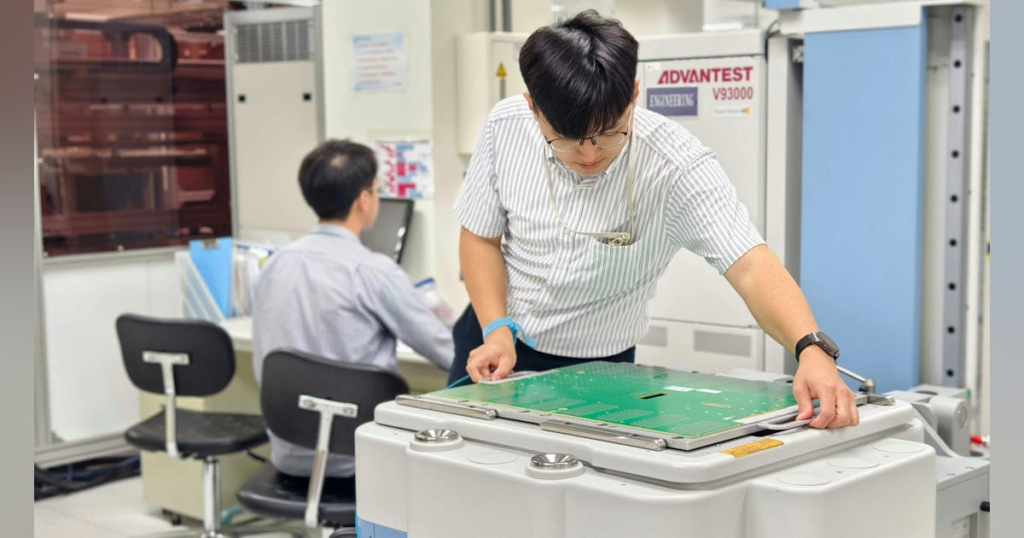
By measuring the total electrical resistance across this chain, any open circuit will result in an infinite resistance, immediately indicating a failure.
For more granular fault isolation, test vehicles often incorporate several shorter daisy chains, or include “taps” at intermediate points along a longer chain, routing these taps to separate BGA pads. If a main chain fails, resistance checks on these sub-chains or taps can pinpoint the approximate location of the open circuit.
That capability is invaluable for subsequent physical failure analysis. It enables engineers to precisely locate the defect through techniques like cross-sectioning or scanning acoustic microscopy, thus accelerating root cause identification and process improvement.
The Many Faces of Test Vehicles
The responsibility for building these test systems is often shared by different players within the semiconductor ecosystem. Manufacturers, including outsourced semiconductor assembly and test (OSAT) firms and foundries, frequently develop test vehicles in-house to validate their proprietary processes and guarantee performance specifications.
For instance, if a foundry claims the ability to reliably produce 12-micron line and space features with an 80,000-pin die, they will probably use internal test vehicles to substantiate these claims and qualify their processes.
However, as customers push the boundaries of what’s currently manufacturable, the onus can shift. When designers create a product with a 120,000-pin die, exceeding the manufacturer’s standard guarantees, they may need to commission or design their own test vehicles.
In such cases, the “die” is typically a “dummy die” — an inert silicon piece featuring only a redistribution layer with the necessary electrical connections for the daisy chain or other test structures, rather than active circuitry. This dummy die mimics the physical characteristics of the actual product without the complexity or cost of fabricating functional transistors.
Layout engineers, who are responsible for the physical design of chips and packages, are the primary architects of these test vehicles. They translate the specific validation requirements into physical designs, ensuring that the test structures accurately represent the critical features and potential failure modes of the target product.
It’s common for large customers to develop several test vehicles, sometimes 10 to 12 for every product, to comprehensively evaluate various aspects of manufacturing — from interconnect reliability to thermal performance — across different process variations.
This collaborative and often iterative process between manufacturers and customers is essential for lowering the risk of advanced packaging innovations.
Heat, Comb, Stack: Testing the Physical Limits of 2.5D and 3D Chips
With the “Wild West” nature of the 3D IC space, companies are rapidly developing new ways of doing heterogeneous integration. As a result, test vehicles must incorporate increasingly advanced structures that go above and beyond the daisy chain.
This is increasingly critical when it comes to validating silicon bridges used for die-to-die interfaces. In many 3D IC designs, a silicon bridge — a small silicon interposer — is employed to connect multiple chiplets (such as an ASIC or HBM) arranged on an organic substrate. This bridge is typically flipped, with its pins oriented upwards, allowing the chiplets to align and connect precisely to it.
The manufacturing process for aligning and bonding these components is highly complex. To evaluate it, a test vehicle can include a dummy silicon bridge and dummy chiplets, all designed with daisy-chain structures that traverse the critical interconnects.
In turn, engineers can quickly verify the physical and electrical integrity of the bridge connections without the need for functional, live chips that would require more complex full-speed testing. If a manufacturing process is changed, a quick run with this test vehicle can confirm its efficacy without risking expensive functional prototypes.
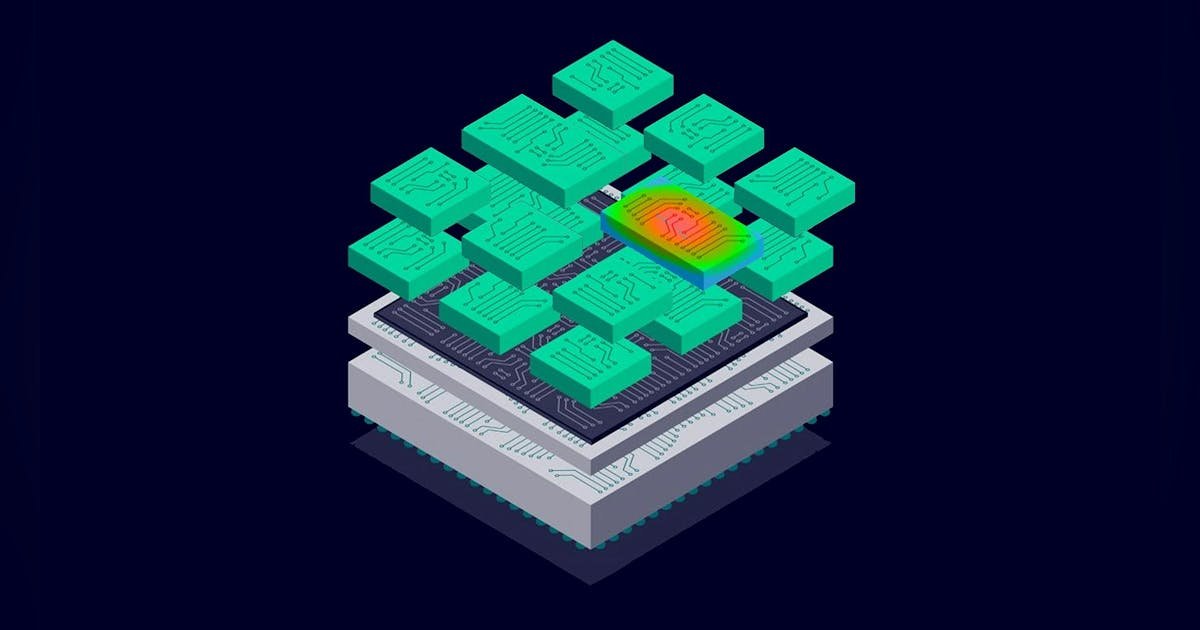
Furthermore, test vehicles can be equipped with structures that simulate real-world stresses during operation and detect subtle manufacturing defects (Fig. 2).