Blog
System-Level Test for Next-Gen AI and HPC Devices

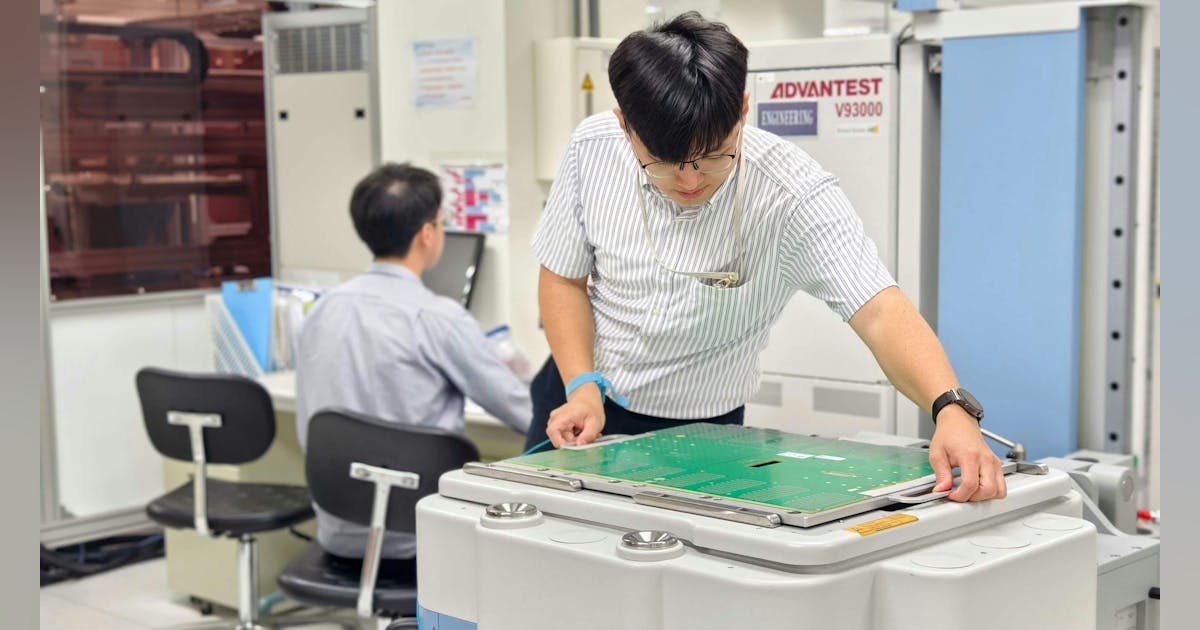
Multi-zone thermal control is becoming increasingly important. Rather than treating the package as a single thermal entity, advanced systems can independently manage multiple regions to compensate for localized hotspots and varying workload conditions.
Cooling technologies continue to evolve as well. Air-based systems remain common, but liquid cooling, refrigerant-based approaches, and hybrid thermal architectures are gaining attention as processor power levels continue to rise.
The objective isn’t simply to keep devices cool. The goal is maintaining repeatable, controlled conditions that enable meaningful performance, reliability, and power measurements throughout the test cycle.
New DFT Approaches Extend Coverage
Although SLT is often associated with functional testing, advances in design-for-test (DFT) methodology are enabling it to play an increasingly important role in structural coverage, too. Even extremely high defect coverage rates leave substantial risk when dealing with devices containing tens or hundreds of billions of transistors. Achieving incremental improvements in structural coverage through traditional methods alone can become prohibitively expensive and time-consuming.
To address this challenge, the industry is increasingly adopting techniques that allow structural test content to migrate into the SLT environment. Rather than relying exclusively on dedicated scan interfaces, newer approaches leverage high-speed communication channels such as PCI Express and USB after the device has booted. Once these interfaces are active, test software can deliver packetized test patterns, invoke built-in self-test resources, and access embedded diagnostic capabilities.
This approach offers several advantages. Existing high-speed interfaces provide abundant bandwidth, reduce dependency on dedicated test pins, and enable engineers to correlate test results across multiple phases of the product lifecycle, including design validation, production test, and post-silicon debug.
The result is a more unified test strategy that combines the strengths of traditional structural test methodologies with the realistic operating conditions available in SLT environments.
Data Infrastructure and AI-Driven Optimization
Modern system-level testing generates enormous quantities of data. Every test cycle may produce information related to performance metrics, thermal behavior, voltage margins, workload execution, communication integrity, and reliability indicators. When multiplied across hundreds of parallel sites and thousands of devices, the resulting data volume becomes substantial.
Capturing this information is only the first step. The real value lies in transforming data into actionable insights in as close to real-time as possible. To support this objective, SLT architectures increasingly incorporate networked supervisory controllers, distributed computing resources, and both centralized and distributed data-management platforms. Ethernet connectivity, cloud integration, and high-speed data pipelines make it possible for information to flow from individual test sites to factory-wide analytics systems.
Machine-learning techniques are becoming increasingly valuable in this environment. Predictive models can identify performance trends, optimize test limits, improve yield learning, and help allocate resources more efficiently. AI-based analytics may also detect subtle correlations that would be difficult to identify using conventional statistical approaches.
As the semiconductor industry moves toward increasingly autonomous manufacturing operations, real-time access to comprehensive test data will become a strategic advantage.
Integrated Test Cells: A New Architectural Model
Historically, many organizations treated system-level test as a collection of loosely connected subsystems. Power supplies, handlers, thermal controllers, software tools, and data systems were often developed and managed independently. That approach is becoming increasingly difficult to sustain.
The complexity of AI and chiplet devices requires a more coordinated architecture in which all major subsystems operate as a unified test cell. Electrical infrastructure, thermal control, automation, software execution, networking, and analytics must be tightly integrated to achieve production-scale performance.
In an integrated architecture (Fig. 4), test programs coordinate with handler operations, thermal systems adapt dynamically to workload conditions, power-management resources respond to changing device demands, and data flows seamlessly between production and engineering environments.