Blog
Safety Implications of Bidirectional Power Flow in 120-V AC Regenerative Electronic Loads

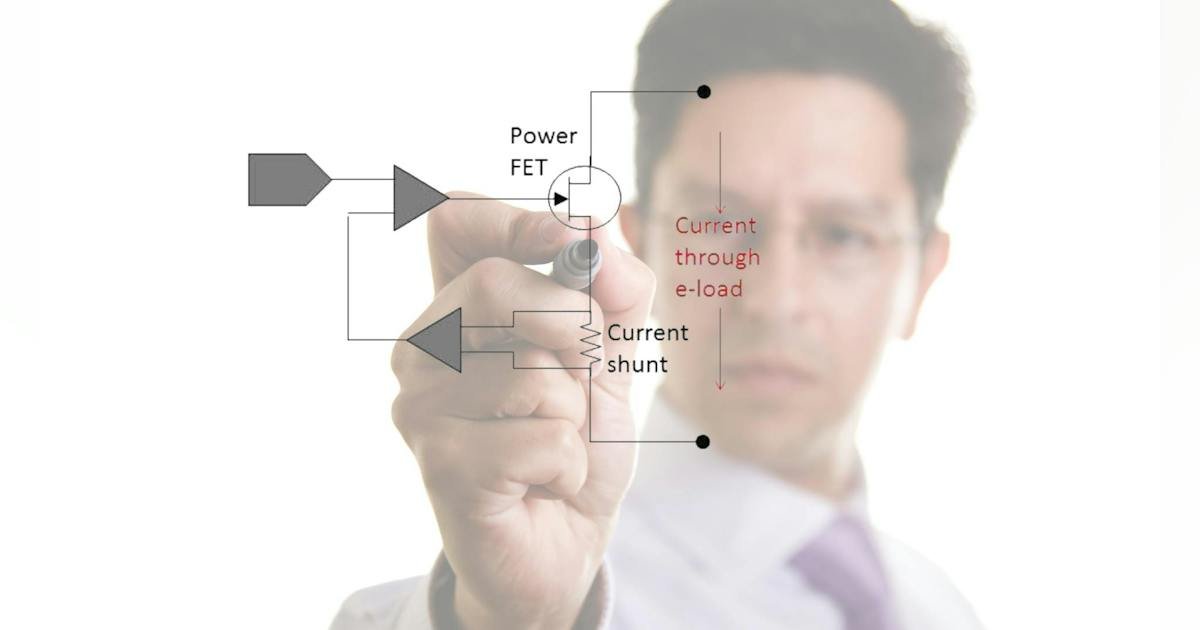
- Comparing dissipative to regenerative e-loads.
Regenerative E-Loads are Grid Power Sources
As stated above, dissipative e-loads dissipate and waste the energy consumed during test. In contrast, a regenerative e-load is actually a power source supplying power to the grid. It must be connected to the electrical grid through a high-power connection so that absorbed energy can be safely converted and returned to the utility.
However, supplying power back to the grid drives additional design requirements, operational behaviors, installation complexity, utility interconnection and regulatory considerations, safety compliance requirements, and facility infrastructure costs compared to simpler dissipative load solutions. For more information on grid-connected devices, see “Modernizing the AC Power Grid for Future Stability.”
Most regenerative e-loads operate at power levels over 5 kW, so their grid connection will be a three-phase high-current and high-power connection. In the U.S., these grid connections will be 208 V AC phase-to-phase 3Φ AC or 480 V AC phase-to-phase 3Φ AC. For these high-power connections, building electrical code requires installation to be hardwired such that the regenerative e-load must be on its own dedicated circuit with a breaker.
But what would happen if the regenerative e-load was a low-power e-load, perhaps at 500 to 1500 W? Since a regenerative e-load of this size would put less than 20 A back on the AC line, it would be able to regenerate AC power back onto the line using a standard 120 V AC. However, you may not be able to find a 120-V AC regenerative e-load that’s safety certified.
Potential Hazard with Regenerative E-loads
The safety issue isn’t related to its electrical behavior or lack of compliance with regulations for putting power back on the grid. The safety issue is caused by human behavior.
A low wattage 120-V AC regenerative e-load would be outfitted with a standard AC line cord that could plug into a standard wall outlet or power strip. This would be a great usability feature, as you would be able to plug it in anywhere and it would place that power back on the ac line … and this is where the safety issue arises.
Let’s say you plan to plug into a standard power strip. These are protected against overload by a circuit breaker in the power strip. But this breaker is located “between” the AC outlets on the strip and the strip’s AC cord, such that if any device pulls too much current, the breaker opens to protect against excessive current flow and potential fire.
This protection scheme works because the power only flows in one direction: from the AC grid through the wall outlet to the power strip’s cord, through the breaker, and into the devices that are plugged into the power strip.
Now, if you put a regenerative e-load into the power strip, current can flow between two devices plugged into the power strip. That current never reaches the circuit breaker. As a result, there’s no protection against excessive current. Let’s look at an example:
- You have three 800-W power supplies connected to a power strip
- Together, they’re 2,400 W and so they exceed the power strip rating. If you try to use them at full power, no hazard will occur because the power strip breaker will blow.
- Now, additionally, plug in a 1,000-W regenerative e-load.
- The total is now 2,400 W of source power minus 1,000 W of regenerated power, yielding a total net power of 1,400 W so that the breaker will not trip, but current flowing inside the power strip can exceed the amperage rating of the power strip.
- This creates a fire hazard.
Now, you may be thinking “Why not prevent the hazard by just stating that the regenerative e-load must be used on a dedicated AC circuit protected by a circuit breaker?” That’s fundamentally how a larger, high-powered regenerative e-load would need to be professionally installed. While the regenerative e-load manufacturer could make this declaration in their documentation, a concept called reasonably foreseeable misuse comes into play.
The standard safety and risk-management term for predictable user actions outside the intended operating instructions is reasonably foreseeable misuse. During product design and safety evaluation, manufacturers must consider these predictable actions and mitigate any resulting hazards through inherently safe design, protective measures, or, where adequate, warnings and instructions.
Even if the documentation says the regenerative e-load must be on dedicated branch, there’s no practical, physical way to ensure that the user will connect the regenerative e-load via its own dedicated branch. Thus, it’s a foreseeable misuse that the user will not connect the e-load to its own dedicated branch.
In the end, the NRTL will withhold certification if:
- The misuse is considered reasonably foreseeable. Note that plugging a regenerative e-load into a power strip is foreseeable, even if the documentation says don’t do it. In fact, a fundamental principle in modern product safety is that warnings and instructions are the weakest form of risk control.
- The resulting hazard is serious (fire, shock, injury).
- The manufacturer can’t adequately mitigate the risk.
Summary: Safety Implications of Bidirectional Power Flow
Electronic loads simulate real-world power consumption by controlling current, voltage, resistance, or power during testing. Dissipative e-loads are simple and economical but they waste absorbed energy as heat, while regenerative e-loads return energy to the grid, reducing energy and cooling costs in high-power applications.
However, low-power 120-V AC regenerative e-loads connected to standard outlets or power strips can create current paths that bypass normal overcurrent protection. The result can be dangerously overheated wiring and a serious fire risk — even when the circuit breaker never trips. As a result, 120-V AC low-power regenerative e-loads will not get safety certified and therefore will not be available from reputable e-load vendors.