Blog
Radiosondes: A Nearly Century-Old Weather Technology Still Used Today

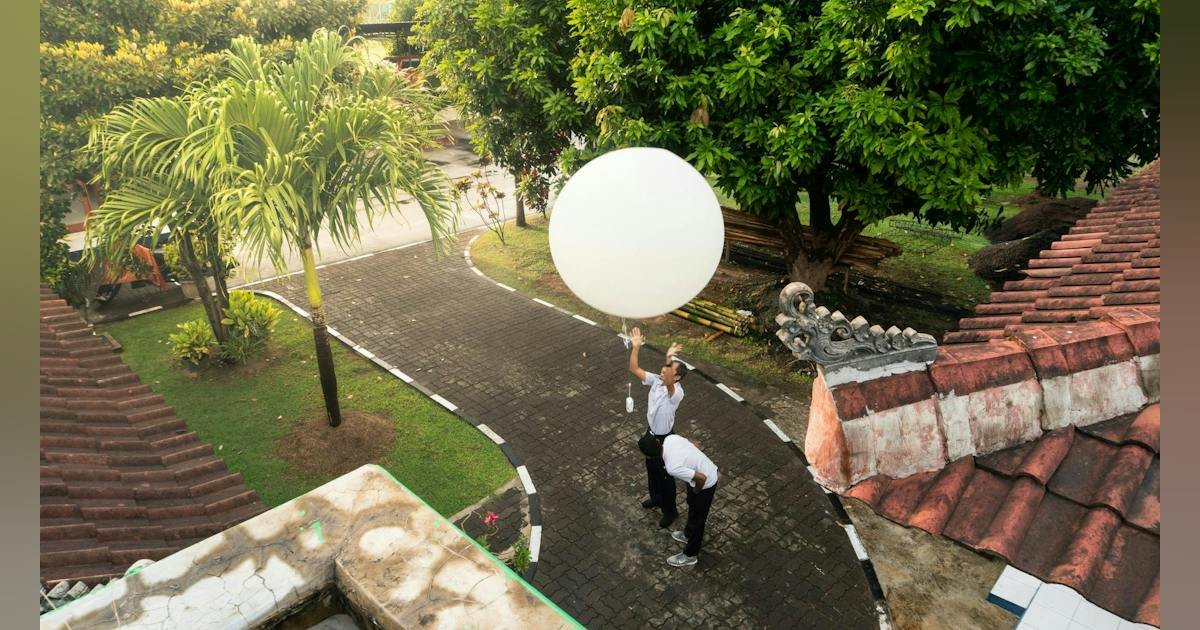
Today, meteorologists still employ radiosondes, even though we now have advanced weather satellites equipped with cutting-edge AI to forecast the weather. They’re robust, outfitted with the latest innovative technology, and can last for days, or even weeks, aloft in the atmosphere. They have been tethered to drones for precision navigation.
While satellites, aircraft, and ground sensors make up the bulk sources of garnering atmospheric data, none of those platforms can match the vertical resolution (30 m) and altitude coverage (30 km) of radiosonde observations. Thus, they remain essential to modern meteorology.
Radiosondes may have started as simple instruments hanging from weather balloons, but they have come a long way since the 1920s. What started as a way to send basic weather measurements back to the ground using radio eventually became an innovative platform capable of collecting and transmitting large amounts of atmospheric data. The technology has even been adapted for use beyond Earth, as shown by the Vega missions to Venus.
Though radiosondes have been updated with modern sensors, electronics, GPS, and digital communications, the basic idea remains the same: Send a small instrument into an environment that’s difficult to reach, collect useful data, then transmit it back to forecasters. Nearly a century later, that simple idea is still being utilized to understand the atmosphere around us and even the atmospheres of other worlds.