Blog
Middle East crisis live: Iran reviewing peace proposal as Trump says a deal ‘very possible’ | US-Israel war on Iran

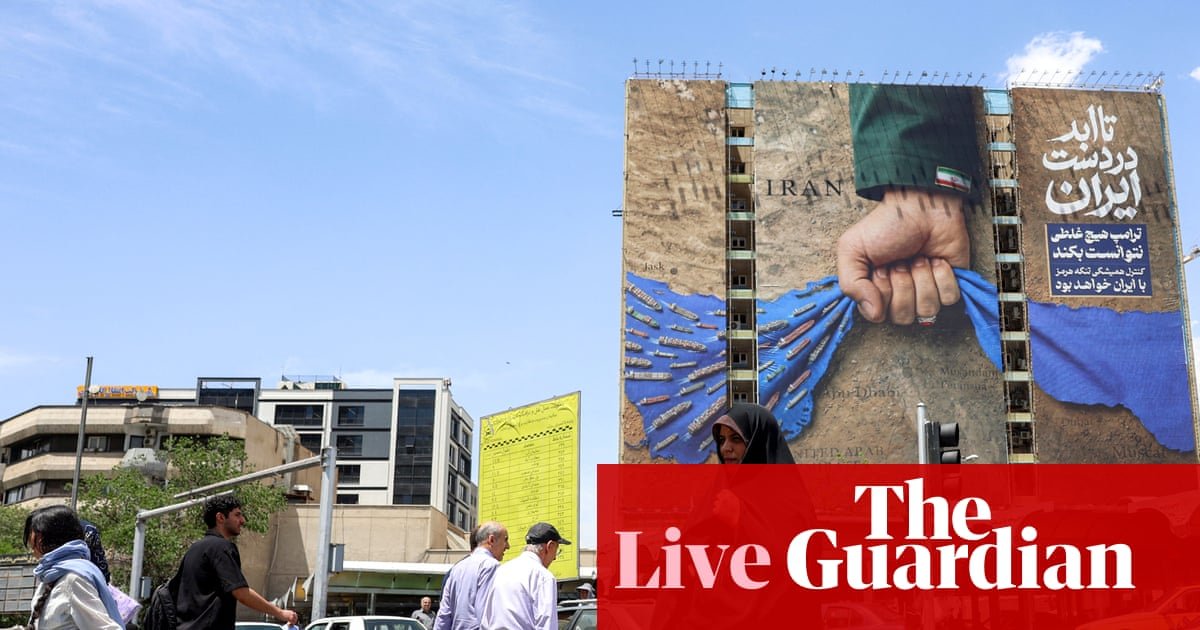
Trump says deal with Iran is ‘very possible’ while Iran downplays reports of peace talks
Morning and welcome to the Guardian’s continuing coverage of the crisis in the Middle East.
The US and Iran have offered conflicting messages over the state of negotiations to end the war, with Donald Trump signalling the talks were “very good” and a deal “very possible”.
Iranian officials, however, have sought to dampen expectations, with state media reporting that Tehran is, at most, reviewing the US’s peace proposal and considering its response via Pakistani mediators. Ebrahim Rezaei, the spokesperson of the Iranian parliament’s national security and foreign policy commission, said the proposal to end the war was merely an “American wish list” and “not a reality”.
Still, the US president struck a positive tone last night while speaking to journalists about a possible deal, with a few threats sprinkled in.
“We’ve had very good talks over the last 24 hours, and it’s very possible that we’ll make a deal,” he told reporters in the Oval Office.
“We’ll see whether or not they are agreeing. And if they don’t agree, they’ll end up agreeing shortly thereafter. That’s the way it is.”
In an interview with US broadcaster PBS, he said there was a “very good chance” of the war ending, adding: “If it doesn’t end, we have to go back to bombing the hell out of them.”
In other developments:
News of a possible deal followed Trump’s abrupt U-turn on a US military operation to guide ships out of the strait of Hormuz, dubbed “Project Freedom”. Trump said the decision to pause the mission on Tuesday – two days after it was launched – was to give peace a chance, but NBC reported that it was suspended after Saudi Arabia refused to allow the US military to use its bases and airspace to carry out the operation. US officials told the American broadcaster that Gulf allies were caught off guard by the sudden announcement of Project Freedom, and that it had angered the leadership in Saudi Arabia.
The Iranian president, Masoud Pezeshkian, told his French counterpart, Emmanuel Macron, that the US’s behaviour had “deviated the path of diplomacy towards threats, pressure and sanctions” and that Tehran could not trust Washington. In a statement carried by the Iranian state-run Press TV, Pezeshkian said Iran had entered into dialogue with the US twice and “on both occasions, military aggression against Iran took place concurrently with the negotiations. Such behaviour is effectively like ‘stabbing from behind’”.
Iran has denied any involvement in damage to a South Korean-operated vessel in the strait of Hormuz, which suffered an explosion and fire on Monday. Trump blamed the incident on an Iranian attack, while South Korea’s foreign ministry said the cause of the fire would only be confirmed after the vessel is inspected. The Iran embassy in Seoul issued a statement this morning rejecting the allegations, saying safe passage through the waterway requires strict adherence to Iranian regulations.
The damage and destruction inflicted on US military sites across the Middle East during the war is far larger than what has been publicly acknowledged by the Trump administration or previously reported, according to analysis by the Washington Post. Reviewing satellite imagery, the newspaper found Iranian airstrikes have damaged or destroyed at least 228 US structures or pieces of equipment, including hangars, barracks, fuel depots, aircraft and key radar, communications and air defence equipment. The US Central Command declined to comment on the report.
In Lebanon, where a ceasefire has demonstrably failed to stop the fighting between Israel and Hezbollah, three people were killed this morning in Israeli strikes on Nabatieh south of the country, according to the official Lebanese National News Agency. The Israeli military said one of its soldiers was seriously injured by an explosive-laden Hezbollah drone in southern Lebanon yesterday. It did not say where the attack took place.
In Gaza, where another ceasefire appears to be fraying, an Israeli airstrike has killed Azzam Khalil al-Hayya, the son of Hamas political bureau leader and chief negotiator Khalil al-Hayya, according to senior Hamas official Basim Naim. Azzam succumbed to his injuries this morning after being struck in an Israeli attack last night in Gaza City, Reuters reported. He is the fourth son of Hamas’s exiled Gaza chief to have been killed in Israeli attacks.
Key events
Saudi Arabia and Kuwait lift curbs on US military access to their bases and airspace, paving way for ‘Project Freedom’ to resume as early as this week, WSJ reports
Saudi Arabia and Kuwait have lifted restrictions on the US military’s use of their bases and airspace that were imposed after the launch of a US operation to reopen the strait of Hormuz, the Wall Street Journal (paywall) reports, citing US and Saudi officials.
Per the WSJ’s report, the move paves the way for so-called “Project Freedom” to resume in the coming days. Pentagon officials told the paper it could happen as early as this week.
Earlier this week the Trump administration abruptly paused its operation for the US military to “guide” commercial ships through the critical waterway after only 36 hours.
NBC News reported on Thursday that Donald Trump’s U-turn came after Saudi Arabia – whose crown prince Mohammed bin Salman reportedly talked directly with the US president – refused to allow US forces to use its airspace and bases for the operation.
A Saudi source denied that report, telling AFP that the United States still has regular access to Saudi bases and airspace.
But the WSJ hears the same, as well as that US access to Saudi bases and airspace was restored after a second call between Trump and MBS.
Per its report:
The mission set off the biggest dispute in Saudi-American military relations in recent years, triggering a spate of high-level phone calls between Trump and the kingdom’s crown prince and raising the risk of a breakdown of a long-held security deal between Washington and Riyadh.
Saudi Arabia and Kuwait blocked the US military’s use of their bases and airspace after senior American officials played down Iranian attacks on the Persian Gulf in reaction to the operation in the strait, Saudi officials said. The Saudis and other Gulf states were also concerned that the US wouldn’t protect them amid the escalation in fighting, they said.
Trump had suspended the effort, called Project Freedom, on Tuesday evening, after a phone call with the kingdom’s crown prince Mohammed bin Salman in which the de facto Saudi leader conveyed his concerns and advised the president of the decision about base and airspace restrictions, the Saudi officials said. The president tried to get the Gulf leader to back down, they said. Trump said on social media that he had agreed to pause the initiative at the request of Pakistan and other countries.
Access to basing and overflight by US forces in Saudi Arabia was reinstated after another phone call between the two leaders, according to US and Saudi officials.
The Trump administration imposed sanctions on Iraq’s deputy oil minister, Ali Maarij Al-Bahadly, the US treasury department said on Thursday, accusing him of abusing “his position to facilitate the diversion of oil to be sold for the benefit of the Iranian regime and its proxy militias in Iraq”.
It also imposed sanctions on three senior leaders of Iran-aligned militias. “Treasury will not stand idly by as Iran’s military exploits Iraqi oil to fund terrorism against the United States and our partners,” treasury secretary Scott Bessent said in a statement.
Outrage as oil giants profit billions from war on Iran – podcast
Shell has made $6.9bn in profits since the US and Israel launched the war on Iran at the end of February, cashing in on soaring energy prices. The enormous profits have reignited calls for higher taxes on fossil fuel companies to fund support for those hardest hit by rising costs.
In today’s edition of The Latest podcast, Lucy Hough speaks to the Guardian’s energy correspondent, Jillian Ambrose.
The day so far
The US and Iran have offered conflicting messages over the state of negotiations to end the war, with Donald Trump signalling the talks were “very good” and a deal “very possible”. Iranian officials, however, have sought to dampen expectations, with state media reporting that Tehran is, at most, reviewing the US’s peace proposal and considering its response via Pakistani mediators.
Lebanon and Israel will hold a new round of talks on 14-15 May in Washington on seeking a peace deal, despite a new Israeli strike against Hezbollah, a US official said Thursday. “There will be talks between Lebanon and Israel Thursday and Friday next week in Washington,” a state department official said on condition of anonymity.
Next week’s talks will be the third between Israel and Lebanon, which had not spoken directly for decades and have no diplomatic relations. “There will be talks between Lebanon and Israel Thursday and Friday next week in Washington,” a US state department official said on condition of anonymity.
A Saudi source on Thursday rejected a US media report saying president Donald Trump announced a pause in an American military operation to guide stranded ships through the strait of Hormuz following an intervention by Riyadh. According to a report from US network NBC News, Trump’s u-turn came after Saudi Arabia – whose crown prince Mohammed bin Salman reportedly talked directly to Trump – refused to allow US forces to use its airspace and bases for the Hormuz operation.
Around 1,500 ships and their crews are trapped in the Gulf due to the Iranian blockade in the strait of Hormuz, the secretary general of the UN’s International Maritime Organization said in Panama on Thursday. The war in the Middle East provoked reprisals from Tehran across the region and a shipping blockade in Hormuz, a crucial global trade route.
The Iranian foreign minister, Abbas Araghchi, has spoken with his Pakistani counterpart, Ishaq Dar, on the phone today, according to a statement posted on the former’s Telegram channel. As reported earlier, Iran said it was reviewing the US proposal to end the war and would convey its position to Pakistani mediators, while Islamabad has expressed hope that a deal could be reached soon.
The United Arab Emirates will form a committee to document Iran’s attacks during the Middle East war to support legal action, state media said Thursday, after earlier calling for reparations. Major landmarks including Dubai’s luxury Palm development, as well as airports and energy facilities, were among the sites hit in Iran’s retaliatory attacks on the Gulf.
Liquefied natural gas (LNG) carriers have transited the strait of Hormuz five times over the past two weeks, maritime tracking firm Kpler said on Thursday. That was up from just one between 1 March and 21 April, after the Middle East war largely halted traffic through the strategic waterway.
Iran is carrying out near-daily executions of prisoners in secrecy and, in some cases, refusing to hand the bodies of the dead to their families, according to rights groups and sources close to the relatives of the dead. Many families only learn of executions after they have been carried out, with some facing harassment and pressure not to speak publicly on the personal impact of the state killings, the sources said.
US secretary of state Marco Rubio has held talks with Pope Leo at the Vatican. The US state department said in a statement quoted by AP that the pair discussed “efforts to achieve a durable peace in the Middle East,” which obviously are at the heart of the disagreement between Donald Trump and the pope.
The governor of Tehran, Mohammad Sadegh Motamedian, has announced that all ministries, government organisations and executive agencies in the Iranian capital will resume full operations from Saturday, according to the semi-official Mehr news agency. Government bodies “will operate with 100% staff attendance” from 9 May, Motamedian was quoted as saying, adding that activities in schools and universities will be announced by the education ministry.
The Israeli military said it would investigate after a soldier was photographed placing a cigarette in the mouth of a statue of the Virgin Mary in southern Lebanon. An image appearing to show an Israeli soldier with his arm around the statue and holding a cigarette up to the mouth of the figure was widely shared on social media yesterday.
The Israeli prime minister, Benjamin Netanyahu, has issued a video statement in response to the reported killing of a Hezbollah commander in Beirut. The Israeli military said this morning that it had killed the commander of Hezbollah’s elite Radwan force in a strike in the Dahiyeh neighbourhood of southern Beirut yesterday, in the first attack on the Lebanese capital in nearly a month.
Liquefied natural gas (LNG) carriers have transited the strait of Hormuz five times over the past two weeks, maritime tracking firm Kpler said on Thursday.
That was up from just one between 1 March and 21 April, after the Middle East war largely halted traffic through the strategic waterway.
Normally in peacetime, 20% of global seaborne LNG passes through the strait of Hormuz.
“LNG operators have remained highly cautious about transiting the strait given the high value of the vessels and the relatively limited size of the global LNG fleet,” Laura Page, Kpler analyst told AFP.
The five crossings recorded since 22 April have involved four LNG tankers linked to the United Arab Emirates (UAE). All kept their transponders off as they navigated the strait.
Next week’s talks will be the third between Israel and Lebanon, which had not spoken directly for decades and have no diplomatic relations.
“There will be talks between Lebanon and Israel Thursday and Friday next week in Washington,” a US state department official said on condition of anonymity.
Israeli strikes in Lebanon have killed more than 2,700 people since 2 March, including dozens since a ceasefire was declared, according to Lebanese authorities.
Around 1,500 ships and their crews are trapped in the Gulf due to the Iranian blockade in the strait of Hormuz, the secretary general of the UN’s International Maritime Organization said in Panama on Thursday.
The war in the Middle East provoked reprisals from Tehran across the region and a shipping blockade in Hormuz, a crucial global trade route.
“Right now, we have approximately 20,000 crewmen and around 1,500 ships trapped,” Arsenio Dominquez told the Maritime Convention of the Americas.
Israel and Lebanon to hold talks in Washington next week, US says
Lebanon and Israel will hold a new round of talks on 14-15 May in Washington on seeking a peace deal, despite a new Israeli strike against Hezbollah, a US official said Thursday.
“There will be talks between Lebanon and Israel Thursday and Friday next week in Washington,” a state department official said on condition of anonymity.
Riyadh ‘did not block US operation in strait of Hormuz’ – source
A Saudi source on Thursday rejected a US media report saying president Donald Trump announced a pause in an American military operation to guide stranded ships through the strait of Hormuz following an intervention by Riyadh.
According to a report from US network NBC News, Trump’s u-turn came after Saudi Arabia – whose crown prince Mohammed bin Salman reportedly talked directly to Trump – refused to allow US forces to use its airspace and bases for the Hormuz operation.
“This isn’t true,” a source close to the Saudi government told AFP. The United States still has regular access to Saudi bases and airspace, the source added.
The United Arab Emirates will form a committee to document Iran’s attacks during the Middle East war to support legal action, state media said Thursday, after earlier calling for reparations.
Major landmarks including Dubai’s luxury Palm development, as well as airports and energy facilities, were among the sites hit in Iran’s retaliatory attacks on the Gulf.
The UAE bore the brunt of the attacks, having been targeted by more than 2,800 drones and missiles from the neighbouring country.
A new national committee has been tasked with “documenting and monitoring all incidents of attacks and military actions associated with the Iranian aggression”, the official WAM news agency said.
“The outcomes of the committee’s work will contribute to supporting the UAE’s legal efforts at both the national and international levels by preparing a comprehensive documentation file,” it added.
Iran foreign minister speaks with Pakistani counterpart in phone call
The Iranian foreign minister, Abbas Araghchi, has spoken with his Pakistani counterpart, Ishaq Dar, on the phone today, according to a statement posted on the former’s Telegram channel.
As reported earlier, Iran said it was reviewing the US proposal to end the war and would convey its position to Pakistani mediators, while Islamabad has expressed hope that a deal could be reached soon.
The statement on Araghchi’s Telegram does not give much away on where the negotiations currently stand, but says:
In this consultation, the parties, while reviewing the latest developments and current trends in the region, emphasised the importance of continuing the path of dialogue and diplomacy, as well as expanding constructive cooperation among the countries of the region, in order to maintain stability and prevent the formation and escalation of tensions.
Iran conducting near-daily prisoner executions in secrecy, say rights groups

Deepa Parent
Iran is carrying out near-daily executions of prisoners in secrecy and, in some cases, refusing to hand the bodies of the dead to their families, according to rights groups and sources close to the relatives of the dead.
Many families only learn of executions after they have been carried out, with some facing harassment and pressure not to speak publicly on the personal impact of the state killings, the sources said.
In the latest reported surge, Iran has executed at least 24 people since March, with six executions carried out over two days, according to a Norway-based monitoring group, Iran Human Rights (IHRNGO).
The killings have raised fears for hundreds believed to be facing the death penalty over mass anti-government protests in January, as well as those held on espionage accusations during the war with the US and Israel.
In one message sent to the Guardian, a close family member of Saleh Mohammadi, a teenager and national wrestling champion executed in March, said the family had been facing “profound psychological trauma”.
“After our brother’s execution, individuals who support the government have repeatedly gathered in front of our home, chanting slogans and subjecting us to ongoing harassment and psychological pressure,” they said.
“These actions have multiplied our suffering and intensified our sense of insecurity,” they added. “I have nightmares every night.”
Read more here:
‘Friendly and constructive’ talks with Pope Leo on ‘efforts to achieve … peace in Middle East,’ US says

Jakub Krupa
Meanwhile, US secretary of state Marco Rubio has held talks with Pope Leo at the Vatican.
The US state department said in a statement quoted by AP that the pair discussed “efforts to achieve a durable peace in the Middle East,” which obviously are at the heart of the disagreement between Donald Trump and the pope.
The meeting showed “strong” relationship between the US and the Vatican, it added.
A US official further briefed reporters that the conversations were “friendly and constructive”, with AFP noting that Rubio – a devout Catholic who has sought to play down the rift – met both the pontiff and Vatican secretary of state (and de facto chief diplomat) Pietro Parolin.
For more on Rubio’s visit and other Europe related news, you can follow our Europe live blog here:
The governor of Tehran, Mohammad Sadegh Motamedian, has announced that all ministries, government organisations and executive agencies in the Iranian capital will resume full operations from Saturday, according to the semi-official Mehr news agency.
Government bodies “will operate with 100% staff attendance” from 9 May, Motamedian was quoted as saying, adding that activities in schools and universities will be announced by the education ministry.
The report indicates some semblance of normal life is returning to Tehran, even as Donald Trump and Israeli officials warn of a return to conflict if Iran fails to accept a deal to end the war.
As reported by the Guardian’s Stefanie Glinski, many Iranians fear the war could return at any moment, but it hasn’t stopped some from carrying on with their lives, judging by the busy coffee shops, traffic on the roads and picnics in the parks.
You can read Stefanie’s report here: