Blog
Lexar’s “AI Storage Stick” Concept Calls for Treating M.2 NVMe SSDs Like Memory-expansion Cartridges

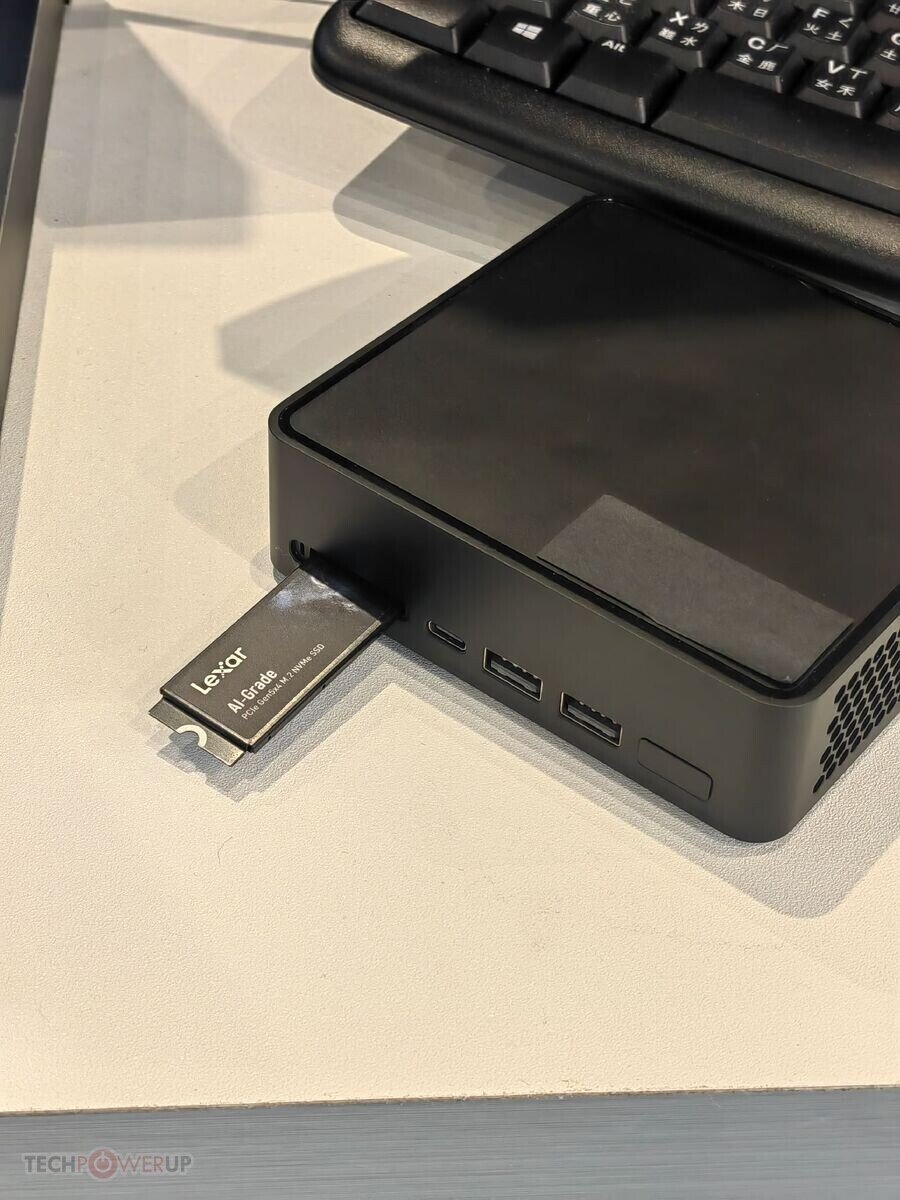
The mini PC you see is a prototype by ASUS. There is of course the problem that neither PCIe isn’t practically a hot-pluggable standard, which is why Thunderbolt and USB 3 came to existence in the first place as hot-pluggable link layers on top of a serial physical layer. The company also showcased the AI-Grade Gen 5 x4 NVMe SSD. This M.2 NVMe drive that’s probably based on a DRAMless controller. Driving Lexar’s effort is the ability to treat the SSD like memory, so the LLM can load larger models, using a 3-tiered memory hierarchy. The GPU’s video memory is at L1 due to its highest bandwidth and least latency to the GPU. Then comes the system memory, larger but relatively slower; and finally, NVMe SSDs. Lexar claims that this approach has found to relieve memory footprint by at least 40%.