Blog
Leopard Imaging, ST combine for robotics vision module| Electronics Weekly

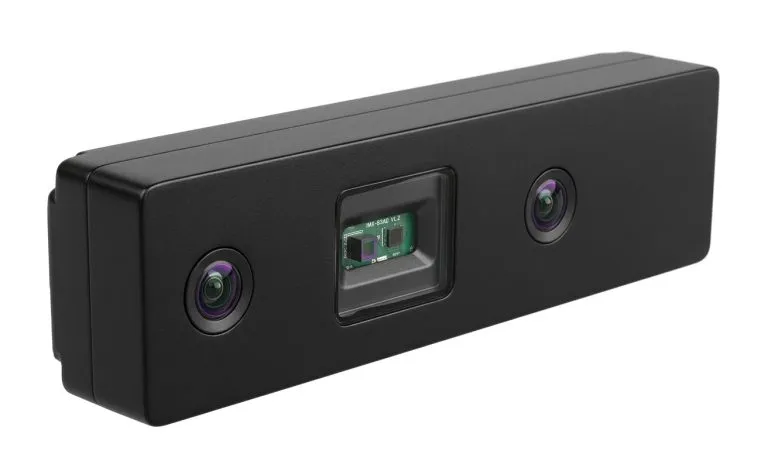
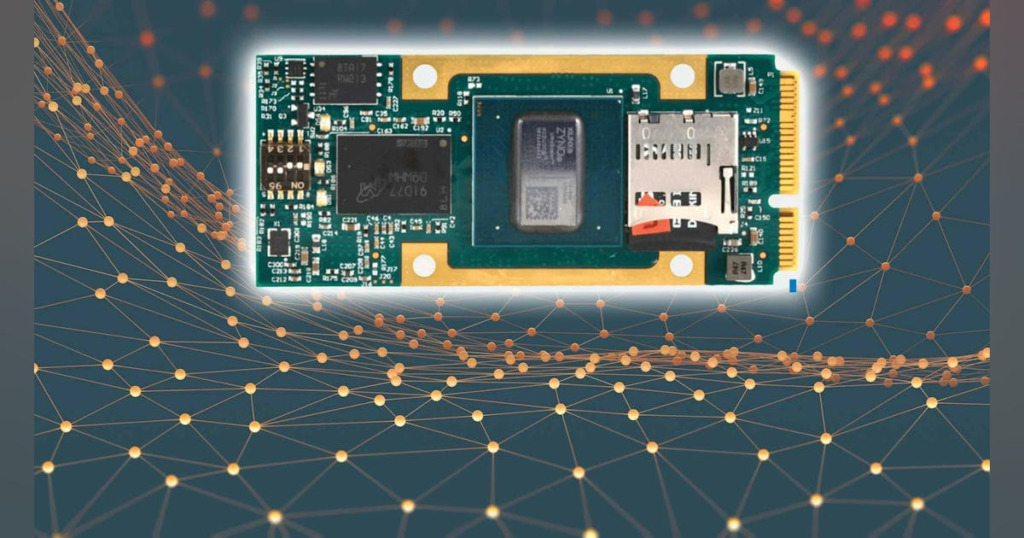
The module – which integrates natively with NVIDIA Jetson and Isaac robot development platforms – combines 2D imaging, 3D depth sensing, and human-like motion perception.
Technical
Specifically, the module incorporates the ST VB1940 automotive-grade RGB-IR 5.1-megapixel image sensor, which has combined rolling shutter and global shutter modes.
For motion sensing, there is a LSM6DSV16X 6-axis inertial measurement unit (IMU). According to ST this embeds ST machine-learning core (MLC) for AI in the edge, sensor-fusion low-power (SFLP), and Qvar electrostatic sensing for user-interface detection.
For 3D depth sensing, there is a VL53L9CX dToF all-in-one LiDAR module. Part of the ST FlightSense product family, it provides 3D depth sensing with accurate ranging up to 9 meters. It has a resolution of 54 x 42 zones (near 2,300 zones) combined with a wide 55°x42° FoV providing 1° angular resolution, short and long-distance measurements and small objects detection (achievable at up to 100 fps).
Humanoid
“Humanoid robotics is moving beyond research projects and demonstrations to deliver powerful new machines for a wide range of roles in manufacturing and automotive factories, logistics and warehousing, as well as retail and customer service,” said Marco Angelici, Vice-President of Marketing and Application for Analog Power MEMS and Sensors, at STMicroelectronics. “Our collaboration with Leopard Imaging brings market-leading ST sensors and actuators, seamlessly integrated into the NVIDIA robotics ecosystem, to accelerate the deployment of physical AI applications with human-like awareness.”
For its part, Leopard highlighted bridging ‘simulation to reality’.
“Accessing to ST sensors and actuators directly within the ecosystem has allowed us to standardize and streamline data acquisition and logging for humanoid robot vision across the HSB interface,” said Bill Pu, CEO of Leopard Imaging. ” Robot builders can use our multi-sensing vision module with Isaac tools to accelerate learning and quickly bridge the ‘sim-to-real’ gap.”
More information can be found on the ST website and blog.
See all our robotics content.