
Blog
Electronic Nose Sniffs Out Bad or Unique Foods

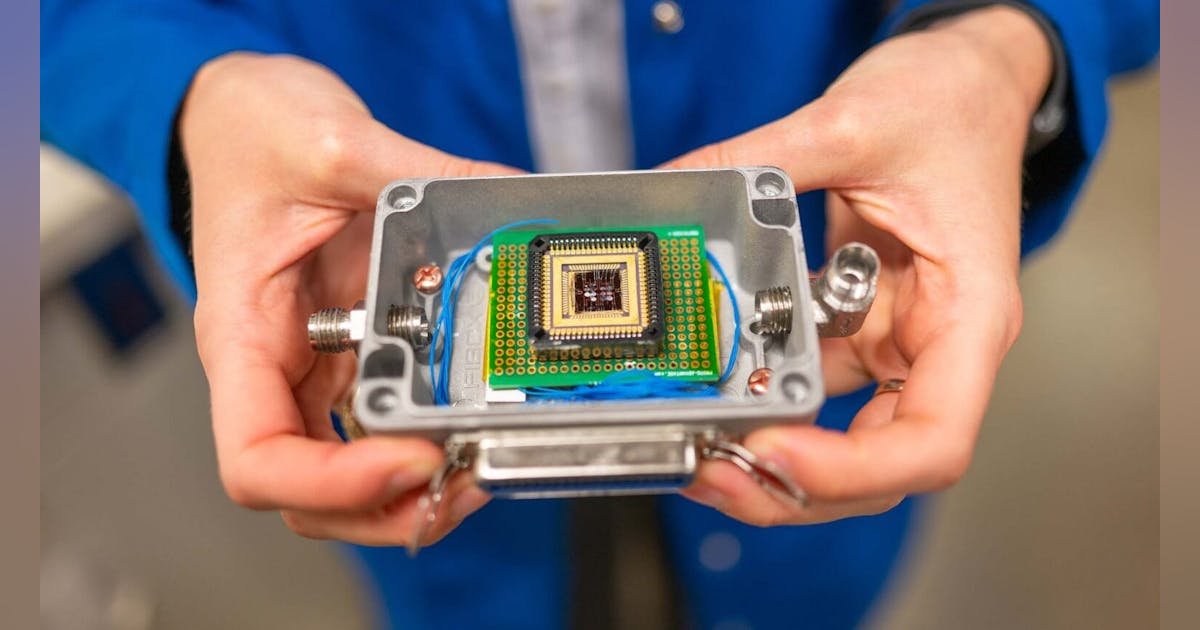
Currently, most single-chip gas detection systems rely on only two to 10 different sensors, and integrating multiple devices fabricated on separate chips introduces wiring complexity and bulky form factors. High-throughput evaporation methods allow for larger arrays; however, neighboring sensors share similar materials, resulting in overlapping and ambiguous responses.
Furthermore, most studies have relied on metal-oxide semiconductors as the gas-sensitive layer, which typically requires high-temperature operation, thus restricting the platform to heat-tolerant materials.
The team overcame many of these challenges by using carbon-nanotube layers that are only around a few nanometers thick as the conducting material, rather than metal oxides. The large surface area of their array, dubbed ML-SCENT, gives them many special qualities, including being highly sensitive at room temperature. The extremely sensitive carbon-nanotube field effect transistors are stimulated through a single-step microdispensing method compatible with automated pipetting systems.
They recorded sensor response by measuring the change in current through each FET over time while grounding the gate (VG = 0 V) and applying a small 500-mV bias between the source and drain electrodes. The current pathway through the device depends on the conductivity of the functional agent.
ML Model and Training
The machine-learning-based scent program was exposed to the data from 16 different food “items,” including various fruits and nuts (strawberry, blueberry, banana, walnut, hazelnut, cashew, and peanut) and spoiled dairy and meat products. These food items produce a volatile landscape ranging from fruity esters and monoterpenes to oxidative aldehydes, heterocyclic pyrazines, and sulfur-containing compounds, underscoring that a simple sensor array can’t effectively discriminate among this extensive chemical diversity.
Using machine learning, the team trained a model to recognize the sensor response profiles associated with seven different foods. They also trained it to recognize the scent of raw chicken, milk, and eggs when they were fresh and when they had been left out at room temperature for 24 hours and 48 hours.
The data was collected using a multiplexer, which cycled through all 16 devices at a rate of 0.25 Hz. Target gases were exposed for 95 seconds with a 185-second recovery period between pulses.
The e-nose was sensitive enough to smell 0.05 grams of isolated walnut, which is about one hundredth of an average shelled walnut. They also acknowledge that they haven’t yet tested the sensitivity of the device in environments where other gases are present, such as when walnuts are in a salad or a cake, or when spoiled foods are in a refrigerator with other foods.
This model yielded 92.6% overall accuracy, which was calculated by dividing the number of correct predictions by the total number of predictions in the dataset (Fig. 5).