Blog
Corvus and Southern Glazer to expand use of drones in warehouses


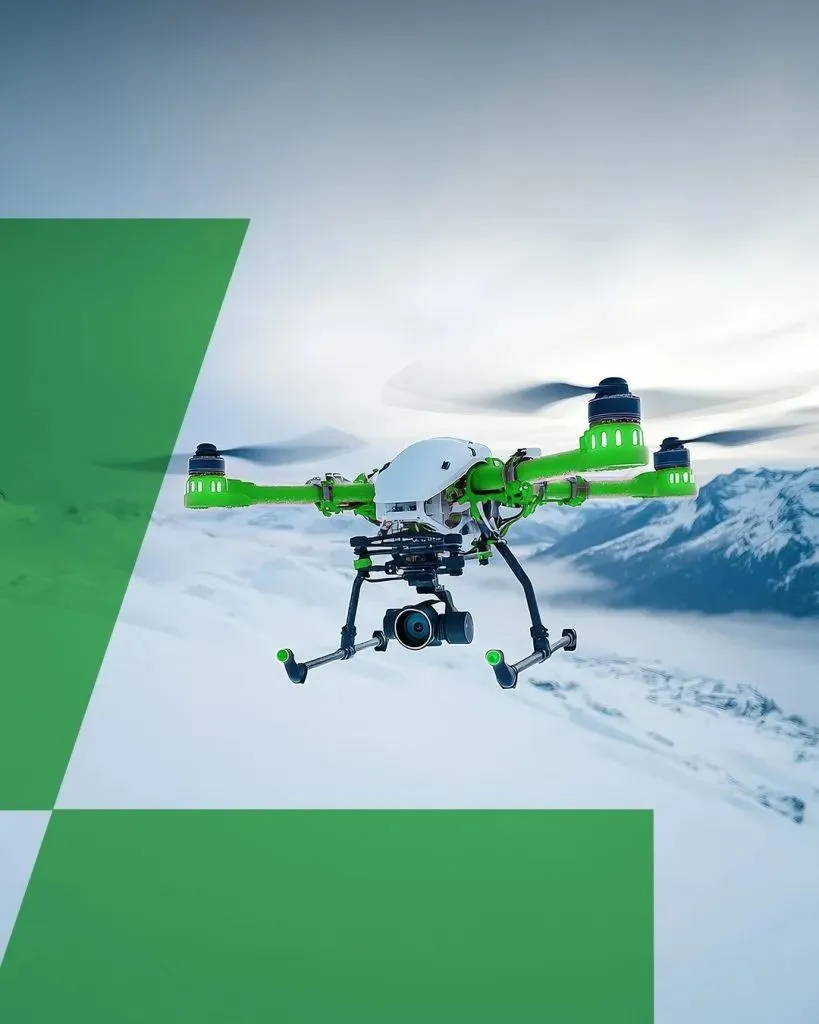
Drones are making a difference in wars in Ukraine and the Middle East while domestic versions are increasingly deployed in industrial and warehouse settings for safety and monitoring of facilities and inventory.
In one example, Corvus Robotics announced on Tuesday an expanded nationwide deployment of its current use of 40-plus Corvus One autonomous drones at nine Southern Glazer’s Wine & Spirits. Southern Glazer is expanding and has partnered with Corvus on the use of drones for its supply chain transformation, the companies said.
The Corvus One drones fly autonomously through warehouse aisles to scan and validate reserve storage locations, while also avoiding disruptions to case-picking operations involving humans and forklifts and other machines. The drones provide hands-free, frequent audits that sync directly to the Southern Glazer’s Warehouse Management System, thereby “freeing the team to focus on higher-value tasks,” the companies said.
Over the past 18 months, the drones have flown more than 5,000 times and improved inventory accuracy (with 35,000 verified discrepancies), increasing processing of cases of wine and spirits leading to more efficient fulfillment of customer orders. Also, the drones have helped add more inventory processes, up from quarterly to biweekly, helping teams resolve discrepancies sooner.
The companies said about 60-to 70 labor hours per week have been saved by moving manual cycle counting to higher value jobs, such as resolving inventory discrepancies. The Corvus interface allows teams to review high-res images, label scans and even reference historical video logs of activities in specific locations. Verifying discrepancies and finding incorrect placements of pallets can be done without slowing the work on the warehouse floor.
Southern Glazer has also seen a 3% improvement in its out of stock percentage by using the audits, which a company official called a “huge” percentage, in a video showing the drones in action inside warehouses.
“In our business, the key is case sales. Out of stock percentages is what we [use to measure] our customer fill rate,” said Erik Skonning, director of operational effectiveness at Southern Glazer.
“By increasing the frequency and precision of our reserve inventory validation, we are identifying issues earlier, improving fill rates, and enabling our teams to focus on proactive problem solving instead of reactive counting. The speed at which we have scaled this technology across nine sites reflects the value it is delivering to our operations,” added Karli Sage, vice president of supply chain management, technology and engineering for Southern Glazer, in a statement.
“Small improvements in accuracy have meaningful downstream impact,” added Jackie Wu, CEO of Corvus Robotics. Southern Glazer’s move to 40 drones in nine warehouses “demonstrates strong operational buy-in.”
Corvus, based in Mountain View, Calif., calls itself the first and only autonomous inventory management system building an AI world model. It counts GNC, Dermalogica and Staci Americas among its customers with a team of fewer than 50 employees. Southern Glazer has operations in 47 markets in the US and Canada, making it the largest in the US, with other operations in the Caribbean, Central and South America.
Sensors are essential to operation of all drones, with up to 10 essential sensors for basic flight stability and navigation including GPS, accelerometers, gyroscopes, barometers and magnetometers. High-end drones used in military operations might add in more than 10 additional sensors such as lidar, infrared and obstacle avoidance.
Ukraine is deploying a massive drone army in its ongoing fight against Russia using low-cost, first person view kamikaze drones and commercial DJI/Autel quadcopters and long-range, domestically produced strike drones such as the UJ-22/UJ-25 drones. AI is being used for targeting.
Iran is using a variety of much larger drones often designed in the style of planes instead of copters in attacks on Israel and nearby countries in response to strong attacks from Israel and the US three weeks ago. They are generally low-cost but long-range and include the Shahed-136, Mohjajer-6 and Arash-2. Cheap drones used by Iran have become a wild card in the Iran war, as noted in various reports. A Shad-136 drone can cost just $20,000 to $50,000 per drone to produce, a fraction of the cost of a ballistic missile.
Grand View Research and others have estimated the commercial and industrial-use global drone market at up to $83 billion in 2025, growing to $182 billion by 2030. Industries using drones include construction, energy, agriculture and logistics. North America has the largest market share globally for industry-use and commercial drones at 40%.
Editor’s Note: To learn more about sensors used in many industrial applications, not only in drones, attend Sensors Converge 2026, May 5-7 in Santa Clara, Calif. Registration is online.