
Blog
Carlo Ratti Associati x Mutti

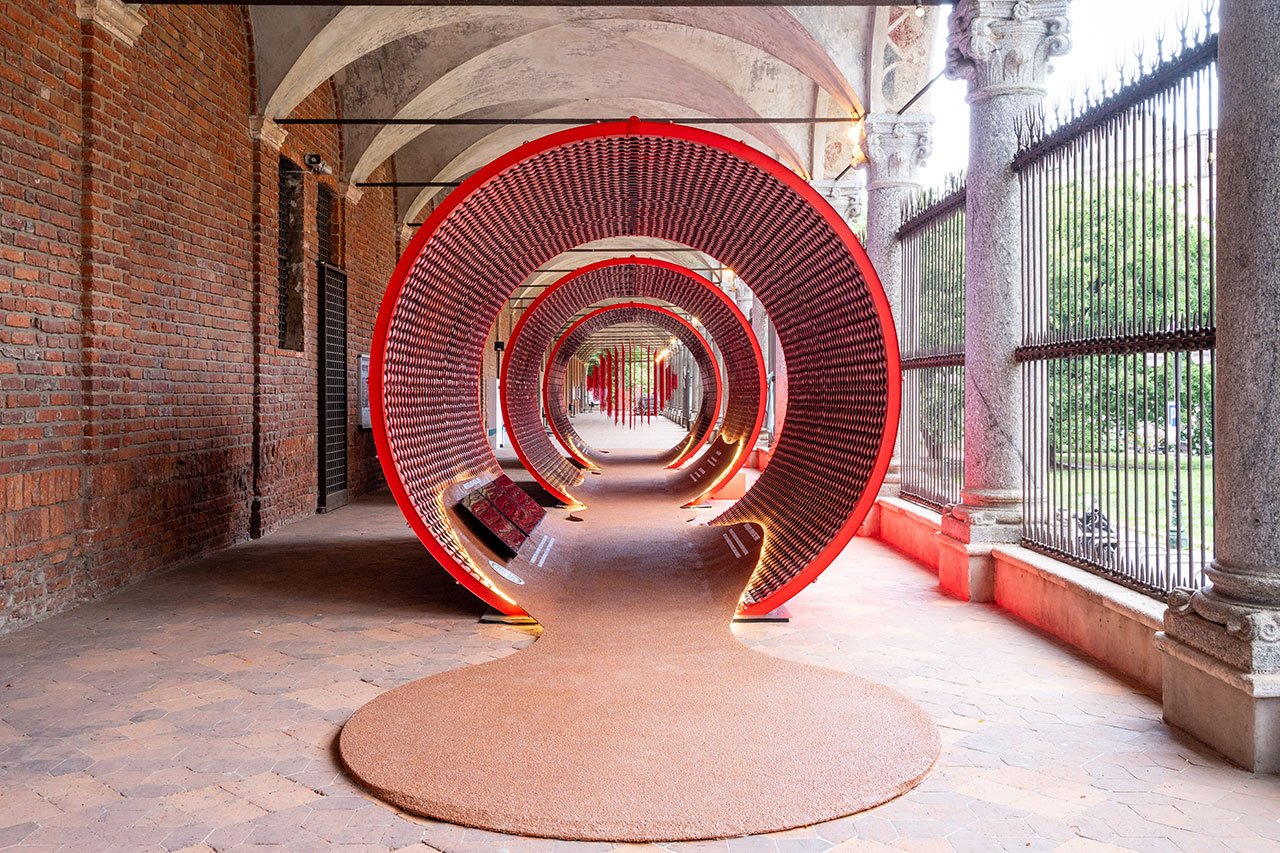
As Milan Design Week comes to a close, the Fuorisalone installation that lingers in my mind is once again that which puts a design spin on the familiar. MIT professor and architect Carlo Ratti partnered with Mutti to create House of Polpa, a temporary structure that turns one of the most ubiquitous pantry staples into an immersive architectural experience. Canned goods are rarely the subject of design discourse, yet their cultural presence is undeniable, as Andy Warhol underscored decades ago.
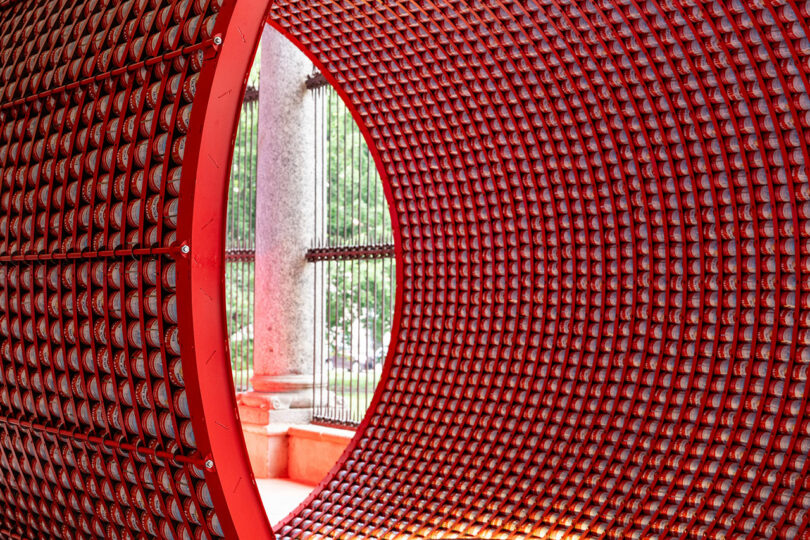
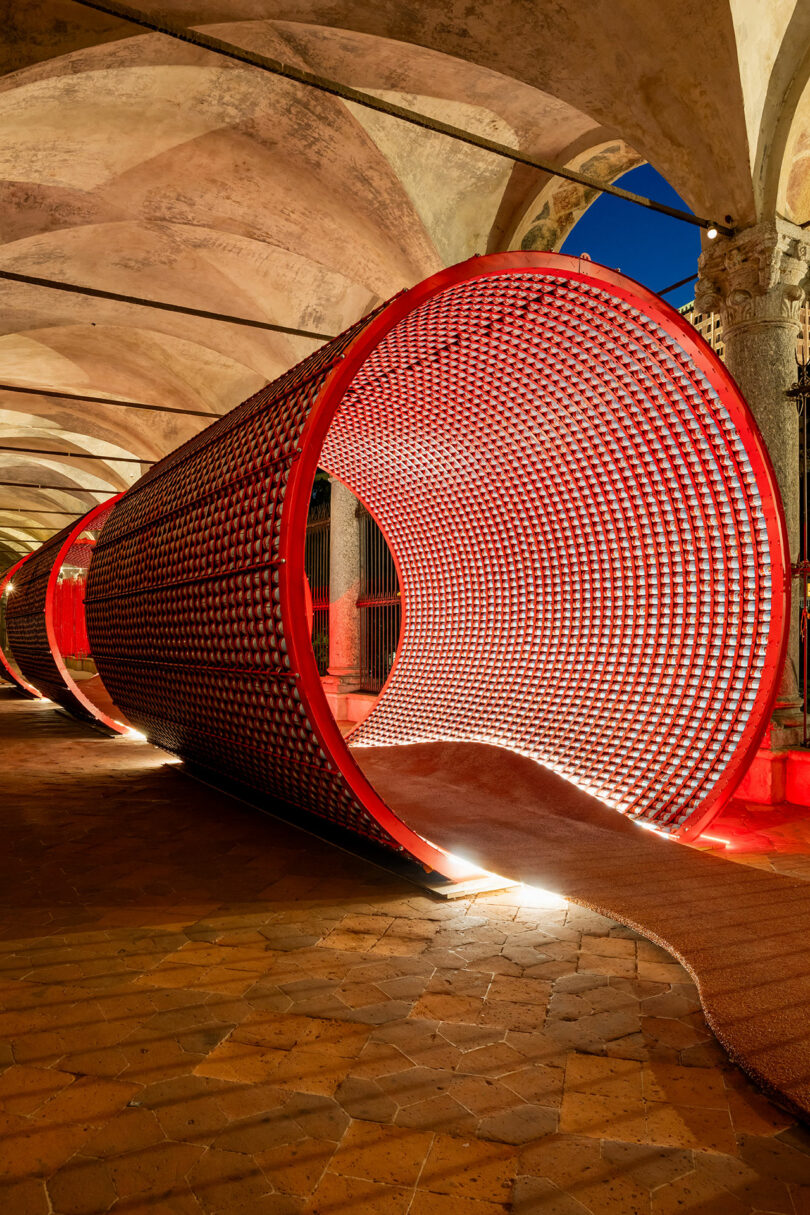
Here, that same basic can became the starting point for a different kind of exploration. Installed beneath the portico of the Università degli Studi di Milano, approximately twenty thousand cans of Mutti tomato pulp were supported by a steel substructure that allows them to be stacked and gradually removed without compromising their stability.
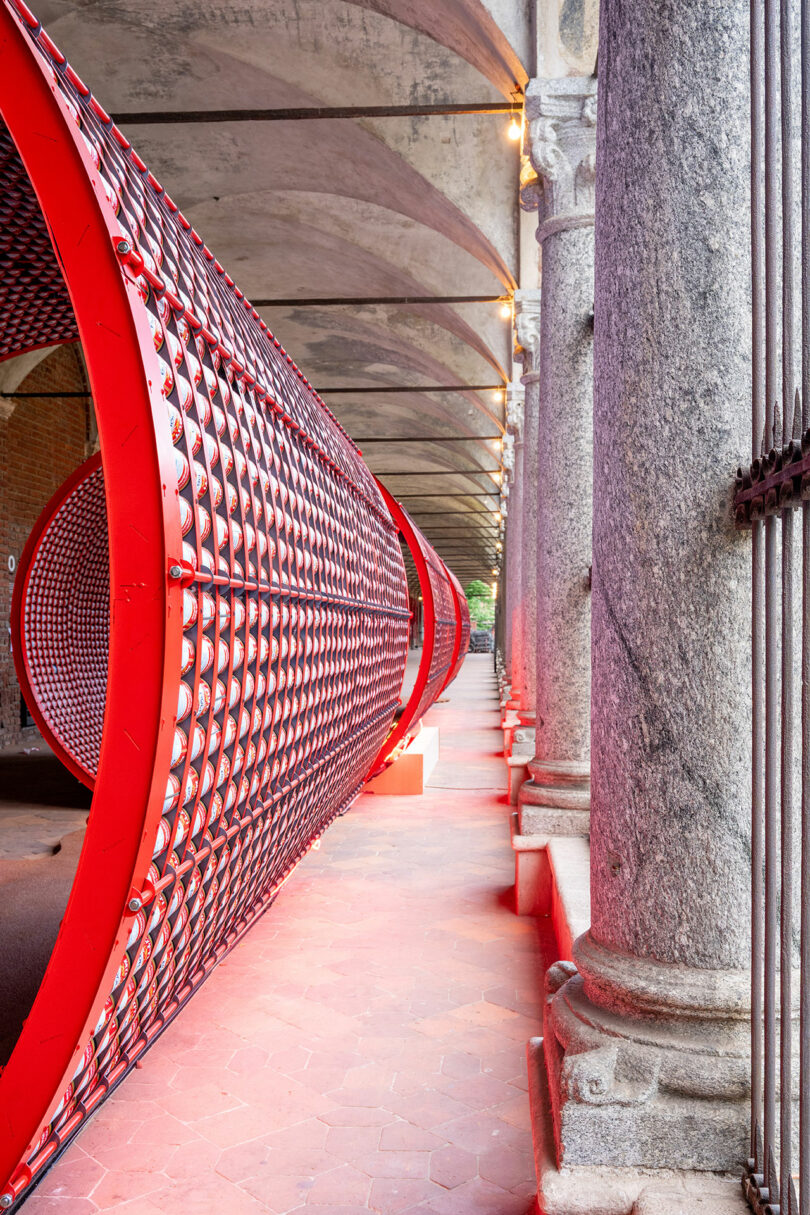
Visitors walked through the red volume spanning more than 25 meters. Inside, the experience move beyond the visual. Subtle cues of scent, texture, and sound created a sensorial environment referencing the tomato supply chain.
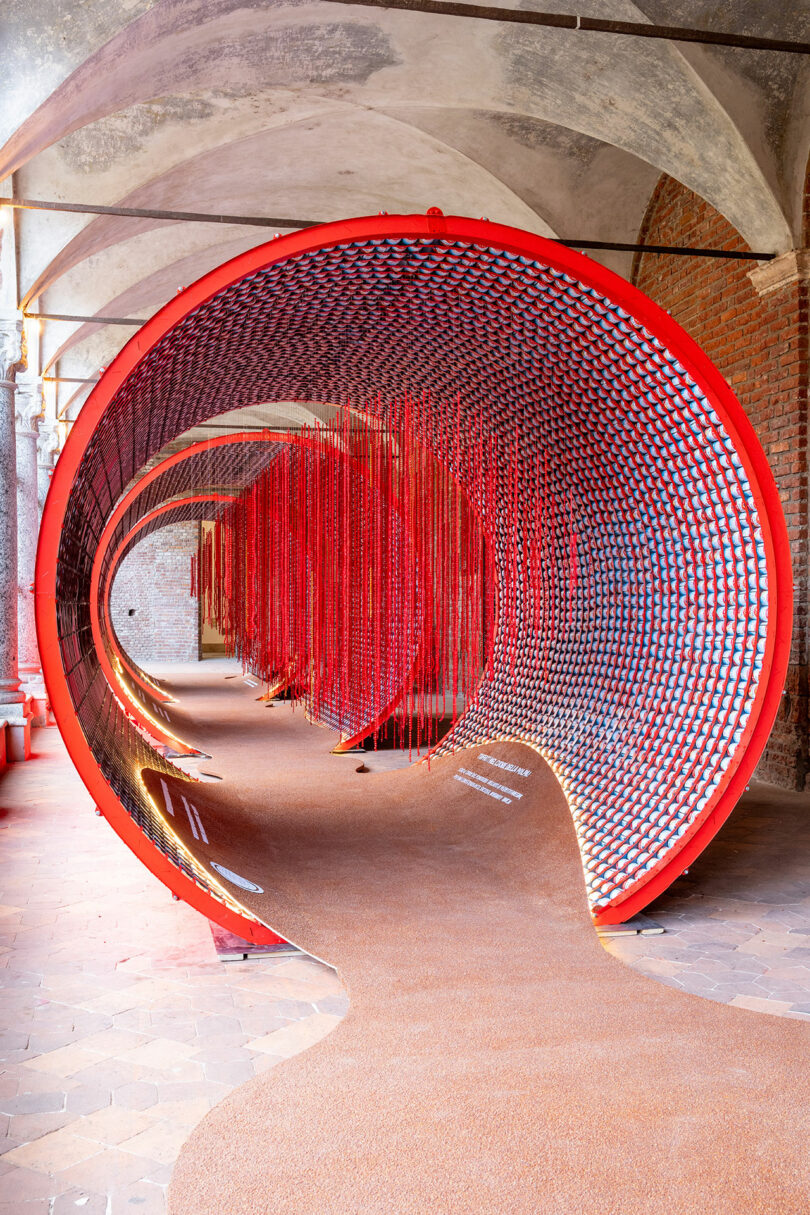
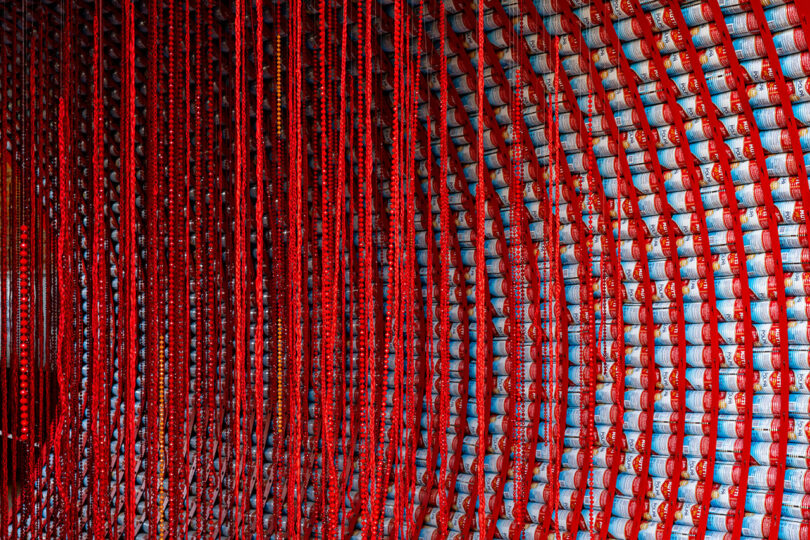
Circularity is also embedded throughout. The flooring, developed using a Mapei resin made from dried tomato peels recovered from processing waste, reinforces the project’s ethos. Nothing there was purely symbolic. Each element points back to cycles of production, use, and reuse. In essence, the project is designed to be ephemeral.
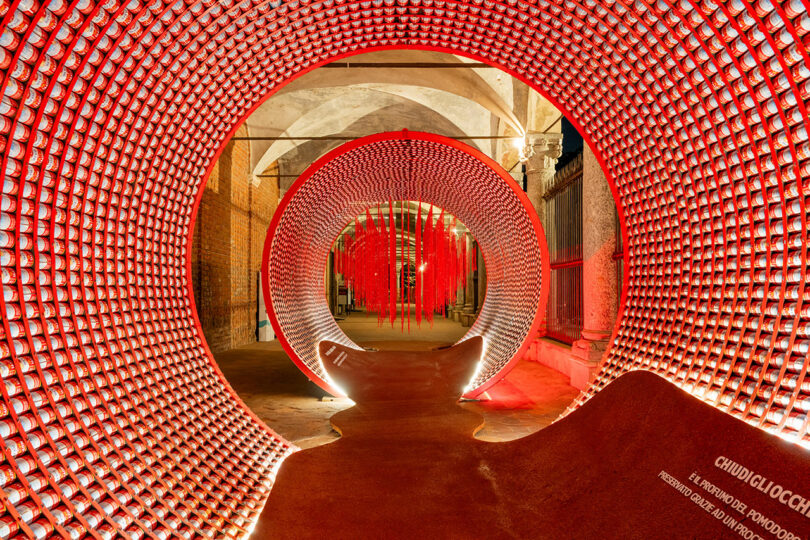
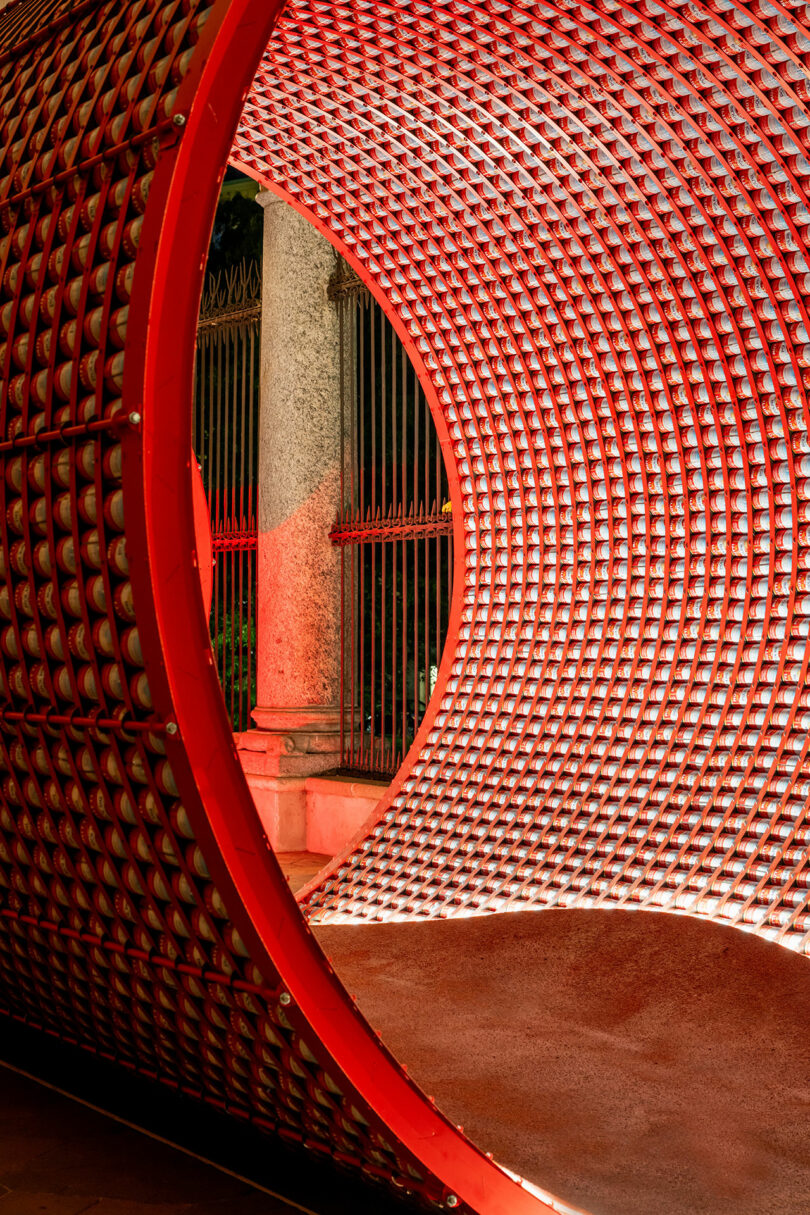
Visitors were invited to remove a can of Mutti Polpa as an example of participation through consumption. The dissolving structure will extend the exhibit’s life into many pasta dinners throughout the region. For the cans that remain, they will be donated. The dispersal of the project is what makes it so compelling. The installation’s destination will be someone’s kitchen, showing how design can minimize waste by thinking beyond single use.
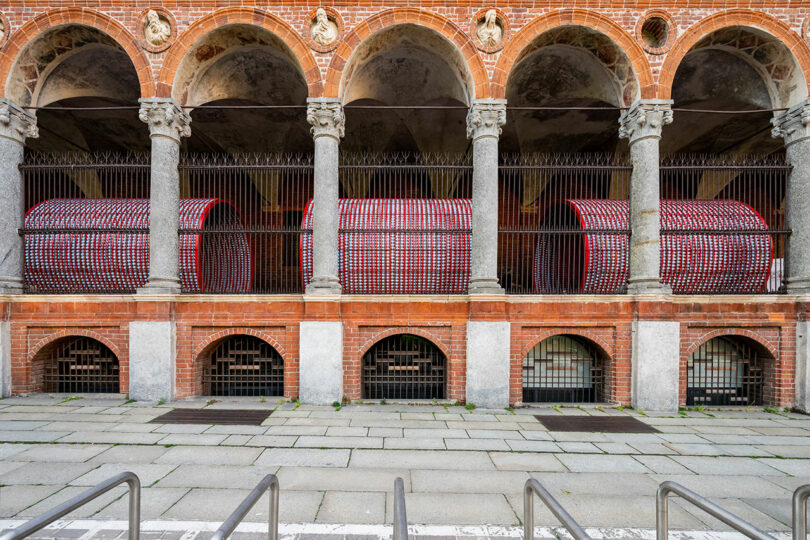
Images by Saverio Lombardi Vallauri, courtesy of INTERNI Magazine.
