Blog
Cabling for Next-Gen Quantum Computing Infrastructures

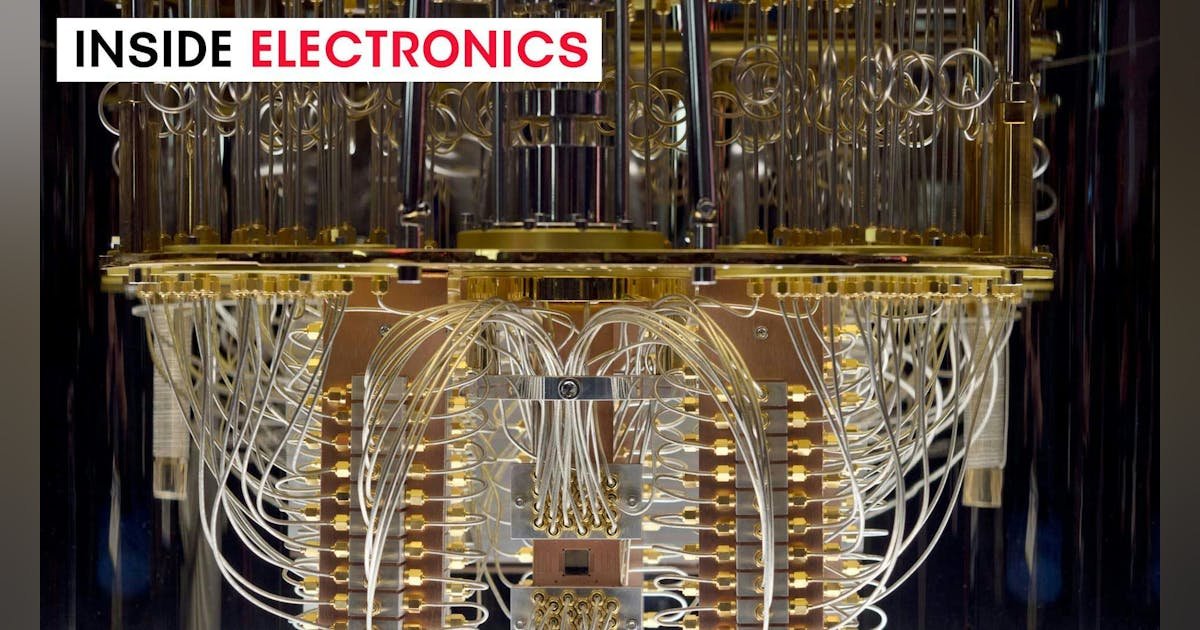
When people talk about advanced computing, the first thing that springs to mind is AI. However, lots of people are trying to achieve a quantum advantage at some point as well. One could argue that quantum computing will be a breakaway core technology for AI, but without the advanced core technologies required for the system infrastructure, not much will be achievable.
Beyond the power and topology issues, we also need to pay attention to the wiring and address the I/O as its own system infrastructure. Just as there are different types of quantum computers, different types of cables are used, too.
However, at the end of the day, it’s almost all cold temperatures, high-frequency signals, and very small environments involved. You have to move the data in and out for any calculations to occur, and we must consider the inter-chip interconnect as well as the intra-chip interconnect.
In a quantum computer, we would connect to two different things. There are the electronics that generate signals, and those go to a QPUA quantum processor. The processor then actually carries out the quantum computation and then sends back signals up to the control electronics. This is why interconnect and I/O are so important. For now, really, the major cabling challenge is about interfacing warm control electronics to extremely cold quantum processors.
One approach is the use of superconducting tapes and superconducting materials because they don’t conduct any heat, making it a material science question as well. But we’re not just looking for superconducting capabilities; we’re looking for them within a specific bandwidth of operation.
We sat down with Daan Kuitenbrouwer, Co-Founder of Delft Circuits, about the company’s effort in that direction. Delft’s Cri/oFlex superconducting cables replace conventional wiring inside cryostats, delivering higher channel density, lower thermal load, and proven reliability at scale in quantum and cryogenic systems.