Blog
Provably Correct Ethernet | Electronic Design


Ethernet has proven to be a robust, long-term, networking solution, but it uses protocols that can lead to data corruption in large-scale systems. TCP with its handshaking protocol is supposed to provide reliable communication. However, what happens to transactions when the handshake fails? This aspect is addressed by the Open Compute Project’s Open Atomic Ethernet project and other similar architectures designed to provide reliable, low-latency, atomic transaction-oriented communications.
Daedaelus is one company that’s working on Atomic Ethernet. Deaedaelus’ Sahas Munamala provides some insight into how reliable communication would work (watch video above). The demonstration system (Fig. 1) shows what the protocol can do, but things get really interesting when we’re talking about hundreds to thousands to possibly millions of nodes within a system, as might occur in a chiplet-based system.
According to Daedaelus, “80% of observed network-partition failures had a catastrophic impact, including data loss.” Oftentimes, the failures were silent or had unclear warnings.
The fabric proposed by the company has each node connected to all nearby neighbors (Fig. 2). All links are atomic — they know immediately if a packet isn’t exchanged properly.
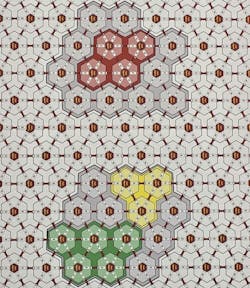
The graph-based topology and communication theory is a bit more extensive than can be covered here. Nonetheless, the approach has many features that are required in this type of environment. They include exactly-once semantics at line rate and self-healing, demand-aware networks that provide reliable, transaction-oriented communication by default. This video provides some insight into the problems and solutions.
Santa Clara Convenction Center | Chiplet Summit

Check out the breaking news, videos, and podcasts coming from this year’s Chiplet Summit.