Blog
AMD Ryzen AI 400G Series Desktop APUs Based on 4 nm “Gorgon Point” with 4P+4C Configuration

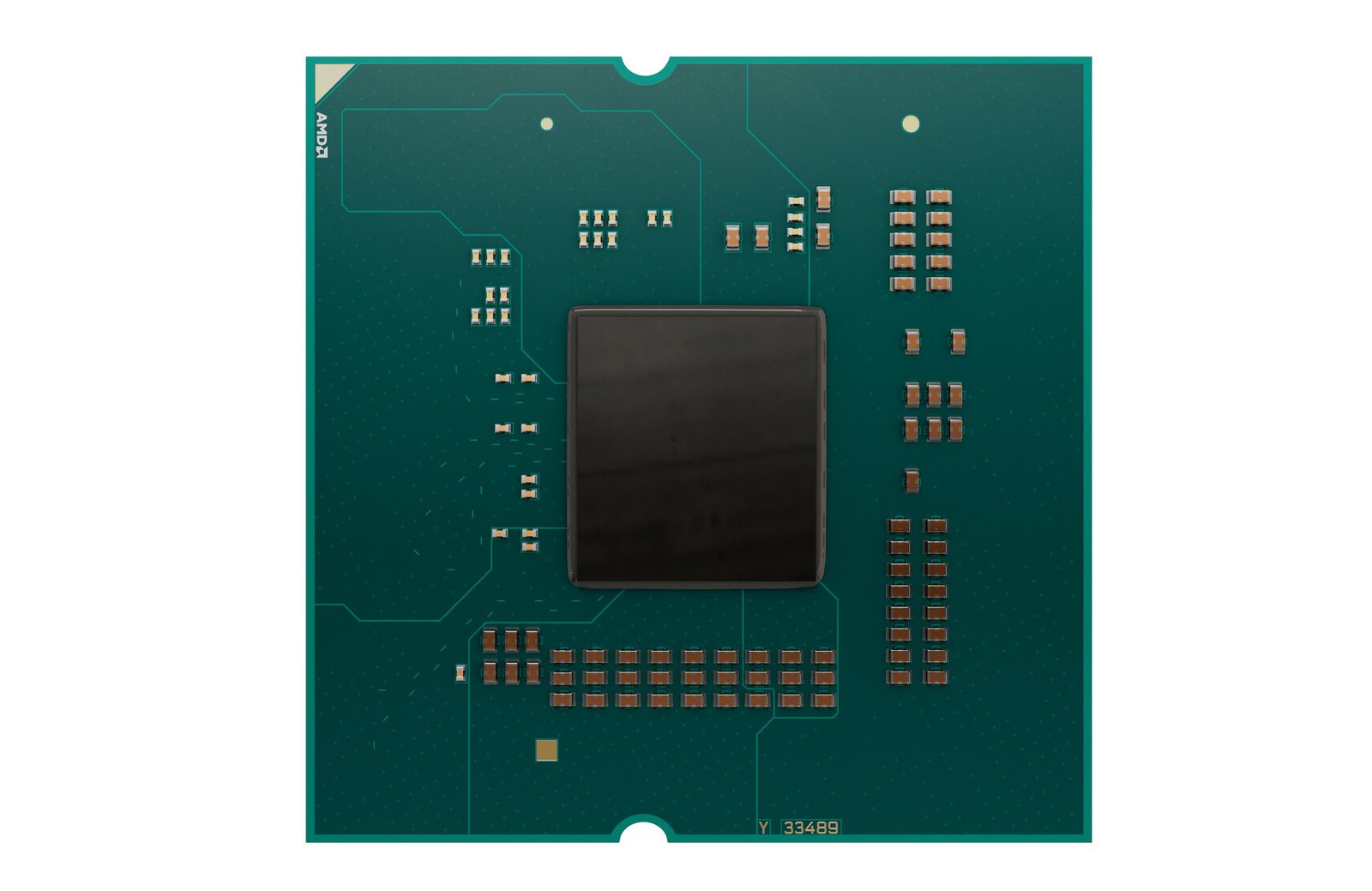
While “Phoenix Point” featured a single CCX design with up to eight full-sized “Zen 4” cores, “Gorgon Point” reverts to a dual-CCX design for its CPU complex. The first CCX features four full-sized “Zen 5” cores that can boost up to the maximum rated speed of the APU model, along with 8 MB of L3 cache that’s shared among the four “Zen 5” cores. The second CCX features four compacted “Zen 5c” cores, with an 8 MB L3 cache shared among them. “Zen 5c” is a physically compacted version of “Zen 5,” it has an identical IPC and ISA, but it caps out at roughly two-thirds the maximum boost frequency of the full-sized “Zen 5” cores. For threads to migrate between the two CCX, their instructions and data make a trip through the chip’s Infinity Fabric interconnect, just like it was during the old “Zen 2” architecture days.
AMD hasn’t maxed out the “Gorgon Point” silicon on the desktop Ryzen AI 400G series, the top model, the Ryzen AI 7 450G, is configured with 4 “Zen 5” cores, and 4 “Zen 5c” cores. The fully unlocked “Gorgon Point” silicon has 12 cores, 4 of which are “Zen 5,” and 8 of which are “Zen 5c.” It’s also worth noting the approach AMD has taken with the iGPU. The top 450G processor model only comes with 8 iGPU compute units, that’s half the CU physically available on the silicon. Most other processor models in the series comes with just 4 CU.
To carve out the Ryzen AI 7 450 series processor models, AMD configured the silicon with 4 “Zen 5” and 4 “Zen 5c” cores. The Ryzen AI 5 440 series chips are configured with 3 “Zen 5” and 3 “Zen 5c” cores. The Ryzen AI 5 435 series chips come with 2 “Zen 5” and 4 “Zen 5c” cores—an interesting bit of sub-segmentation within the Ryzen AI 5 brand extension.
The design focus with the Ryzen AI 400G series desktop APUs hence appears to be that 50 TOPS NPU more than an overpowered iGPU that can bring 1080p gaming to the masses. A processor model with 16 CU and relaxed power limits of the desktop platform would have aligned closer with AMD’s traditional notions of an APU.