Blog
Smart Power for Agile Robots: Integrated Motor Control, Thermal Managementm and Energy Flow


Power-Stage and MOSFET Choices for 48-V Robotic Systems
A 48-V bus is used in many robotic systems to balance power delivery, current levels, and system requirements. At this voltage, MOSFET selection, gate-drive strategy, and PCB layout remain important factors in controlling switching losses, electromagnetic interference (EMI), and heat.
Discrete MOSFETs and gate drivers provide layout flexibility, while more integrated power stages may simplify implementation and improve consistency across designs. The appropriate approach depends on electrical, thermal, qualification, and manufacturing requirements.
In a compact robotic joint, MOSFET packaging, heat-transfer paths, and gate-drive tuning interact with the motor characteristics and motion profile. Switching-frequency selection involves tradeoffs among switching losses, current ripple, filtering requirements, and control performance. The selected operating point must satisfy both the thermal limits and the current-sensing requirements of field-oriented control. Reusing characterized power-stage building blocks can improve consistency across product variants compared with developing a separate discrete implementation for each robot.
Circuit simulation supports the evaluation of MOSFET technologies, gate-drive strategies, and switching frequencies before hardware fabrication. Representative motion cycles can be used to assess acceleration, holding torque, regenerative braking, and current-loop behavior.
These simulations provide a basis for comparing switching losses, conduction losses, DC-link ripple, and transient thermal stress across device options. In compact joints, changes in switching behavior or thermal impedance can materially affect continuous torque capability and reliability.
Motor-control development tools can complement this process through graphical configuration, parameter monitoring, and rapid evaluation. These tools allow engineers to test operating conditions without first developing a complete application firmware framework. Used alongside circuit simulation and hardware validation, they’re able to reduce development effort and help identify efficiency, EMI, and thermal issues earlier in the design process.
System-Level Considerations for Robotics Power Design
Motor power management in robotics involves coupled thermal limits, sensing requirements, regenerative behavior, EMI, and protection mechanisms. Changes in one area can affect performance or operating margins elsewhere. A coordinated design process begins with representative torque and power profiles and uses them to define the sensing architecture, heat-transfer paths, and power-stage requirements.
This approach supports the development of compact joints that meet temperature limits and dynamic-performance targets. Reusable motor-control building blocks may also support multiple robot configurations and payload options. The extent of reuse, firmware modification, and additional qualification depends on the electrical, mechanical, and safety requirements of each configuration.
Integrated Motor-Control Drivers for Robotics
Integrated motor-control devices can combine a microcontroller, gate drivers, power management, and a configurable analog front end (AFE) in a single package for field-oriented control.
Some devices include a high-performance microcontroller core, e.g., a 150-MHz Arm Cortex-M4F with floating-point support and hardware arithmetic acceleration. Such a core can execute field-oriented-control calculations alongside application and communications tasks, depending on the implementation and processing load.
An integrated AFE could include three precision differential programmable-gain amplifiers (PGAs), dedicated overcurrent comparators, and digital-to-analog converters (DACs) for programmable protection thresholds. This arrangement will support fast and filtered overcurrent protection while reducing the need for external amplifiers and comparators. Additional single-ended PGAs may support temperature and DC-link voltage measurements.
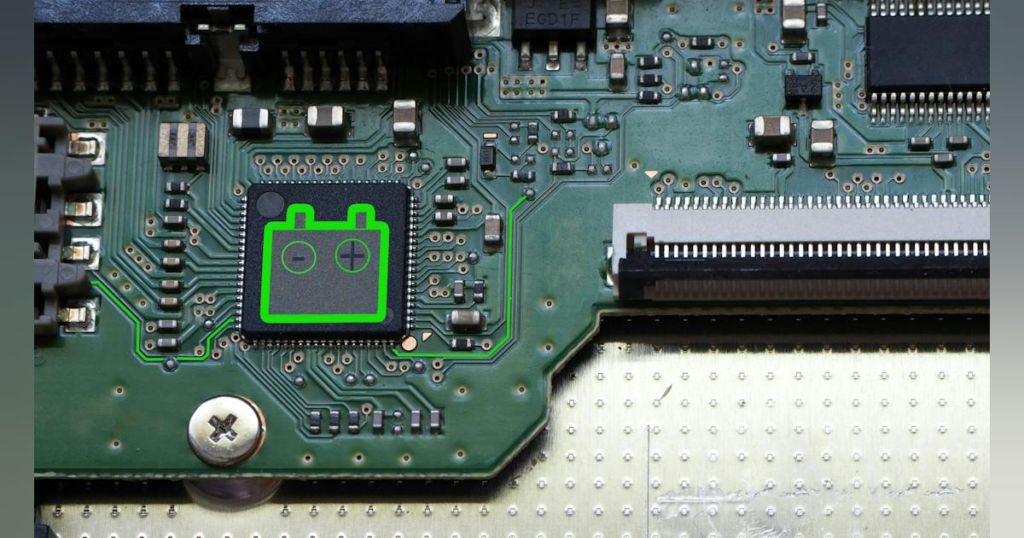
Integration can reduce PCB area and the number of external circuits requiring selection, layout, and validation (Fig. 3). Consolidating analog signal conditioning, gate-drive circuitry, and power management may also improve implementation consistency across projects. An AFE motor driver used with an existing microcontroller can provide similar consolidation without requiring migration to a different processor architecture, although interface and protection changes may still require firmware updates and validation.