Blog
IA for AI, The UX of contrast, Battling AI fatigue


Weekly curated resources for designers — thinkers and makers.
“The discourse surrounding generative AI in the creative arts is frequently characterised by a sense of historical rupture, a seismic shift unlike any that has come before. Critics often frame the emergence of Large Language Models and diffusion-based image generators as an unprecedented existential threat to the ‘soul’ of human expression, a black swan event that may signal the end of human creative sovereignty.
However, when we look back over the history of Western art and technology, it becomes clearer that this anxiety is not a new phenomenon but rather a recurring structural feature of the relationship between human intent and technical innovation. Whenever a new tool emerges that threatens to lower the barrier to entry or automate a process previously governed by arduous manual labour, the established artistic class has responded with a mixture of moral panic, accusations of ‘soullessness,’ and a retreat into essentialist definitions of what constitutes ‘true’ art.”

Visualize striking 3D embellishment mockups →
[Sponsored] DREAMCOMPOSER ® transforms designs into impressive 3D mockups. Try 100+ KURZ transfer decorations and share results instantly.
Editor picks
- Information architecture is the foundation AI is starving for →
Every AI problem you chase traces back to IA.
By Patrick Neeman - Rethinking friction in an AI world →
Why the best UX often disappears.
By Darren Yeo - Your people get AI. Get out of their way. →
Companies that win will be the ones willing to trust people.
By Dan Maccarone
The UX Collective is an independent design publication that elevates unheard design voices and helps designers think more critically about their work.
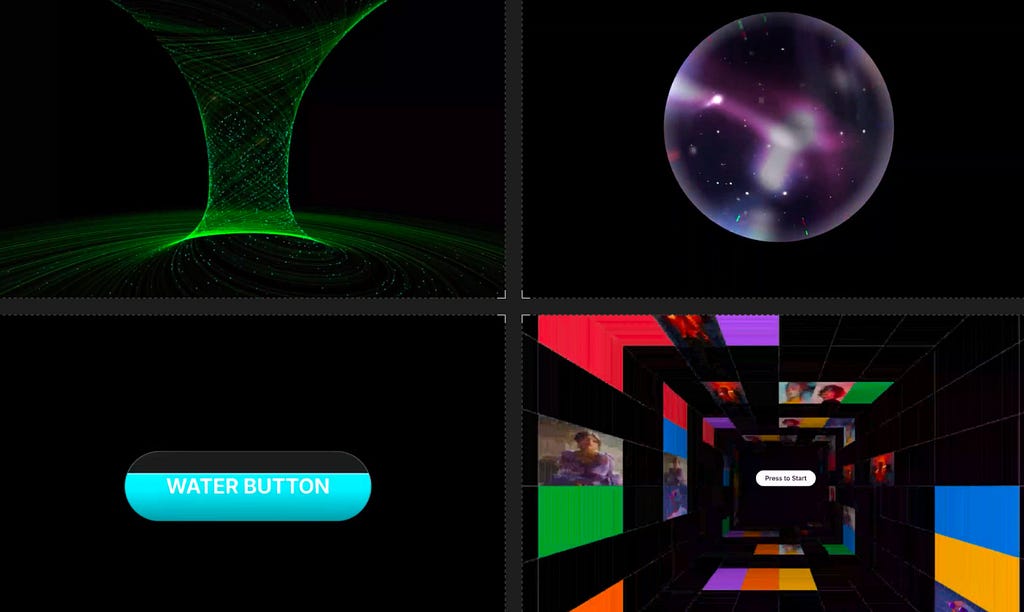
Originkit: a free animated component library for the web →
Make me think
- You don’t have to be smart if you can think clearly →
“When you’re on fire, problems are transparent: they’re solved simply by the act of looking at them. Even complicated layers of multiple problems can simply be glanced through like stacked panes of glass. But nobody can work that way all the time.” - Vercel project cards →
“I started by tweaking the padding and co-located information to reduce the vertical space occupied by each card. Some data was also omitted, for example we realised that we don’t need to show the project branch on the card which is generally always ‘main’.” - The era of personal software →
“But on the walk home, I realized something strange had happened. Or rather, something hadn’t happened. I never opened Google. I never searched GitHub for “activity monitor CLI.” I didn’t spend an hour trawling through “Top 10 GitHub Tools” blog posts, or installing three different utilities only to find out one was deprecated and the other required a subscription.”
Little gems this week

The UX of contrast: lessons from Indika’s game design →
By Alisa Smelkova

The consciousness mirage in AI design →
By Slava Polonski, PhD

The MOS 6502: the people’s princess →
By Neel Dozome
Tools and resources
- Battling AI fatigue: a practical guide →
AI is great, but it doesn’t have to take over your life.
By Adir SL - The accessibility paradox →
How making the web easier for humans also made it easier for machines.
By Michael Buckley - Redesigning TikTok in five weeks →
Exploring the user experience issues behind TikTok’s high churn rate.
By Hani Yeo
Support the newsletter
If you find our content helpful, here’s how you can support us:
- Check out this week’s sponsor and support their work too
- Forward this email to a friend and invite them to subscribe
- Sponsor an edition

IA for AI, The UX of contrast, Battling AI fatigue was originally published in UX Collective on Medium, where people are continuing the conversation by highlighting and responding to this story.