Blog
International Women in Engineering Day: Notable Women Engineers, Scientists, and Technologists

“As women in engineering, I see it as our goal to use our skills and perspective to solve meaningful problems and challenge stereotypes through actions and results, with the hope of inspiring the next generation of women to pursue careers in STEM or engineering by doing so. Diversity drives real business impact. Women notice different problems, ask different questions, and approach solutions in different ways. This diversity of thought ultimately makes teams and products stronger.
Days like International Women in Engineering Day are a reminder of how important a sense of community is for women in STEM. Being welcomed into TI’s Women Employee Network (WEN), an employee resource group where women can develop professionally and build relationships across the company, early in my career had a profound impact on my success. Now 10 years later, I serve as the executive sponsor for WEN and continue to see how networks for women in engineering can positively influence one’s professional growth and overall feeling of belonging in the workplace.
To young women considering engineering: follow your strengths, follow your passions and don’t be afraid to stand out.”
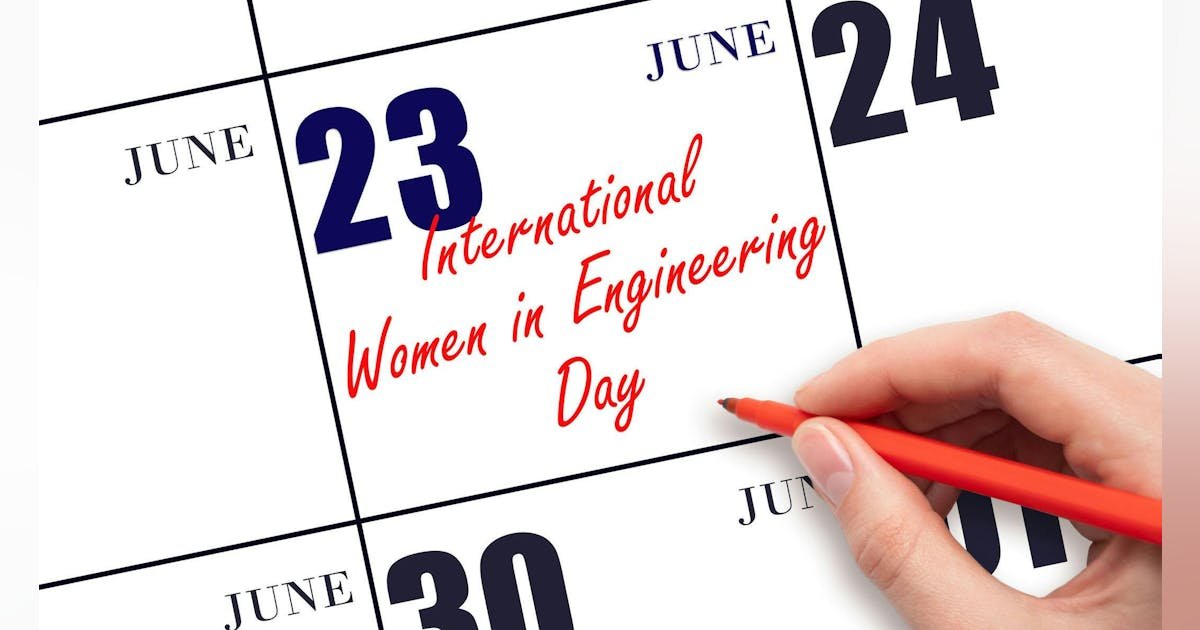
International Women in Engineering Day recognizes the social, economic, cultural, and political achievements of women around the world. Beyond those triumphs, women have played vital roles in raising the bar for science, technology, engineering, and mathematics (STEM), helping to advance many of the innovations that continue to impact society today.
To celebrate International Women in Engineering Day (June 23), we look at several notable engineers, technologists, and scientists whose contributions have helped drive advances across a wide range of disciplines.
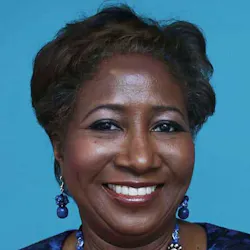
Sandra K. Johnson: Electrical Engineer
Sandra K. Johnson is known for being the first African-American woman to earn a doctorate in electrical engineering at Rice University and the first black woman to enter the IBM Academy of Technology. After gaining her doctorate, Johnson went to work for IBM Research, where she developed parallel and shared memory systems, parallel I/O, networked computing, and the Vesta Parallel File System. She also had a hand in creating Deep Blue, the AI-powered chess computer. In 2001, Johnson shifted from her research work to head IBM’s web-database integration team at the company’s Silicon Valley Lab. She worked there until 2011 before becoming a business development executive and later Chief Technology Officer of IBM Central, East and West Africa (based in Nairobi). Over the course of her distinguished career, Johnson earned myriad technical and professional awards and has over 40 patents issued and pending. She’s also an accomplished author and wrote and co-authored over 80 publications, most notably being the Editor-in-Chief of the book Performance Tuning for Linux Servers.

Donna Strickland: Optical Physicist
Dr. Donna Strickland is a Canadian optical physicist who helped pioneer the field of pulsed lasers. Strickland, along with French scientist Gerard Mourou, was awarded the Nobel Prize in Physics in 2018 for the practical implementation of chirped pulse amplification. In 1989 Strickland earned her Doctorate in Philosophy and began working with Mourou to develop an experimental setup that could raise the peak power of laser pulses. The intent was to overcome a limitation: When laser pulses reached gigawatts per square centimeter, the laser’s amplifier would become severely damaged. Strickland and Mourou’s technique of chirped pulse amplification helped stretch out each laser pulse both spectrally and in time before amplifying it, then compressed each pulse back to its original duration, generating ultra-short optical pulses of terawatt to petawatt intensity. This allowed smaller high-powered laser systems to be built on a typical laboratory optical table, which are known as “table-top terawatt lasers.”

Radia Perlman: Programmer/Network Engineer
Radia Perlman is known as the Mother of the Internet for her work in creating the Spanning Tree Protocol (STP). It allowed Ethernet to go beyond a few hundred nodes in a single building into large networks that connect hundreds of thousands of computers. She also played a role in the creation of internet routing, making it resilient and scalable, and the protocols she designed in the 1980s are still widely used today. Perlman’s breakthroughs led to her election into the Internet Hall of Fame in 2014 and the National Inventors Hall of Fame in 2016. She also received lifetime achievement awards from USENIX in 2006 and the Association for Computing Machinery’s SIGCOMM in 2010. Perlman currently holds over 100 issued patents and even authored a poem about STP entitled “Algorhyme.”
I think that I shall never see
A graph more lovely than a tree.
A tree whose crucial property Is loop-free connectivity.
A tree which must be sure to span
So packets can reach every LAN.
First the root must be selected.
By ID it is elected.
Least cost paths from root are traced.
In the tree these paths are placed.
A mesh is made by folks like me
Then bridges find a spanning tree.
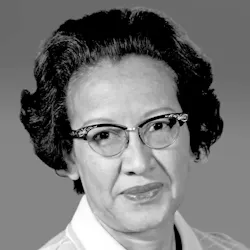
Katherine Johnson: Mathematician
Katherine Johnson is regarded as one of NASA’s brilliant mathematicians — “computers who wore skirts” — and was responsible for calculating the orbital mechanics of America’s first space flights. Her work included calculating trajectories, launch windows, emergency return paths for Project Mercury spaceflights, and rendezvous paths for the Apollo Lunar Module and command module on flights to the Moon. Katherine also had a hand in getting the Space Shuttle off the ground and even worked on plans for missions to Mars. To her testament, Johnson received multiple awards and honors for her contributions to science, including the Presidential Medal of Freedom, the nation’s highest civilian honor; a Congressional gold medal; the Silver Snoopy Award (awarded for flight safety, mission successes); and the NASA Achievement Award. Her legacy continues to inspire generations of scientists, mathematicians, and engineers, serving as a great example of perseverance, excellence, and dedication to the pursuit of knowledge.

Fei-Fei Li: Computer Scientist
Dr. Fei-Fei Li is currently the inaugural Sequoia Professor in the Computer Science Department at Stanford University, and a Founding Co-Director of Stanford’s Human-Centered AI Institute. She’s widely known for her work in establishing ImageNet, the image dataset that enabled rapid advances in computer vision during the 2010s. Li’s work has helped propel advances in AI, including deep learning, robotic learning, spatial intelligence, and ambient intelligence for healthcare delivery. From 2017 to 2018, Dr. Li took a break from her work at Stanford and joined Google Cloud as its Chief Scientist of AI/ML and Vice President. Her team focused on democratizing AI technology and lowering the barrier for entrance to businesses and developers, including the developments of products such as AutoML. In 2023, Li co-led the launch of the RAISE-Health (Responsible AI for Safe and Equitable Health) initiative at Stanford University, which looks to develop frameworks for the responsible use of AI in healthcare, including clinical care, biomedical research, and patient safety.
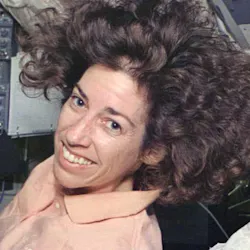
Ellen Ochoa: Astronaut/Electrical Engineer
Ellen Ochoa is an electrical engineer and the first Latina astronaut NASA sent into space during a nine-day mission aboard the Shuttle Discovery in 1993. She also became the first Latina director for the Johnson Space Center in 2012, and the second woman to hold that title. During her time as an astronaut, Ochoa managed the Intelligent Systems Technology Branch at Ames, where she supervised a staff of 35 responsible for researching computational systems for spaceflight missions. On her first three flights, Ochoa operated the space shuttle’s remote manipulator system, or Canadarm, On her last flight, she used the International Space Station’s arm to install the S0 truss, the structural the backbone of its workshop, as well as to move astronauts during extravehicular activities or spacewalks. She also used her remote manipulator skills to deploy and capture a pair of satellites on other missions. After her final flight in 2002, Ochoa became the deputy director of the Flight Crew Operations Directorate, where she oversaw the launch and landing of the Space Shuttles. Then on February 1, 2003, after the Space Shuttle Columbia and crew were lost during reentry, she initiated the directorate’s contingency action plan, which enacts structured protocols designed to mitigate risks to human life, secure facilities, and maintain critical space operations during emergencies. Ochoa remain the deputy director until 2006, where she was promoted to Director of the FCOD, and remained at the position until her retirement in 2018.

Kimberly Bryant: Electrical Engineer/Technologist
Kimberly Bryant is an electrical engineer and widely known for her Black Girls Code initiative, which aims to provide computer and programming education to African-American girls. Bryant was introduced to computer programming when she enrolled at Vanderbilt University in 1985, majoring in Electrical Engineering. During her time at Vanderbilt, Bryant became aware of a noticeable lack of people that looked like her in her classrooms. She was aware that the absence was most likely due to the lack of opportunities, resources, and support available to underrepresented groups at a young age. This led Bryant to found Black Girls Code in 2011, with its mission statement being to provide young girls of color with the chance to learn digital skills and drive a new generation of coders. The organization has since grown beyond its Bay Area headquarters — it now has seven chapters across the U.S. and one in Johannesburg, South Africa.
Conclusion
From pioneering breakthroughs in networking, artificial intelligence, and optical physics to advancing space exploration, computing, and STEM education, the women featured in this article have left a lasting impact on technology and the world we live in today. Their achievements not only helped shape their respective fields, but they also continue to inspire future generations of scientists, engineers, and technologists. As we celebrate International Women’s Day, it’s important to recognize the contributions of these remarkable women and the role they have played in advancing science, technology, and human understanding.