Blog
Usability, accessibility, and the human-AI paradigm

The divergence between usability and accessibility in the age of AI and vibe coding
Today, during what began as a routine discussion on accessibility with my Project Manager, the conversation took an unexpected turn. She suddenly looped in a senior member of the development leadership to “help move things forward.”
In the middle of the exchange, the development leader looked at me and said, with surprising casualness:
“Zeeshan, why are you treating Accessibility as something separate? You just need to focus on the Information Architecture and UX of the app — which we’re already handling.”
For a moment, I froze. The weight of the statement hit me like a quiet blow. I took a deep breath, steadied myself, and calmly explained the fundamental differences between the two. But after the call ended, a heavier realisation settled in.
If we dare to claim that we have designed, developed, and published digital experiences for over million users, then we have a profound responsibility — one that begins with mastering the very basics of true Usability.
Because building for millions is not just a matter of features and flow.
It is a question of dignity, inclusion, and whether we truly understand what it means to create something that works for everyone.
Usability versus accessibility
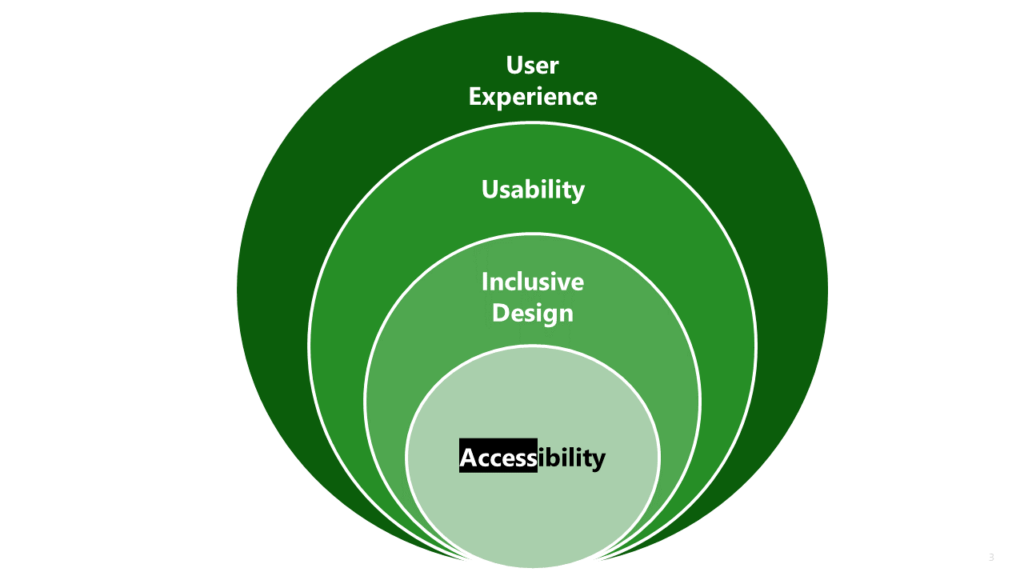
In the high-stakes world of modern Human-Computer Interaction (HCI), few issues are as dangerously misunderstood as the subtle yet profound difference between “usability” and “accessibility.”
These two terms are too often carelessly conflated, yet they represent entirely distinct — and unequally critical — dimensions of human experience with technology.
The ISO framework and the illusion of success
According to the International Organisation for Standardisation (ISO 9241–11), usability is,
“The extent to which a product can be used by specified users to achieve specified goals effectively, efficiently, and with satisfaction in a specified context of use.”
Note the quiet trap hidden in that definition: it is inherently conditional. Usability measures how well a product performs for a narrowly defined group of users under ideal conditions. It assumes, often dangerously, that the user can actually reach and interact with the interface in the first place.
Imagine a sleek, award-winning mobile banking app crafted for young, tech-savvy professionals. Its vibrant colors, minimalist design, and lightning-fast three-tap transaction flow feel like pure efficiency to its intended audience. For them, the experience is seamless, even delightful.
But for a user with low vision or color blindness, those same “vibrant” buttons disappear into the background due to insufficient contrast. What was hailed as highly usable suddenly becomes completely unusable. The app succeeded in usability for its “specified users” — yet failed at the most fundamental level: allowing people to participate at all.
Gatekeeper of human dignity
Accessibility is not an enhancement. It is the prerequisite. It demands that digital products be usable by people across the widest possible range of abilities, characteristics, and needs. While usability judges the quality of the experience, accessibility determines whether the experience can even exist for a given individual.
Without accessibility, usability is meaningless — a beautiful door that remains forever locked for far too many.
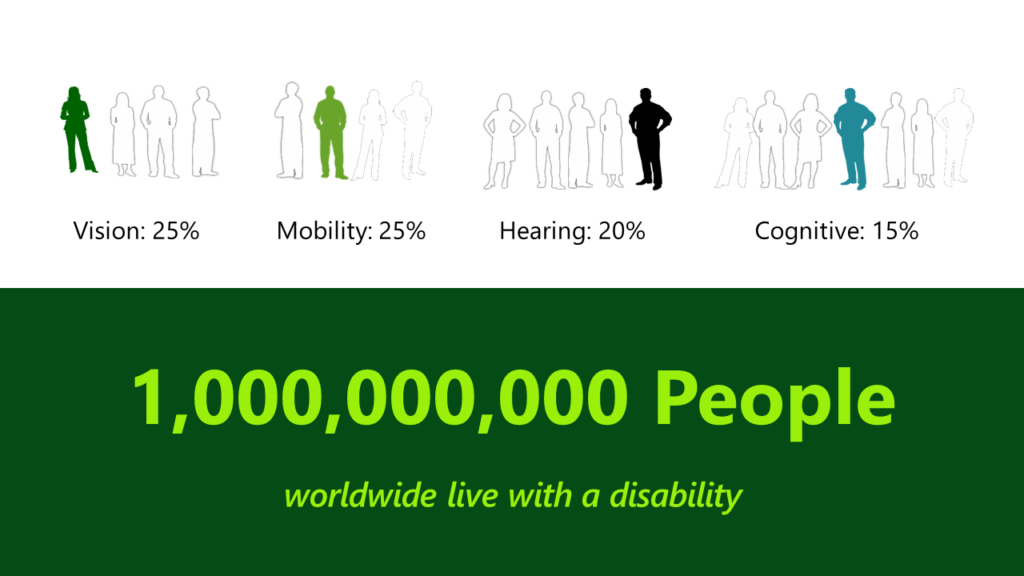
This distinction echoes a deeper philosophical shift: the move from the outdated “medical model” of disability — which sees the individual as broken and in need of fixing — to the “social model,” which recognises that disability is often created not by the person, but by environments and systems that erect invisible barriers.
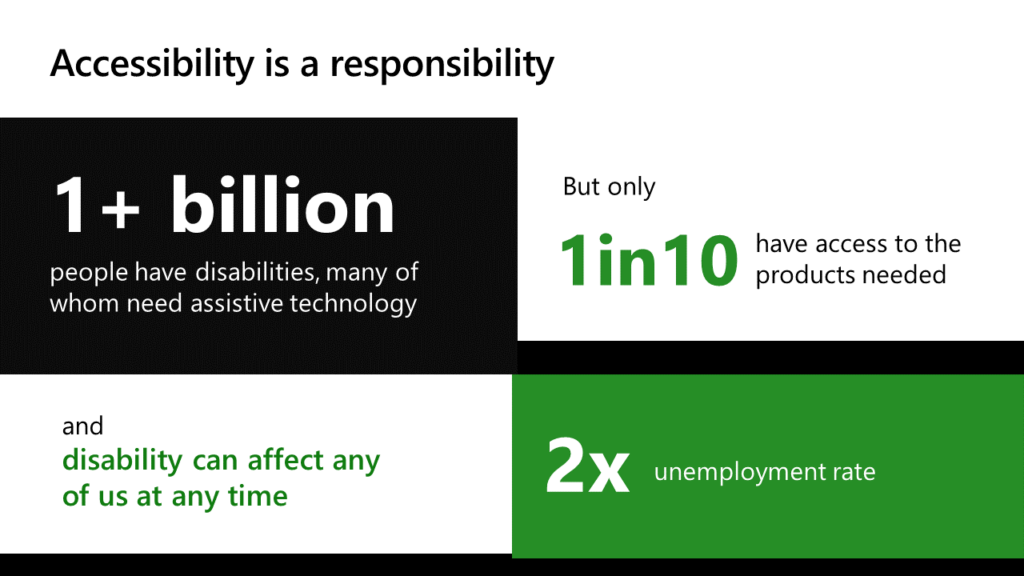
The consequences of ignoring this truth surface painfully in moments of raw “product dissonance.” Picture a person with a motor impairment, hands trembling, desperately trying to complete a purchase on what everyone calls a “highly usable” e-commerce platform. The “Buy Now” button — praised for its clean design — is simply too small and unforgiving for their pointer to reliably hit.
In that agonising moment, the failure is not merely one of usability. It is a profound breach of accessibility — a quiet form of exclusion that denies dignity, autonomy, and equal participation in the digital world.
Accessibility & Inclusion for all
Before going into further discussion I want you to watch the Accessibility & Inclusion for all by World Economic Forum.
https://medium.com/media/824c47a2fc2ce2bc0dde669c0a619bd3/href
Psychological and motor foundations of inclusive design
True digital inclusion is not built on good intentions alone — it is anchored in the hard laws of human psychology and the unforgiving physics of the human body. By embracing these foundational models, designers and engineers gain the power to predict exactly where interfaces will break for millions of real human beings.
The brutal physics of interaction
In 1954, psychologist Paul Fitts uncovered a fundamental truth about the human motor system that still governs every tap, click, and swipe we make today. Fitts’s Law mathematically expresses the time required to acquire a target as a function of both distance and size. The movement time (MT) is given by:
MT=a+b⋅log2(2A/W)
where 2A is the movement amplitude (distance to the target) and W is the target width (size of the button or link).
For users with motor impairments, this equation becomes merciless.
- Small targets dramatically inflate the Index of Difficulty, demanding levels of precision that trembling hands or limited fine motor control simply cannot sustain.
- Greater distances between targets compound the problem, turning every action into a high-stakes battle against overshooting and catastrophic errors.
Picture this: an emergency alert application where the “Cancel” and “Confirm” buttons are tiny 15-pixel icons placed at opposite corners of the screen. For a person in the grip of a panic attack or someone living with Parkinson’s disease, those few centimeters might as well be miles. The logarithmic nature of Fitts’s Law is unforgiving — as targets shrink, the required time and effort do not rise gently; they explode.
This is why WCAG 2.2 recommend a minimum touch target of 44×44 pixels and 24×24 pixels. The result is the powerful “curb-cut effect” — larger, more forgiving targets don’t just help people with disabilities; they benefit everyone, including the exhausted commuter trying to order a ride with one hand on a crowded, moving train.
The silent tax on human potential
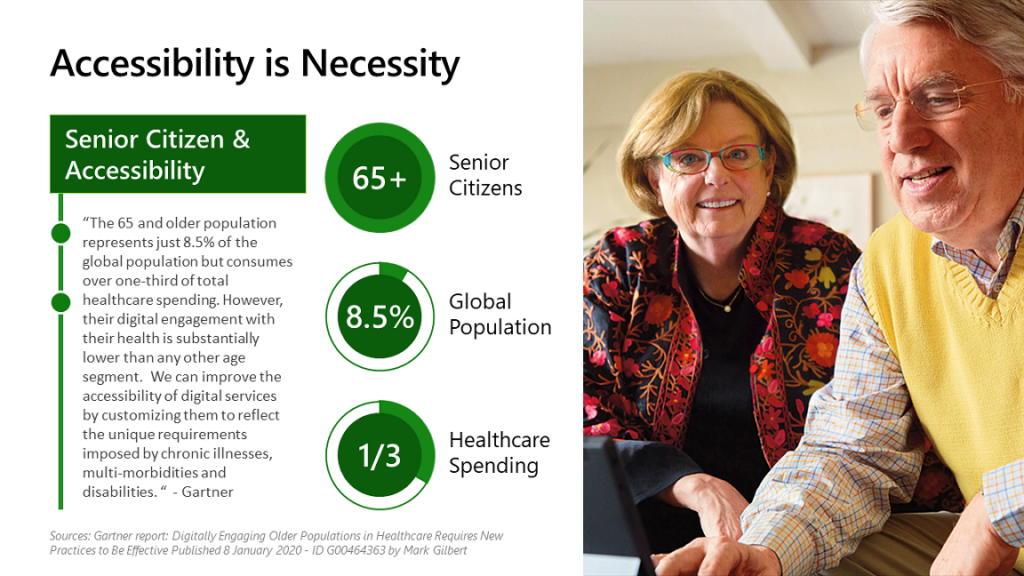
John Sweller’s Cognitive Load Theory reveals another harsh reality:
The human mind has severely limited working memory. Most people can consciously juggle only five to nine “chunks” of information at any given moment. Every unnecessary demand steals from this precious mental budget.
Cognitive load comes in three forms:
- Intrinsic Load: The natural complexity of the task itself (understanding a dense insurance policy, for example).
- Extraneous Load: The unnecessary mental effort imposed by poor design — confusing navigation, distracting animations, inconsistent layouts, or cryptic jargon.
- Germane Load: The productive effort that builds real understanding and mental models.
For neurodivergent individuals and people with cognitive disabilities, extraneous load is often the breaking point. A chaotic interface doesn’t just frustrate — it quietly robs users of their ability to function.
Imagine a screen reader user landing on a news portal that lacks a simple “Skip to Content” link. Instead of reaching the article, they are forced to endure twenty repetitive navigation items on every single page load. What should be a quick scan becomes an exhausting ordeal, rapidly draining their limited cognitive resources. This is not minor inconvenience — it is “technostress” in its purest form. The psychological toll is severe: mounting anxiety, plummeting self-esteem, and, in the worst cases, complete withdrawal from digital spaces altogether.
When we ignore these psychological and motor realities, we don’t just create bad interfaces. We build invisible walls that slowly crush human dignity, one failed tap and one overwhelmed mind at a time.
The Shift-Left paradigm
For too long, the traditional development model has treated accessibility as an afterthought — a mere checklist item hastily reviewed during the final Quality Assurance phase. This reactive approach is not only inefficient and outrageously expensive; it is fundamentally disrespectful to the millions who depend on our products.
The Shift-Left paradigm represents a necessary revolution. It demands that accessibility be embedded from the very first spark of an idea, woven into the DNA of the product lifecycle rather than patched on as a reluctant bandage at the end.
Product Manager: Architect of the inclusive vision
The Product Manager holds the sacred responsibility of setting an uncompromising inclusive vision. Accessibility must never be dismissed as a “non-functional requirement” buried in fine print. It must be elevated to a core feature from the earliest moments of requirements gathering.
This begins with writing truly human-centered user stories:
“As a keyboard power user, I want to navigate the entire payment gateway using only the keyboard so that I can independently and confidently complete my purchase.”
Inclusive features must be prioritised with the same rigor and urgency as revenue-driving business goals. When accessibility is perpetually deferred to “the next version,” that version rarely arrives — and real people are left behind in silence.
Developer: Builder of digital pathways
Developers lay the critical technical foundation for true inclusion. Their most powerful weapons are deceptively simple: semantic HTML and ARIA (Accessible Rich Internet Applications).
Using a proper <button> element instead of a styled <div> is not a minor technical detail — it is the difference between an interface that welcomes everyone and one that silently shuts doors.
Semantic code ensures that browsers automatically provide keyboard focus and correctly announce the purpose of every element to assistive technologies.
Developers must obsess over logical tab order and visible focus indicators.
For millions who cannot use a mouse, the developer literally builds — or destroys — the only path they have through the application.
A single careless decision can turn a seamless journey into an impenetrable maze.
Quality Assurance: Beyond the illusion of automation
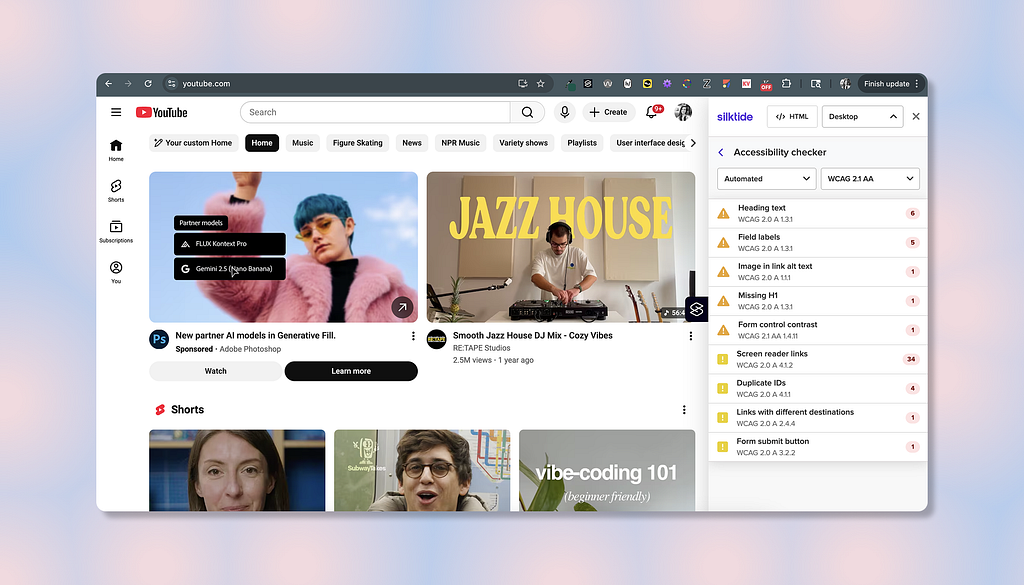
QA teams must rise above the dangerous comfort of automated scanners. Tools like Axe may catch roughly 30% of accessibility issues, but they can never replace the lived experience of real users.
True validation demands manual testing with actual assistive technologies — screen readers like NVDA and VoiceOver, high-contrast modes, and keyboard-only navigation. QA must verify not just that the product functions, but that it truly “speaks” and “appears” correctly to every kind of user.
They must also act as relentless guardians through regression testing, ensuring that every flashy new “vibe-coded” feature does not quietly shatter existing accessibility foundations.
Designer: The last gatekeeper of human dignity
Designers stand as the final and most decisive gatekeepers of human experience. Every choice they make — font, color contrast, spacing, hierarchy — creates the invisible “gravity” that either pulls people in or pushes them out.
In that deeply personal moment of creation, the designer faces a quiet moral choice:
Chase a trendy gray-on-gray aesthetic that looks striking in a pitch deck, or champion a high-contrast, truly legible interface that respects every human eye.
When designers fail to provide clear accessibility annotations — heading structure, focus order, or semantic meaning — they force developers to guess. And in that guesswork, accessibility quietly dies.
The truly conscious designer understands their power. They are not merely crafting beautiful interfaces. They are deciding whether a person with a visual impairment will feel the sharp sting of exclusion and emotional dissonance, or the quiet dignity of being seen, welcomed, and empowered.
Accessibility in the era of AI and “vibe coding”
We stand at the dawn of a seductive new era: the age of “vibe coding” — where natural language prompts and generative AI can spin entire interfaces into existence with breathtaking speed. What was once reserved for skilled developers is now available to anyone with an idea.
This democratisation of creation is exhilarating. But beneath the excitement lies a grave and growing danger for digital accessibility.
The hidden perils of generative UI
Modern AI models are trained on the vast ocean of the existing internet — an internet that remains over 90% inaccessible. As a result, when left unchecked, these models regurgitate the same broken patterns they’ve absorbed: bloated “div-soup” code, missing alt-text, absent semantic structure, and treacherous keyboard traps.
The risks run deeper than technical flaws:
- The intent gap: Blind and low-vision users face a cruel paradox. They cannot visually inspect the output of AI-generated code, so they must depend entirely on the AI’s own description of its work. This creates a dangerous “hallucination loop” — where the user is falsely reassured that the interface is accessible, only to discover later that it remains a locked fortress.
- Bias and patronising design: AI agents often carry subtle, baked-in assumptions about neurodivergent and disabled users. They frequently default to overly simplistic, hand-holding interfaces that feel condescending rather than empowering — treating users as fragile instead of capable.
Can AI truly solve accessibility?
The honest answer is sobering: No.
While AI excels at narrow, technical tasks — calculating color contrast ratios or spotting missing ARIA labels — it fundamentally lacks the human judgment, empathy, and contextual understanding that accessibility demands.
- Uncertainty and false confidence: AI-powered scanners may claim to detect 50–75% of issues, but they do so with significant uncertainty and frequent false positives. Unlike traditional tools like Axe or WAVE, which are highly accurate on the limited set of issues they cover (roughly 25–30% of total problems), AI often requires painstaking human verification for every single flag.
- The meaning gap: Consider a simple but revealing example. An AI-generated alt-text for a photo of a person laughing might read: “A person with a wide mouth and visible teeth.” Technically correct, yet painfully hollow. If that same image appears in a marketing campaign for “Joyful Living,” the truly meaningful and accessible description should be: “A happy customer expressing pure joy.”
AI can describe pixels. It cannot yet understand emotion, context, or human intent.
In this brave new world of rapid AI-generated interfaces, we risk scaling exclusion at unprecedented speed. What used to be isolated accessibility failures can now be instantly replicated across thousands of products before anyone even notices the damage.
The promise of “vibe coding” is immense — but without deliberate human oversight, it threatens to become the most efficient engine of digital exclusion humanity has ever built.
Operationalising accessibility within the organisation
Talking about accessibility is easy. Embedding it into the very soul of an organization is hard. To move beyond scattered, last-minute fixes and deliver truly inclusive products, companies must commit to a deliberate journey toward maturity — a transformation that turns accessibility from an afterthought into a strategic, non-negotiable discipline.
The Digital Accessibility Maturity Model (DAMM)
This journey unfolds through five predictable, often painful, stages of growth:
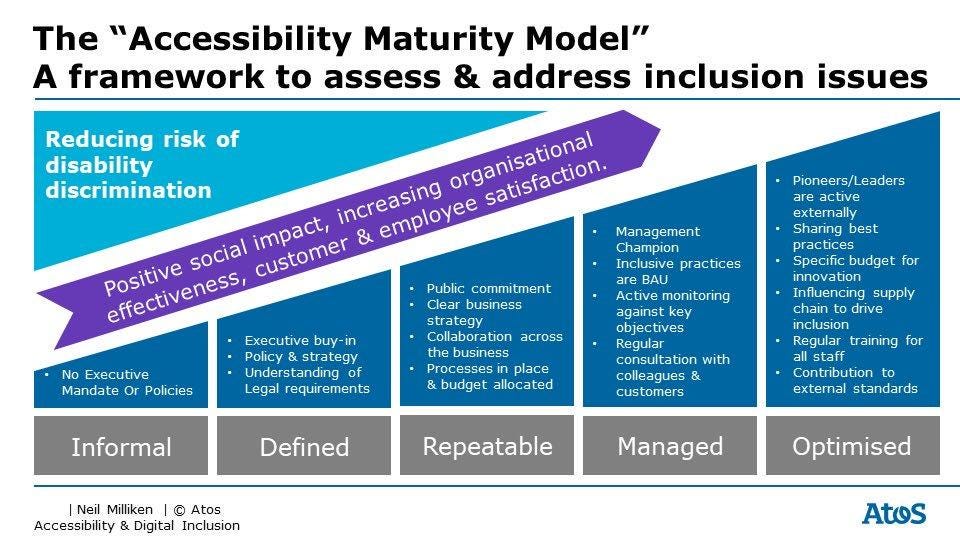
- Stage 1: Inactive / Ad-Hoc — The dangerous starting point. No dedicated resources, no policy, no accountability. Accessibility only surfaces after a furious complaint or the looming threat of a lawsuit.
- Stage 2: Launch / Planned — The awakening. Initial audits are conducted, a policy is born (usually targeting WCAG 2.2 AA), and leadership begins to acknowledge the issue — at least on paper.
- Stage 3: Defined — Structure emerges. Processes are documented, a dedicated accessibility team is hired or created, and role-specific training programs are rolled out across the organisation.
- Stage 4: Managed (Shift-Left) — Momentum builds. Automated accessibility testing is embedded into CI/CD pipelines, and “accessibility champions” are planted within every product squad to catch issues early.
- Stage 5: Optimised — The pinnacle of maturity. Inclusive design becomes a driver of innovation. People with disabilities are actively involved in user research, and the organization maintains near-zero tolerance for accessibility regressions. Accessibility is no longer a compliance checkbox — it is a source of pride and competitive advantage.
The legal framework
As I am living in Dubai, so let’s take UAE as an example here.
In the UAE, the pressure to mature is not just moral — it is sharply legal.
- Federal Law №29 of 2006 enshrines the rights of “People of Determination,” guaranteeing equal access and participation across all spheres of life, including digital services.
- Dubai Universal Design Code (DUDC) takes it further, mandating full WCAG 2.1 Level AA compliance for all digital platforms operating in Dubai.
The consequences of failure are severe:
Fines reaching up to AED 200,000, disqualification from government contracts, and lasting reputational damage.
In today’s world, organisations no longer have the luxury of treating accessibility as optional. Maturity is not a nice-to-have. It is the price of doing business with conscience — and with the law.
The way forward
Building a truly accessible digital world demands far more than good intentions. It requires a powerful synthesis of technical excellence, psychological empathy, and unwavering organisational commitment.
The stakes are high — every decision we make today will either open doors for millions or quietly lock them out.
Recommendation 1: Empower the Designer as gatekeeper
The design phase is where accessibility is either won or tragically lost.
Organisations must stop treating designers as mere pixel artists and instead arm them with the right tools — and enforce “accessibility specifications” as a mandatory part of every design handoff.
When designers fully own their role as gatekeepers, they can prevent majority of accessibility issues before a single line of code is written. A thoughtful designer does not just make interfaces beautiful — they decide whether millions of people will feel welcomed or rejected by technology.
Recommendation 2: Adopt a hybrid AI strategy
AI is a powerful ally, but a dangerous master. While it cannot replace human judgment, it can dramatically accelerate tedious foundational work — generating initial alt-text, auditing contrast ratios, and flagging basic structural issues.
The winning approach is a disciplined hybrid model:
Let AI handle the first layer of rapid evaluation, but always follow it with a mandatory manual review layer conducted by accessibility experts or, better yet, real users with disabilities.
Technology should serve humanity — not replace its conscience.
Recommendation 3: Address the psychological tilt
We must stop pretending that inaccessible experiences are merely technical failures. They are deeply human ones. Research on “tilt” in gaming and emotional dissonance in digital environments reveals a painful truth:
Repeated barriers don’t just frustrate users — they exhaust them, erode their confidence, and eventually push them toward withdrawal and burnout.
By truly embracing the third pillar of ISO usability — satisfaction — teams can move beyond cold compliance toward something far more powerful: genuine user delight. An interface that works for everyone doesn’t just function; it respects human dignity.
Recommendation 4: Scale through champions
Accessibility can never be the responsibility of one lone hero. Organisations must build a distributed Accessibility Champions Network, placing at least one trained advocate in every product squad — Design, Development, Product Management, and QA.
These champions become the immune system of the organisation, constantly defending inclusive standards from the pressures of speed and shortcuts.
The Garden of accessibility
Ultimately, digital accessibility is not a project with a finish line. It is a living garden that demands continuous care, attention, and nurturing.
In this explosive era of AI and “vibe coding,” the velocity of creation has never been greater. Yet the fundamental need for human connection, empathy, and inclusion remains unchanged.
By embedding the social model of disability deep into our code, our processes, and our culture, we can ensure that the digital future we are building is not merely smart — but truly universal.
The path forward lies not in blind automation, but in more intentional, empathetic, and research-backed design.
Because when technology truly works for everyone, we don’t just improve products — we restore human dignity, one inclusive experience at a time.

Usability, accessibility, and the human-AI paradigm was originally published in UX Collective on Medium, where people are continuing the conversation by highlighting and responding to this story.